Condition-tier comparison
Grade A vs Grade B iPhones: How Buyers Compare Condition Tiers
A side-by-side procurement comparison of Grade A and Grade B used iPhones, including customer fit, inspection evidence and value controls.
Overview
Compare two defined cosmetic tiers.
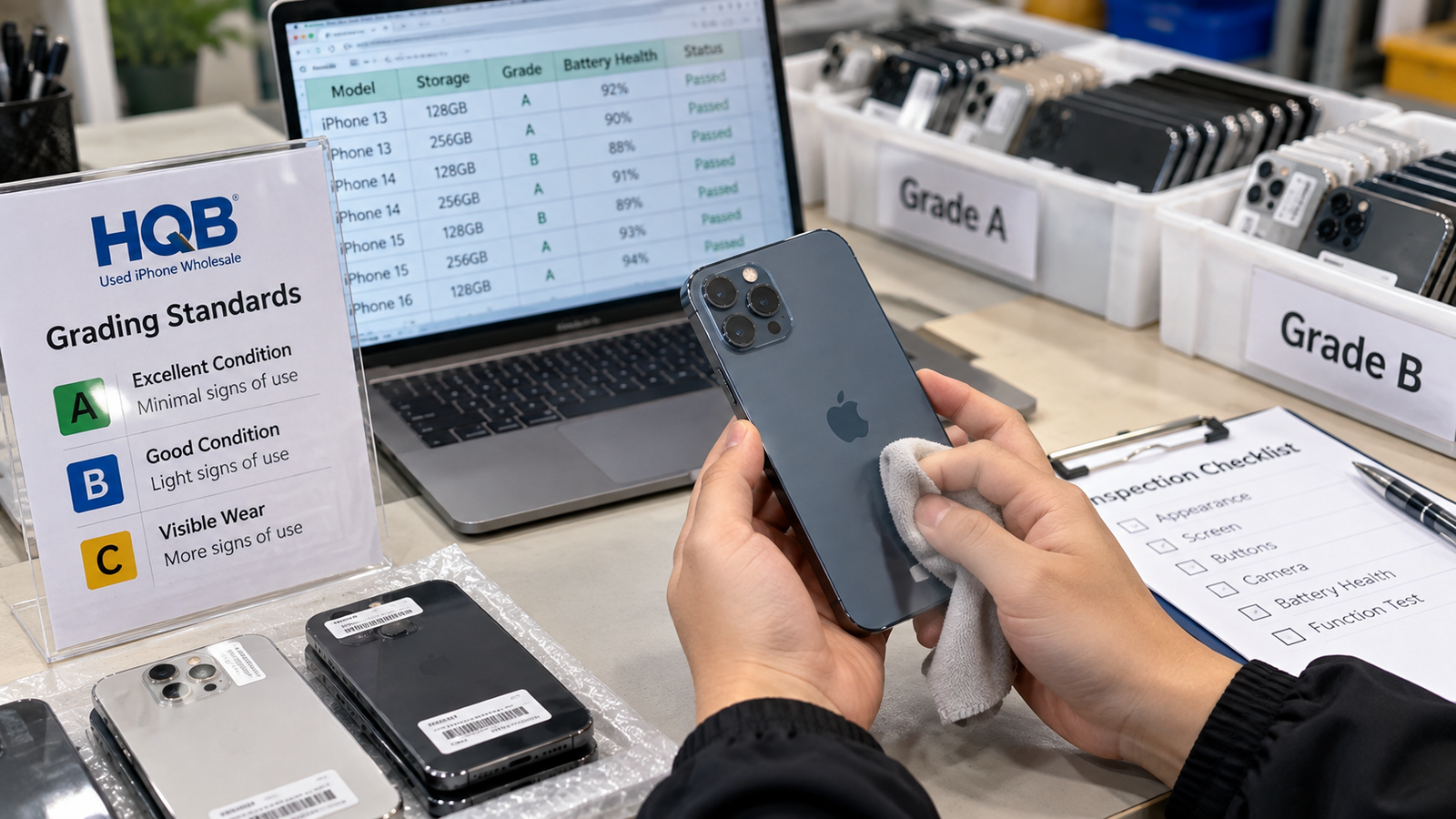
This page is not a definition of Grade A alone. It helps a buyer choose between two agreed condition tiers by comparing visible wear tolerance, target customer, acquisition cost, listing disclosure and return risk.
Decision process
How to Apply This Before You Buy

- 1. Obtain the supplier's written A and B definitions.
- 2. Compare the same model, storage, battery and status across grades.
- 3. Inspect sample devices or photos against the definition.
- 4. Match Grade A to appearance-sensitive channels.
- 5. Match Grade B to value channels with clear disclosure.
| Review area | Evidence | Commercial result |
|---|---|---|
| Device specification | Model, storage and configuration record | Compare only matching units |
| Condition | Grade, test and disclosure record | Price or hold appropriately |
| Channel fit | Current sales and return observations | Control the next order |
B2B application
Use a Clear Requirement and Acceptance Rule
Grade A and Grade B are commercial condition tiers, not universal facts. The buyer should decide the suitable tier only after the actual criteria and price difference are clear.
Review relevant inventory through Products, then use the quote form to specify models, quantity, condition, storage, destination and acceptance requirements.
FAQ
Buyer Questions
Can a title or grade label decide the purchase?
No. Verify the exact configuration, condition and commercial terms before deciding.
What should a buyer document?
Keep the requirement, supplier statement, inspection result and exception or remedy record.
How should quotes be compared?
Compare only identical specifications and include all relevant downstream cost and risk.

Summary
Compare two defined cosmetic tiers.
Grade A and Grade B are commercial condition tiers, not universal facts. The buyer should decide the suitable tier only after the actual criteria and price difference are clear.
Talk to HQB
Request a specification-based quotation
Share models, quantity, storage, grade, destination and acceptance requirements.