TERMINOLOGY
What Does “Fully Unlocked iPhone” Actually Mean?

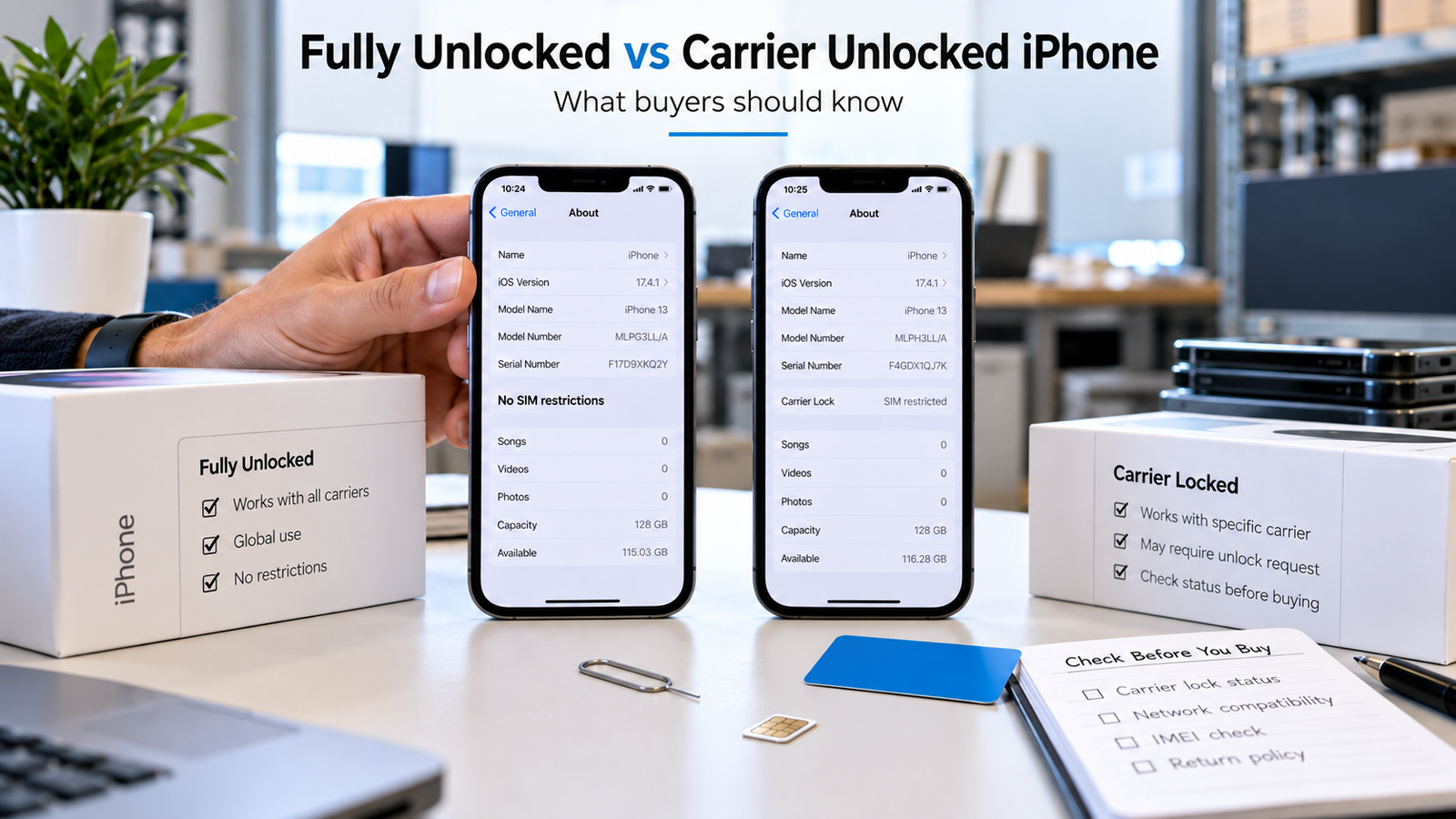
“Fully unlocked” is widely used in retail, resale, and wholesale listings, but it is not Apple’s formal Carrier Lock name. In many listings it means the seller believes the iPhone has no current carrier restriction; in others it is used as shorthand for factory unlocked or SIM-free.
Those labels can be useful starting points, yet they are not identical evidence. A unit may be sold as fully unlocked because it started unlocked, because a carrier later unlocked it, or simply because the seller has not separated original history from present status.
Fully unlocked
A secondary-market term for a phone presented as unrestricted for compatible networks.
Factory unlocked
Usually describes a phone sold without an original carrier lock.
SIM-free / unlocked
Marketing language that still needs a current Carrier Lock check.
What buyers should ask instead of simply asking “Is it fully unlocked?”
- What does Carrier Lock show in Settings?
- What was the original carrier?
- Is the IMEI clean and matched to the unit?
- Is the phone fully paid off where relevant?
- Is Activation Lock removed?
- What model number and region is the device?
- Does it meet the target country’s SIM or eSIM requirements?
CARRIER HISTORY
What Is a Carrier Unlocked iPhone?

A carrier-unlocked iPhone began life through or tied to a network provider. It may have been subject to payment, account, contract, or activation requirements before the carrier would remove its restriction.
- The iPhone is sold through or associated with a carrier.
- The carrier applies its own eligibility conditions.
- The carrier determines whether the unit qualifies for unlocking.
- After the official unlock completes, the phone can use other compatible networks.
- Carrier Lock should then display No SIM restrictions.
Carrier policies vary by network and change over time, so a bulk buyer should not build a sourcing rule around a temporary waiting period or a reseller’s general statement. Apple does not perform carrier unlocks on behalf of carriers; the original or current carrier controls the official carrier-unlock process.
A carrier-unlocked device is not automatically a risky device if:
- the unlock is legitimate;
- the IMEI is clean;
- financing obligations are settled;
- Activation Lock is removed; and
- the model is compatible with the destination market.
COMPARISON
Fully Unlocked vs Carrier Unlocked iPhone: Key Differences
| Comparison point | Fully / factory unlocked | Carrier unlocked |
|---|---|---|
| Original sales channel | Direct, retail, or other channel without an initial carrier restriction | Sold through or initially tied to a carrier |
| Original carrier restriction | Usually none | Yes, historically |
| Current SIM restriction | None when accurately described | None after official completion |
| Need for carrier approval | Usually not applicable | Required for the historical unlock |
| iOS functionality | Standard iOS | Standard iOS |
| Software updates | Normal Apple updates | Normal Apple updates |
| Hardware performance | Depends on the individual unit | Depends on the individual unit |
| Switch compatible carriers | Generally yes | Generally yes |
| International use | Check regional model and networks | Check regional model and networks |
| IMEI verification | Always required | Always required |
| Activation Lock risk | Separate check | Separate check |
| Financing history | Still worth checking | Often especially relevant to history |
| Buyer perception | May appear simpler | Benefits from clear explanation |
| Ease of resale | Often straightforward when proven | Strong when verified and disclosed |
| Mixed export markets | Good, subject to configuration | Good, subject to configuration |
| Documentation requested | Status, IMEI, model, ownership, condition | Status, IMEI, model, ownership, condition, carrier history where available |
What Is Actually Different?
- The original path into the market and any historical carrier relationship.
- The amount of provenance a reseller may want to disclose or retain.
- How some customers interpret the terms in a listing.
- The value of supporting documentation in a cross-border or marketplace sale.
What Is Usually the Same After an Official Unlock?
- iOS, apps, cameras, Face ID, and ordinary performance.
- Battery behavior based on the unit’s actual battery condition.
- Software update access.
- Access to compatible carrier networks.
- The need to review condition, parts history, and hardware function separately.
BUYER DECISION
Is a Carrier Unlocked iPhone as Good as a Fully Unlocked iPhone?
For normal use, an officially carrier-unlocked iPhone with a clean and appropriate status can be functionally equivalent for most buyers. It does not inherently have inferior iOS, carrier bloatware, a slower processor, weaker camera, lower battery performance, or worse updates.
Wholesalers may still distinguish the two because inventory is also a commercial product. Listing transparency, customer preference, original carrier history, marketplace rules, buyer confidence, and destination-market expectations can affect how a unit should be presented.
For End Users
Focus on current Carrier Lock status, compatible network access, the exact model, and the handset’s actual condition. If the unit shows No SIM restrictions and fits the carrier, the historical label may make little practical difference.
For Resellers and Wholesalers
Focus on traceability and accurate listing language. Record status and provenance clearly so a later customer is not asked to trust a vague “fully unlocked” statement.
Buying rule
Do not pay a premium for the words “fully unlocked” alone without verifying the underlying device.
RISK CHECKS
An Unlocked iPhone Can Still Have Other Problems

Unlocked status answers a narrow network question. It does not prove legal ownership, commercial history, cosmetic condition, battery health, or worldwide compatibility, and it should never be used as a catch-all quality claim.
| Status | What it means | Same as Carrier Lock? | Why it matters |
|---|---|---|---|
| Carrier Lock | Controls carrier restriction and network use. | Yes | Confirms whether another compatible carrier can be used. |
| Activation Lock | Find My and Apple Account anti-theft protection. | No | A phone can show No SIM restrictions yet be unusable if linked to the previous owner. |
| IMEI blacklist | Lost, stolen, fraud, or carrier-related status may affect service. | No | Can affect activation and resale in relevant markets. |
| Financing / unpaid balance | Commercial history associated with the device. | No | Current network status and financial history should be reviewed separately; not every financed phone is inevitably blacklisted. |
| Regional model compatibility | Hardware variant, bands, and local features. | No | An unlocked phone is not automatically compatible with every country or network. |
| Physical SIM vs eSIM | How the device supports cellular activation. | No | Importers must match the exact model to destination requirements. |
For wholesale purchasing, “unlocked” should be treated as one verification item—not the entire quality check.
VERIFICATION
How to Verify an Unlocked iPhone Before Buying

- Check Carrier Lock. Open Settings → General → About → Carrier Lock. The desired result is No SIM restrictions.
- Test another compatible SIM or eSIM. Where practical, test activation with another compatible network to support the setting result.
- Check the IMEI. Review known lost, stolen, or blacklist concerns through appropriate carrier or trusted verification channels.
- Check Activation Lock. The device should not request the previous owner’s Apple Account during setup.
- Confirm model number and region. Match the hardware variant to the intended destination.
- Check SIM / eSIM requirements. This is especially important for export orders.
- Document bulk-order results. Keep clear SKU-level or lot-level records to reduce disputes.
Buyer checklist
- ✓ Carrier Lock result recorded
- ✓ IMEI matched to unit and shipment records
- ✓ Ownership setup checked
- ✓ Model and SIM configuration matched to destination
- ✓ Unit condition assessed separately
WHOLESALE IMPACT
Why Unlock Status Matters for Wholesale and Export Buyers
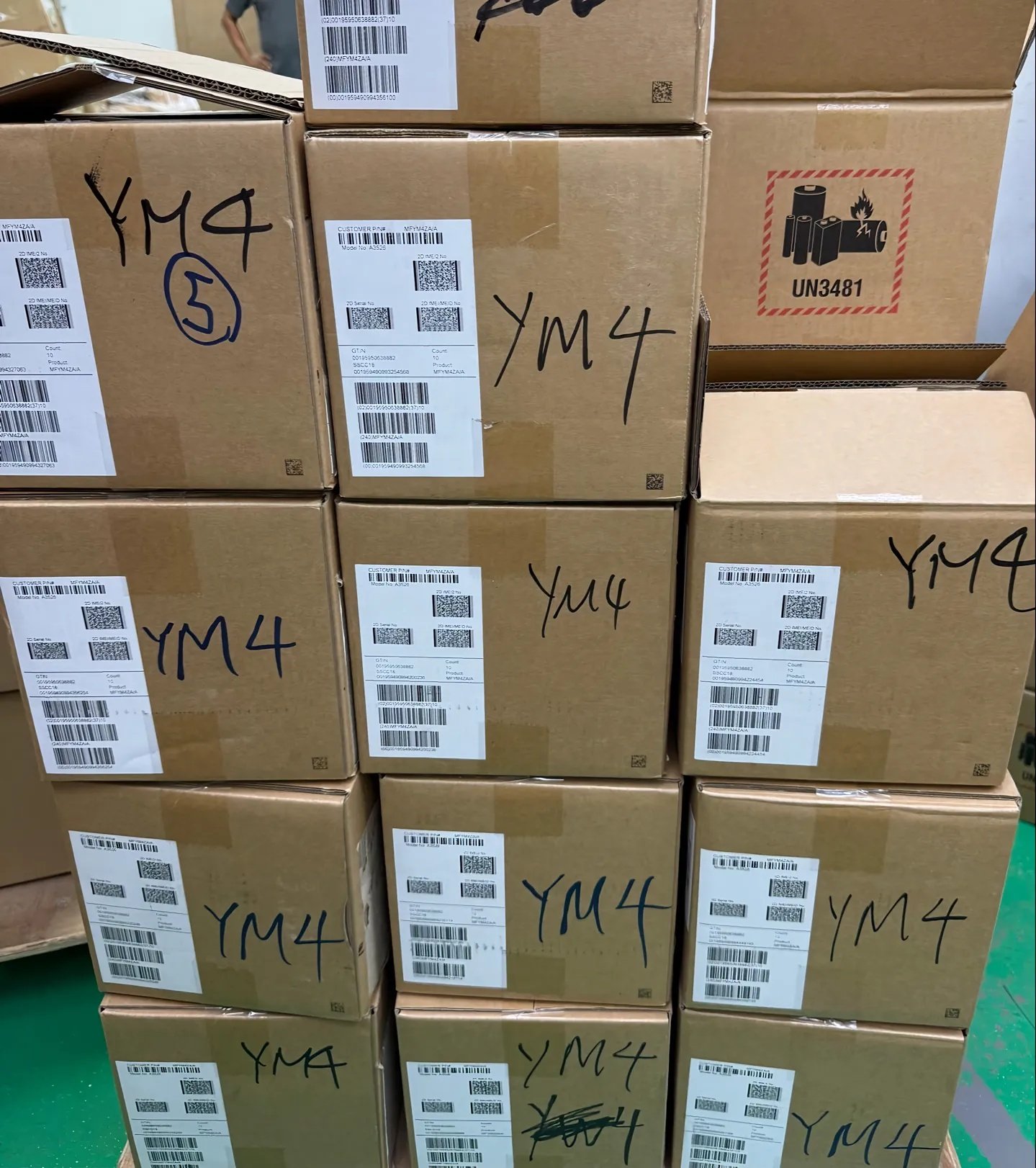
For distributors, retailers, online resellers, refurbishers, exporters, and repair businesses, unlock status influences more than a single sale. It can affect how flexibly a batch is allocated between customer groups, how much support is needed after delivery, and whether a listing needs extra explanation.
Unlocked stock may command stronger demand or simpler resale positioning in some markets, especially where buyers expect to choose their own carrier. The responsible approach is not to promise a price premium, but to match verified stock to the market that values it.
Unlock status can affect:
- the number of potential buyers;
- markets where stock can be sold;
- inventory turnover and customer support burden;
- return risk and listing accuracy;
- resale price positioning; and
- the ability to sell mixed lots internationally.
Mixed-country buyers often prefer inventory with fewer carrier restrictions because it provides more routing options. Still, the right model, SIM configuration, and local network compatibility remain essential for every destination.
For a wholesaler, this is also a stock-segmentation issue. A lot with documented current status can be split by model, SIM arrangement, condition grade, and destination fit before it reaches a sales channel. That is more reliable than sending one broad “unlocked” description downstream and asking each reseller to resolve the details later.
Clear status records can reduce avoidable questions after delivery. They give retail teams a factual basis for product pages, help repair businesses decide which units fit their local customer base, and make exceptions easier to isolate before they turn into returns or disputes.
SOURCING CHOICE
Fully Unlocked or Carrier Unlocked: Which Should You Buy?
| Choose fully / factory unlocked inventory when: | Carrier-unlocked inventory can also make sense when: |
|---|---|
| Exporting to multiple countries. | The current unlock status is verified. |
| Selling to buyers with unknown carriers. | The IMEI is clean and matched to the unit. |
| Simplicity is more important than the lowest acquisition cost. | The original carrier is known. |
| Customers specifically request factory-unlocked stock. | The hardware model fits the destination. |
| Standardized listing language is important. | Documentation is available and pricing reflects inventory history. |
Avoid or investigate further when:
- unlock status cannot be verified;
- the seller only says the phone “should unlock later”;
- IMEI status is uncertain;
- the device remains Activation Locked;
- model number or region is unclear; or
- the supplier cannot explain the lock status consistently.
For professional buyers, verified status matters more than marketing terminology.
EXPORT FIT
Are All Unlocked iPhones Suitable for Export?
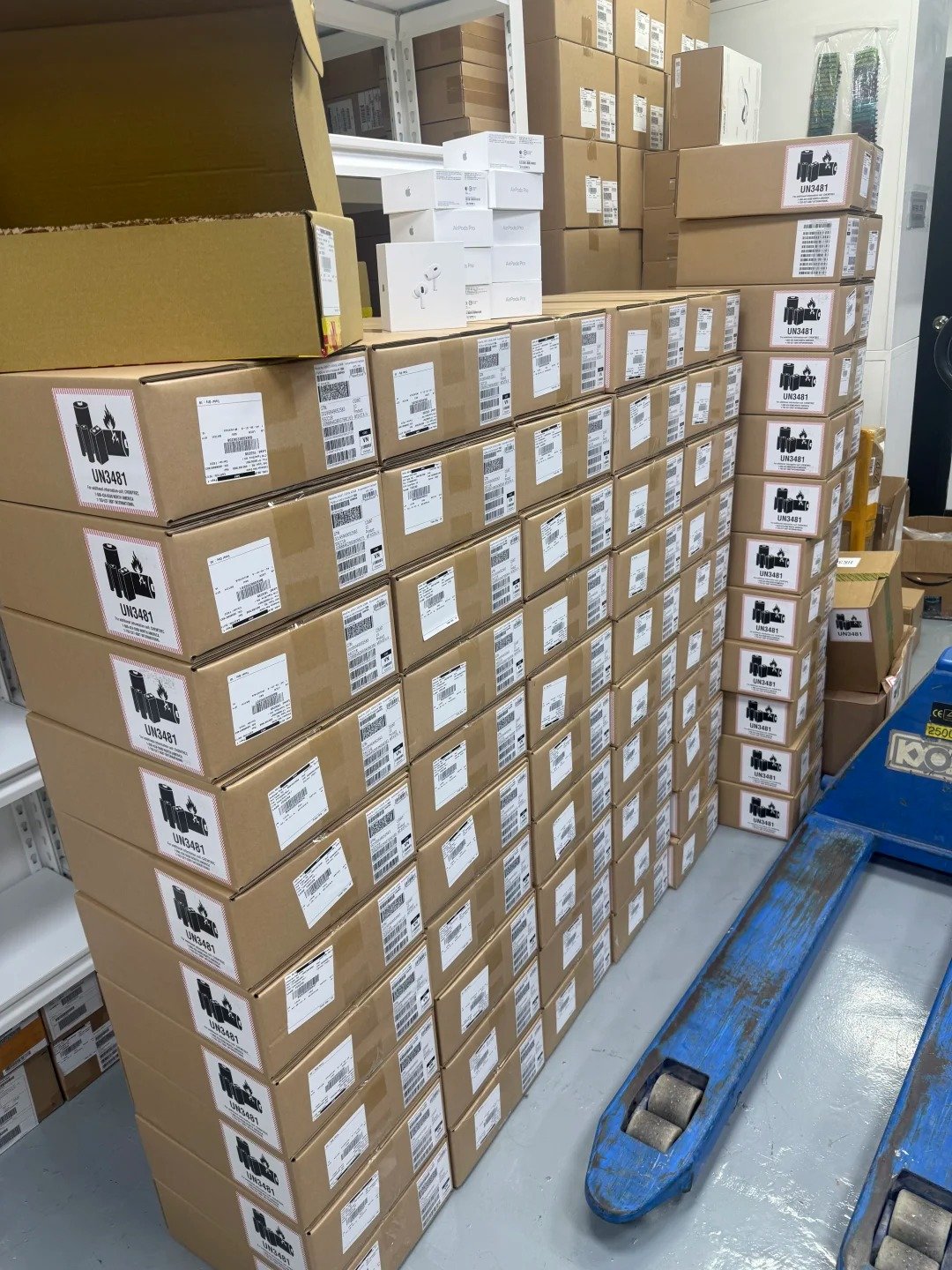
No—not automatically. Carrier unlocking removes a network restriction. It does not change the iPhone’s model number, regional hardware, cellular bands, physical SIM availability, eSIM support, or destination carrier compatibility.
Before a shipment is allocated, importers should confirm the exact model against the intended destination, then compare local buyer preferences and resale-listing expectations. A technically unlocked phone can still be a poor match for a market that expects a physical SIM tray, a specific regional variant, or a particular eSIM arrangement.
Before exporting unlocked iPhones:
- verify the exact model;
- verify destination networks;
- verify SIM/eSIM requirements;
- verify IMEI;
- verify Activation Lock removal; and
- verify device condition separately.
For further market-planning context, see HQB’s Best iPhones for Export Markets guide and the relevant iPhone series availability pages.
PURCHASING CHECKLIST
Wholesale Unlocked iPhone Buying Checklist

Network Status
- Carrier Lock checked
- No SIM restrictions verified
- Target network compatibility checked
Ownership and IMEI
- IMEI verified
- Lost/stolen status checked
- Activation Lock removed
- Financing history addressed where relevant
Hardware
- Correct model number and storage
- Battery condition
- Screen and camera functionality
- SIM/eSIM configuration
Commercial information
- Cosmetic grade and quantity
- Model mix and carrier history where available
- Return / after-sales terms
- Shipping destination requirements
This is a purchasing control, not a sales pitch. It helps a buyer decide whether a supplier’s current inventory matches the specific brief rather than merely matching a broad product title.
SUPPLIER QUESTIONS
What to Ask an Unlocked iPhone Wholesale Supplier
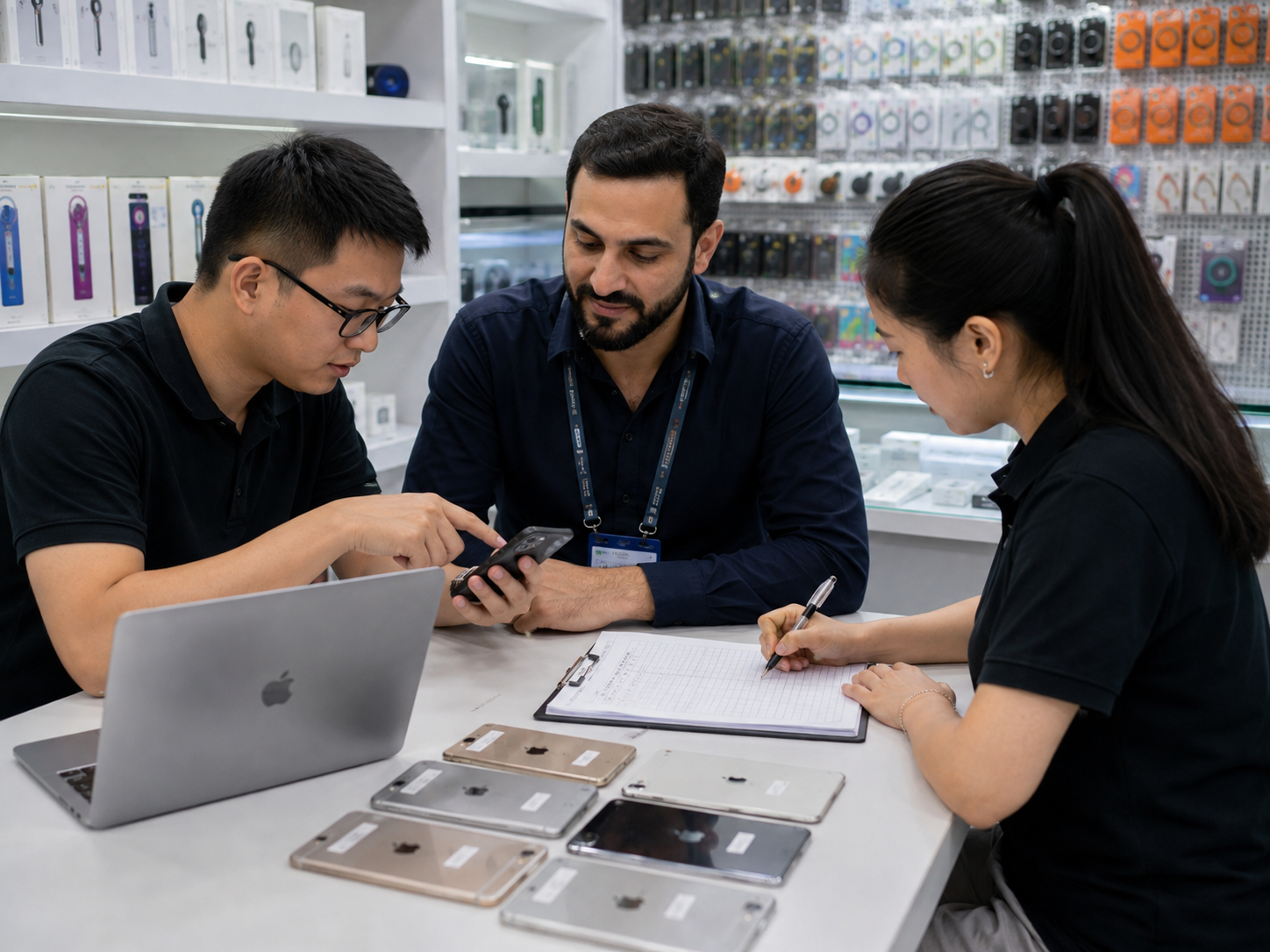
- Are the devices currently carrier unlocked?
- Can Carrier Lock status be verified?
- Is the original carrier known?
- Are IMEIs checked before shipment?
- Are devices free from Activation Lock?
- Which regional model numbers are available?
- Are the phones physical SIM, eSIM, or both?
- What cosmetic grades are available?
- Can buyers request specific models and storage capacities?
- What information is provided for bulk orders?
These questions are useful whether you are evaluating pre-owned, refurbished, or mixed used iPhone inventory. Buyers sourcing pre-owned or refurbished iPhones can contact HQB to discuss current model availability, grade requirements, destination market, and wholesale purchasing needs.