
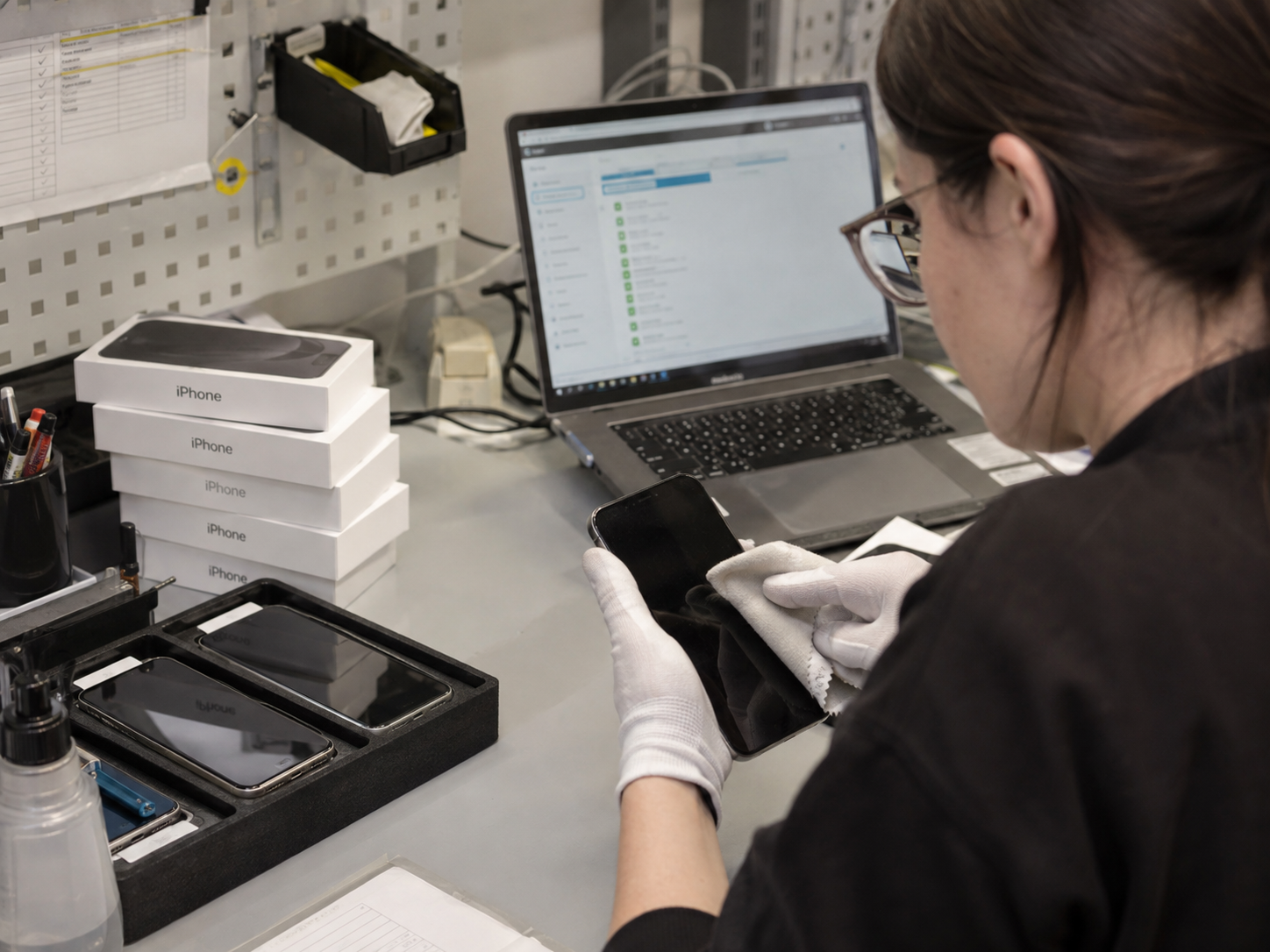
What Does Refurbished iPhone Mean?

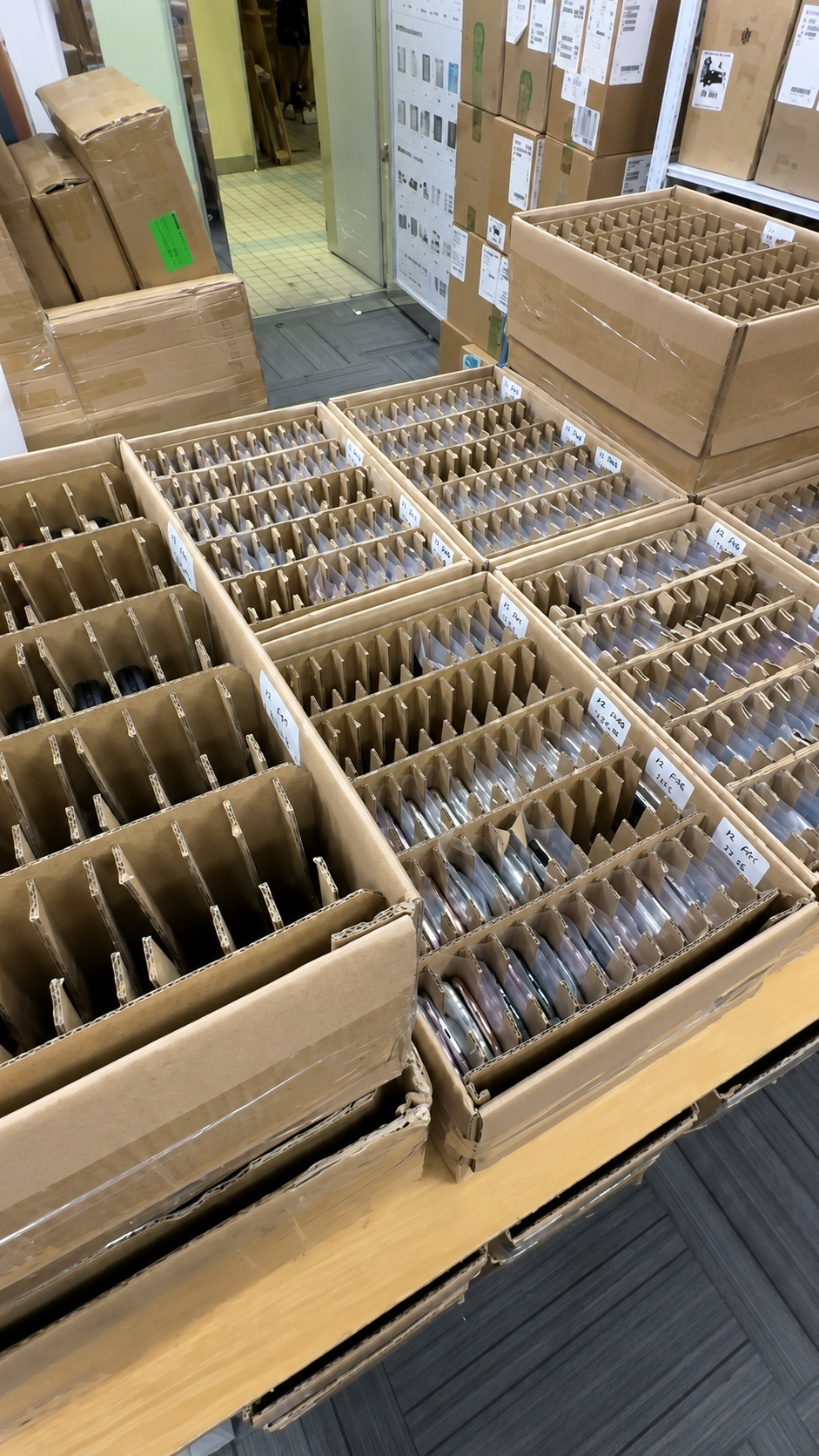
Concise definition: refurbished describes a resale process, not one universal condition standard. A device can be returned, inspected, repaired when needed, cleaned, tested, graded, packaged, and offered again; the depth of each step depends on the provider.
For a retailer or export buyer, the label is a starting point. It becomes useful only when the supplier explains what was tested, what was repaired, which parts policy applies, how battery condition is handled, and what happens if the shipment does not match the agreement.
Typical Refurbishment Journey
- Device intake and identity verification.
- Initial cosmetic and functional inspection.
- Diagnostic testing.
- Repair or replacement when required.
- Cleaning and data removal.
- Retesting and grading.
- Packaging, warranty allocation, and resale.
Important Reality Check
| Item | Why it may vary between sellers |
|---|---|
| Battery health threshold | Some use a stated minimum; others report the measured result. |
| Battery replacement policy | Replacement may be conditional, optional, or not offered. |
| Screen and housing replacement policy | Cosmetic rework ranges from none to replacement when required. |
| Genuine vs. compatible replacement parts | Part source must be disclosed rather than assumed. |
| Water-resistance expectations | Original resistance can be affected by age or repair and should not be promised without evidence. |
| Accessories | Charger, cable, box, and packaging vary by listing. |
| Warranty duration | Coverage can range from none to a seller-defined term. |
| Return process | Window, proof, freight, and remedy differ by supplier. |
Refurbished vs. Used vs. Open-Box vs. New

These terms describe different starting points and selling processes. They should never replace unit-level condition checks, especially when an order includes more than one grade, battery range, model, or regional variant.
| Check | Refurbished | Used | Open-box | New |
|---|---|---|---|---|
| Previous ownership or return status | Usually yes | Yes | Often returned or handled | Normally no end-user ownership |
| Testing level | Seller-defined process | Seller-defined or minimal | Confirm individually | Factory standard |
| Possible repair work | Possible | Possible or unknown | Usually limited, but verify | Not expected |
| Cosmetic consistency | Often graded | Can vary widely | Often close to new | Factory-new presentation |
| Battery expectations | Must be stated | Measured condition matters | Confirm status and health | New battery |
| Warranty expectations | Seller-defined | Often limited | Seller or manufacturer terms | Manufacturer or seller terms |
| Typical pricing position | Mid-range | Usually lower | Near-new range | Highest |
| Main buyer risk | Assuming a universal standard | Uncontrolled variation | Assuming unopened means unused | Ignoring regional or channel limits |
Best fit by buyer type
- Budget buyers: documented used or refurbished stock that matches a defined condition threshold.
- Retailers: consistent cosmetic grades, live function checks, and a clear remedy process.
- Wholesalers: manifest-backed lots with repeatable test, grade, and battery rules.
- Manufacturer-backed condition buyers: Apple Certified Refurbished where its specific program is available and appropriate.
Apple Certified Refurbished and Third-Party Refurbished Are Not the Same

Apple Certified Refurbished is Apple’s own program, with promises Apple states for those specific products. Apple describes a rigorous refurbishment process, full functional testing, cleaning and inspection, genuine Apple replacement parts when needed, and a standard one-year limited warranty. Apple also says its certified refurbished iOS devices receive a new battery and outer shell.
Those statements should not be copied across the wider market. A third-party refurbished iPhone may be well processed, but its repair scope, battery standard, part origin, cosmetic work, warranty, and return terms are determined by that provider—not by the word “refurbished.”
| Apple Certified Refurbished | Third-Party Refurbished |
|---|---|
| Apple-defined process and stated promises for eligible products. | Independent process that must be described by the seller. |
| Apple states genuine replacement parts are used when needed. | Part origin may be genuine, compatible, reused, or mixed; request disclosure. |
| Apple states certified refurbished iOS devices receive a new battery and outer shell. | Battery and housing policies vary; never assume replacement. |
| Apple states a standard one-year limited warranty. | Warranty length, exclusions, and remedy vary by seller. |
Questions to Ask Any Third-Party Refurbisher
- Which functions are tested on every unit?
- Which repairs are made, and how are they disclosed?
- What is the part-origin policy for battery, display, camera, and housing work?
- What battery standard applies, and when was it tested?
- What warranty and return process applies to this exact lot?
- How is each cosmetic grade defined?
- How is data erased and setup readiness confirmed?
- Can the seller provide IMEI or serial-number records?
- What packaging and accessories are included?
What a Proper iPhone Refurbishment Process Should Include

A reliable process does not need to make every device identical. It does need to make the condition measurable. Written coverage helps a buyer price devices honestly and route exceptions to repair, value retail, or claim handling.
Functional Diagnostics
- Display, touch response, brightness, and dead-pixel inspection.
- Front and rear cameras, focus, flash, and video recording.
- Speakers, microphones, buttons, vibration, and sensors.
- Charging port, cable charging, and wireless charging where applicable.
- Wi-Fi, Bluetooth, cellular signal, GPS, and SIM/eSIM behaviour.
- Face ID or Touch ID where applicable, with normal setup and use.
Repair and Replacement Controls
| Component | What to disclose | Buyer verification | Why it matters |
|---|---|---|---|
| Battery | Original or replaced, measured health, policy | Settings, test date, charging check | Resale value and runtime expectations |
| Display | Replacement status and part policy | Touch, brightness, True Tone where relevant, history | Daily usability and customer disclosure |
| Cameras | Repair or replacement status | Photo, video, focus, and flash tests | Core iPhone feature quality |
| Rear glass/housing | Cosmetic rework or replacement | Grade inspection and fit check | Appearance and structural expectations |
| Charging connector | Repair history if known | Cable and data test | Charging reliability |
| Logic board | Any repair history or restriction | Identity, functions, and setup test | High-value core component risk |
| Water-damage indicators | Observed condition or policy | Visual inspection; do not infer water resistance | Potential latent-fault risk |
Cleaning, Data Removal, and Final Retesting
- Clean the device and inspect ports, lenses, edges, and buttons.
- Erase all prior-user data using a legitimate device-reset process.
- Confirm the phone starts a normal setup flow with no other person’s Apple Account attached.
- Repeat the agreed functional checks after any repair and after reset.
- Record result, grade, identifier, and any disclosed exception before packing.
Battery Health Is a Key Refurbishment Question

Battery condition affects resale value, customer experience, and the margin needed for future service. It should be a separate field in a wholesale specification, never a vague promise hidden inside a cosmetic grade.
What Battery Health Tells You
- Maximum Capacity: an iPhone-reported estimate of capacity relative to when the battery was new.
- Peak Performance Capability: an indicator of whether iOS reports normal performance-management status.
- Important limit: battery health is one signal, not a complete measurement of safety, charging behaviour, heat, repair history, or remaining useful life.
Battery Standards Differ by Seller
| Seller condition | What it can mean | Buyer action |
|---|---|---|
| Original battery above a stated threshold | Original battery meets an agreed reported range. | Request the threshold, test timing, and tolerance. |
| Original battery with lower capacity but disclosed condition | Lower capacity is priced and documented. | Match it to a value channel or service plan. |
| Replaced battery | Battery was replaced under a stated parts policy. | Confirm origin, message status, testing, and warranty. |
| Battery condition not specified | No usable buying standard has been supplied. | Pause pricing comparison until the condition is documented. |
Battery Questions for Bulk Buyers
- What minimum threshold or range applies?
- What is the test date or inspection point?
- Is every battery replacement disclosed?
- What mixed-lot tolerance is allowed?
- Is cycle-count information available where applicable?
- How are below-standard exceptions separated, priced, or remedied?
Check Parts and Service History Before You Buy

On supported iPhone models, Parts and Service History may be available in Settings > General > About. The information shown depends on the model and its repair history, so an empty or unavailable section is not proof that nothing was repaired.
| Status | What it can indicate | What not to assume | Recommended buyer response |
|---|---|---|---|
| Genuine Apple Part | A genuine Apple part and related repair record may be shown. | That every function or cosmetic area is perfect. | Keep the record and complete normal functional testing. |
| Used Part | A part previously used in another iPhone may be shown. | That the part is automatically defective. | Evaluate function, disclosure, price, and warranty fit. |
| Unknown Part | A part may be unverified, non-genuine, incomplete, or not functioning as expected. | The exact cause without further evidence. | Inspect carefully; isolate or disclose according to policy. |
| Unverified Part | The device may not be able to verify a part or repair relationship. | That a simple cosmetic check is enough. | Request repair disclosure and decide against your acceptance rules. |
| No history shown | The feature may be unavailable or have no displayed item. | That no repair ever occurred. | Use testing, documentation, and warranty terms together. |
Use records as one part of the decision
- Review the screen with live functional testing.
- Compare it with the seller’s repair disclosure and unit record.
- Keep the warranty and return terms tied to the actual condition category.
Cosmetic Grades Explain Appearance, Not Full Functionality

Grade A, Grade B, Excellent, Good, and Like New are seller-defined labels unless a written grading guide is supplied. A clean-looking device can still have a functional, battery, lock, or repair-history issue; functional testing must stand on its own.
Why Grade Names Vary
- One seller’s Grade A can allow marks that another seller rejects.
- Screen, frame, camera area, and back glass may use different defect limits.
- Mixed lots need a stated tolerance for exceptions, not only a headline grade.
A Practical Grade A vs. Grade B Reference
| Area | Grade A reference | Grade B reference |
|---|---|---|
| Screen | Clean appearance with only minor permitted wear. | Visible light marks may be allowed if the display works properly. |
| Frame/housing | Limited signs of handling. | More noticeable wear may be accepted. |
| Camera area | Clean lens area within agreed limits. | Cosmetic wear may be accepted without affecting function. |
| Back glass | Minor wear within the written guide. | More visible marks within the written guide. |
| Visible wear | Lower visual impact. | Higher visual impact, priced accordingly. |
| Acceptable defects | Must be defined in writing. | Must be defined in writing. |
| Typical resale positioning | Premium or standard retail. | Value retail or repair-market resale. |
Cosmetic grade must never replace functional testing.
Request a Written Grade Definition
- Photo examples for each grade.
- Defect limits and prohibited damage.
- Screen and frame standards.
- Camera-area and back-glass standards.
- Repair disclosure rules.
- Battery thresholds and mixed-lot consistency rules.
Verify Identity, Activation Status, Carrier Status, and Ownership Risk

Identity, ownership, carrier status, and cosmetic condition are separate controls. They should be verified before a device enters resale inventory, and any exception should be documented rather than hidden by a general “refurbished” description.
IMEI and Serial Number Controls
- Record identifiers before shipment or at the agreed inspection stage.
- Match each device to the supplied manifest.
- Check for duplicates and quantity mismatch.
- Confirm exact model, storage, and color.
- Retain receiving photos and discrepancy evidence.
Activation Lock and Apple Account Status
- The device must be removed from the prior owner’s account and ready for a normal setup process.
- Activation Lock must never be bypassed, sold as bypassable, or recommended as a workaround.
- Any account issue must be resolved only by the rightful owner or authorized organization.
Carrier and Management Restrictions
| Concern | Lawful verification and resolution action |
|---|---|
| Carrier lock | Confirm the stated status and have the carrier or rightful account holder resolve restrictions. |
| Blacklist / IMEI concern | Use lawful market-appropriate checks and pause on discrepancies. |
| MDM or remote management | Have the owning organization remove management through its authorized process. |
| Finance-related restriction | Ask the rightful seller or carrier to resolve it under the applicable agreement. |
| Region/model compatibility | Confirm bands, SIM/eSIM format, and destination-market suitability before purchase. |
Warranty and Return Terms Determine the Real Value

A low device price does not establish value by itself. The commercial value of a refurbished lot includes the time allowed to inspect it, what qualifies as a claim, who pays freight, and whether the remedy is repair, replacement, credit, or refund.
| Coverage type | Typical coverage | Best use case | Questions to ask | Main risk |
|---|---|---|---|---|
| Short warranty | Limited functional coverage for a stated period. | Standard resale with fast incoming checks. | What is excluded and how are claims handled? | Terms may be too narrow for latent issues. |
| Extended warranty | Longer seller-defined support. | Channels that promise more after-sale support. | Who performs repair and where? | Added cost or difficult claim handling. |
| DOA-only coverage | Applies only to devices failing on arrival. | Experienced buyers with their own repair capacity. | How is DOA defined and documented? | Little protection after acceptance. |
| No-warranty sales | No post-sale functional promise. | As-is or repair inventory only. | What evidence can be reviewed before payment? | All defect risk stays with the buyer. |
Before You Place a Bulk Order
- Written warranty duration.
- Claim procedure and response time.
- Return window and DOA definition.
- Freight responsibility.
- Repair, replacement, credit, or refund remedy.
- Grade or battery tolerance.
- Documentation required for claims.
How to Evaluate a Refurbished iPhone Wholesale Lot

Wholesale consistency comes from records and acceptance rules, not from a product label. A buyer can make a mixed lot manageable by defining the data required before shipment and how exceptions will be sampled, documented, and resolved.
Review the Lot Manifest
| Required field | Why it belongs on the manifest |
|---|---|
| Model, storage, color, and quantity | Confirms the commercial product mix. |
| Grade and battery health range | Connects price to condition. |
| Lock status and repair disclosure | Supports lawful resale and clear customer communication. |
| IMEI / serial record | Supports reconciliation and receiving control. |
| Price and warranty | Links unit value to the agreed remedy terms. |
Use Sampling and Acceptance Rules
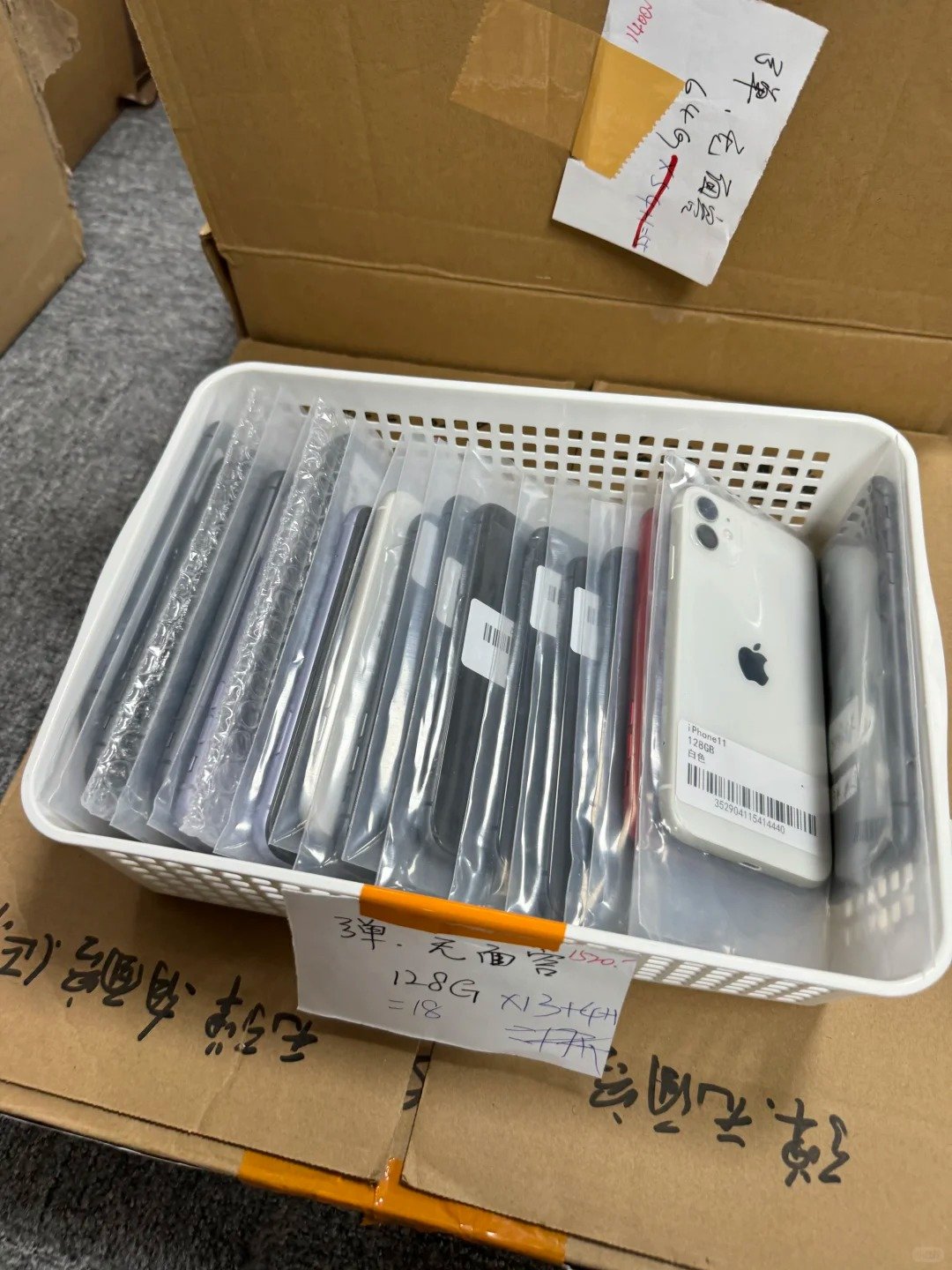
- Request current pre-shipment photos or video that represent the lot.
- Agree a sample-testing method and model/grade coverage.
- Write cosmetic, functional, battery, and documentation tolerances.
- Inspect promptly on receipt and reconcile identifiers.
- Document discrepancies with photos, test notes, and the manifest reference.
- Submit claims within the agreed window using the agreed evidence.
Match Refurbished Stock to Your Resale Channel
- Budget retail: disclosed used or lower-grade stock with price-aligned battery and cosmetic rules.
- Online resale: consistent photos, clear condition language, and a support plan.
- Export distribution: manifest-backed batches with compatible regional variants.
- Repair-market resale: known condition and repair disclosure that supports technical evaluation.
- Premium retail: tighter grade, battery, parts, and warranty requirements.
The best lot is the one whose condition, price, documentation, and warranty match the promises made by the resale channel.
Red Flags When Buying Refurbished iPhones
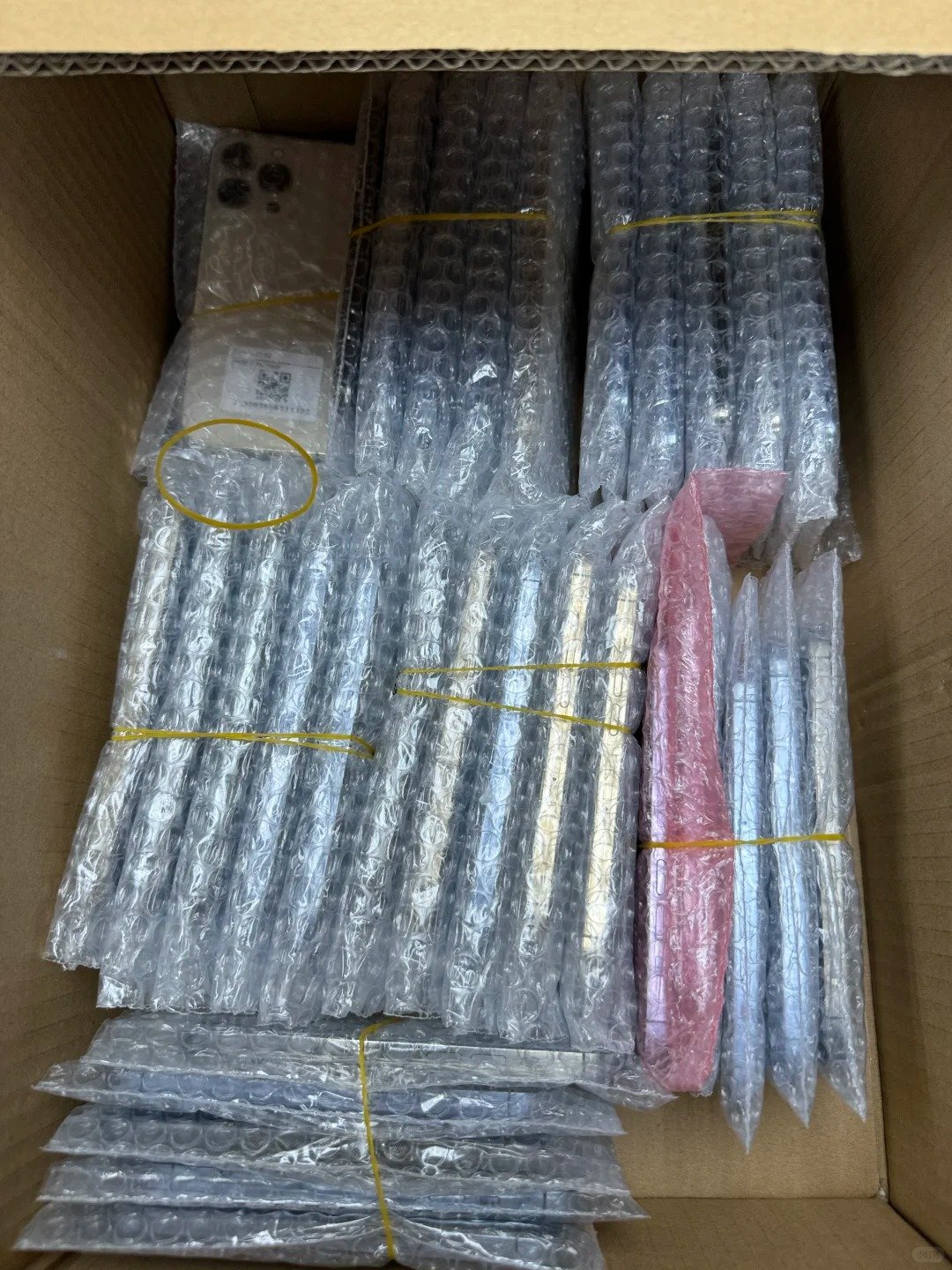
One red flag does not prove that every unit is unsuitable, but it is a reason to slow down and ask for evidence. Reliable sourcing becomes easier when the buyer can separate a normal exception from a missing process.
- No written definition of refurbished.
- No battery policy.
- No testing report or process description.
- Unclear replacement-part policy.
- Missing IMEI or serial-number list.
- Activation Lock or remote-management warning.
- Inconsistent photos and grade claims.
- Unrealistically low pricing.
- No warranty or unclear returns.
- Seller discourages inspection or documentation.
Pause the transaction when…
- the seller cannot reconcile the offered devices with a manifest;
- an ownership, blacklist, carrier, or remote-management issue is unresolved;
- the terms change after inspection questions are asked; or
- the claimed grade, battery range, parts disclosure, and price do not align.
Frequently Asked Questions About Refurbished iPhones

Short answers for practical screening. The seller’s written specification remains the deciding document for a particular device or lot.
What does refurbished iPhone mean?
It usually means a previously owned or returned iPhone was processed for resale. The exact inspection, repair, battery, parts, grading, and warranty rules depend on the seller.
Is a refurbished iPhone the same as a used iPhone?
No. Both can be pre-owned, but refurbished normally implies a stated resale process. Verify that process rather than assuming it is universal.
Are all refurbished iPhones repaired?
No. Some need repair, while others may be cleaned, tested, graded, and resold without a repair. Ask what was done to the exact unit or lot.
Does refurbished mean the iPhone has a new battery?
No. A new battery is only promised when the provider states it. Check the seller’s policy, Battery Health information, and disclosure.
Does refurbished mean genuine Apple parts were used?
No. Part origin varies with the provider. Ask for the parts policy and review Parts and Service History where available.
Is Apple Certified Refurbished different from third-party refurbished?
Yes. Apple Certified Refurbished follows Apple’s stated program; third-party stock follows the independent seller’s own process and terms.
Can a refurbished iPhone have a replaced screen?
Yes. A replaced screen can be part of a refurbishment. It should be disclosed and assessed through function testing, part information, price, and warranty.
How can I check iPhone Parts and Service History?
On supported models, open Settings, General, then About. Availability and shown information vary by model and repair history.
Can I buy a refurbished iPhone with Activation Lock?
No. Do not buy or recommend bypassing it. The rightful owner or authorized organization must remove the lock before normal resale.
What battery health should a wholesale buyer request?
Request a written threshold or measured range, test timing, tolerance for mixed lots, and the process for below-standard units.
Is Grade A refurbished iPhone always better than Grade B?
Not automatically. The labels usually describe appearance and vary by seller. Functional testing, battery, locks, and documentation remain separate checks.
What documents should come with a refurbished iPhone wholesale order?
Request a manifest, grade definition, test process, battery policy, repair disclosure, lock status, warranty, and claims terms.
What warranty should I expect?
There is no universal term. Confirm duration, coverage, exclusions, claim steps, freight responsibility, and remedy in writing.
Are refurbished iPhones suitable for resale?
Yes, when their condition and legal status are verified and the disclosure, price, and support terms match the resale channel.
| Question area | Most important check | Document or screen to review |
|---|---|---|
| Condition | Written grade plus function | Grade guide and inspection record |
| Battery | Threshold or measured result | Battery policy and Battery Health screen |
| Parts | Repair and part-origin disclosure | Parts and Service History where available |
| Ownership and network | Setup readiness and stated carrier status | Manifest, setup flow, and lawful checks |
| After-sales | Claim remedy and timing | Warranty and return terms |
Final takeaway
Final Takeaway: Buy the Process, Not Just the Label
Refurbished describes a process, but the depth and quality of that process vary. Apple Certified Refurbished and third-party refurbished products should not be treated as identical.
Five-point decision checklist
- Confirm the written test and grading process.
- Set a battery standard and require repair/parts disclosure.
- Verify lawful identity, ownership, and carrier status.
- Match the price to condition, warranty, and return risk.
- Document acceptance rules before shipping or payment.
Best practice for buyers
- Keep test records, battery standards, parts disclosure, legal status, grading definitions, warranty, and return terms together.
- Use samples and incoming inspection for wholesale lots.
- Treat a lower purchase price as valuable only when condition and risk are understood.
Qualified B2B buyers can contact HQB for refurbished iPhone inventory details, grading information, battery standards, and wholesale terms.
Talk to HQB
Request Refurbished iPhone Wholesale Details
Tell HQB the models, quantities, grades, battery requirements, and destination market you need. Contact: sales@usedphonehqb.com.

Published: •Last updated:
Author: HQB Editorial Team • Category: Used iPhone Wholesale Guide • Reading time: 12–14 minutes
Related guides
Related Articles
 Comparison guide
Used vs Refurbished iPhone: What’s the Difference?
Compare ownership history, repairs, battery expectations, parts disclosure, testing, grading, warranty, and the questions that make each device suitable for a particular resale channel.
Read the guide Testing guide
How Are Used iPhones Tested Before Wholesale?
See the practical device checks that help wholesale buyers evaluate displays, cameras, charging, connectivity, battery condition, parts history, and ownership status before inventory ships.
Read the guide Inspection guide
How to Check a Used iPhone Before Buying
Use a step-by-step inspection approach for condition, battery health, identifiers, carrier status, Activation Lock, parts information, and core functionality before accepting a device.
Read the guide