

1. Factory Unlocked vs Officially Carrier Unlocked
A factory unlocked iPhone was sold without a restriction to one carrier. An officially carrier-unlocked iPhone was released later through the original network provider’s eligible process. For wholesale, the current verified status and the supporting record matter more than the origin story alone.
| Unlock type | Typical origin | Commercial advantage | Verification requirement |
|---|---|---|---|
| Factory unlocked | Sold unlocked from the beginning | May suit compatible carriers | Check setting and model variant |
| Officially carrier unlocked | Original provider release | Can broaden buyer choice | Record current status |
| Carrier locked | Provider restriction remains | May fit only a defined channel | Disclose or exclude |
| Unknown lock history | Documentation incomplete | No reliable advantage | Pause until resolved |
- The current verified status matters more than a vague marketing label.
- Do not describe third-party bypasses or unofficial lock-removal methods.
- Apple cannot unlock a carrier-locked iPhone; the original network provider handles eligible carrier unlocking.

2. Why Unlocked iPhones Matter for Wholesale Buyers
Unlocked inventory may help resellers serve a broader group of compatible carriers and buyers. It can reduce some customer uncertainty, but every listing still needs accurate model, network, SIM, and device-status information.
| Resale benefit | Why it may help | Important limitation |
|---|---|---|
| Wider potential buyer pool | More compatible carrier options | Compatibility is not universal |
| Easier carrier choice | Customer may select eligible network | Provider terms still apply |
| Cross-border resale flexibility | Can suit some export channels | Bands and rules vary |
| Faster customer decision-making | Clear status reduces questions | Status must be documented |
| Lower listing confusion | Precise descriptions help buyers | Do not overstate fit |
| Broader business deployment use | May fit managed-device needs | Verify local service requirements |
When Unlocked Inventory May Fit Your Resale Strategy
- Your customers use several compatible carriers.
- You can identify model variants and SIM/eSIM configurations accurately.
- Your team checks status, identity, functionality, and incoming condition separately.
- Your listings explain compatibility without promising universal coverage.

3. Unlocked Does Not Mean Globally Compatible
Network bands, region-specific hardware, physical SIM support, eSIM support, and carrier certification can vary. A device can be unlocked and still be a poor fit for a particular market, carrier environment, or customer group.
| Compatibility factor | What to verify | Why it matters |
|---|---|---|
| Exact model number | Recorded hardware variant | Starting point for compatibility |
| Destination-country bands | Local network requirements | Service suitability |
| LTE and 5G support | Supported technologies | Customer expectations |
| Physical SIM tray | Tray configuration | Local SIM practices |
| eSIM capability | Device configuration | Carrier activation options |
| Dual-SIM configuration | Variant-specific support | Buyer workflow |
| Carrier compatibility | Destination provider fit | Usability after sale |
| Emergency-service requirements where applicable | Local device rules | Market compliance |
| Local device-registration requirements where applicable | Destination obligations | Lawful resale planning |
Questions to Ask Before Exporting Unlocked iPhones
- Which exact variants do destination carriers support?
- Do buyers expect physical SIM, eSIM, or a combination?
- Are network-band, registration, tax, safety, or consumer rules relevant?
- How will the configuration be stated clearly in the listing?

4. How to Verify Carrier-Lock Status Properly
Carrier-lock verification should be a legitimate device-inspection step and documented separately from all other checks. Do not infer the result only from the original sales region, packaging, or supplier claim.
Carrier-Lock Verification Checklist
- Power on the device and complete only legitimate inspection steps.
- Open Settings.
- Go to General > About.
- Find Network Provider Lock or Carrier Lock.
- Record the displayed status.
- If “No SIM restrictions” appears, record the device as not restricted to one carrier.
- Match the result to the supplier manifest.
- Record any mismatch before accepting or listing the unit.
| Verification point | What to record | Why it matters |
|---|---|---|
| Settings field | Displayed carrier-lock wording | Direct device evidence |
| Manifest status | Supplier’s stated result | Supports reconciliation |
| Model number | Exact variant | Separates status from compatibility |
| Inspection date | When result was checked | Supports receiving records |
| Exception note | Mismatch or unavailable status | Guides claim handling |
This check does not replace IMEI, Activation Lock, or network-compatibility verification.

5. IMEI, Serial Number, and Device Identity Checks
A wholesale buyer needs a complete device identity record. Carrier status is one field in that record; it is not proof of clean IMEI status, valid ownership history, storage capacity, or correct regional configuration.
| Identity field | Why it matters | Buyer action |
|---|---|---|
| IMEI | Unique device identifier | Match lawful records |
| IMEI2 where applicable | Second identifier on some units | Record when present |
| Serial number | Additional unit identity | Match manifest |
| Model name | Product description | Confirm unit |
| Model number | Regional hardware variant | Check market fit |
| Storage capacity | Configuration and resale value | Verify in settings |
| Color | Inventory planning | Record accurately |
| Regional version | Compatibility context | Match destination requirement |
| Supplier lot number | Batch traceability | Keep with receiving record |
Manifest Fields for Unlocked iPhone Wholesale Orders
- Per-device IMEI or serial number, model, storage, color, and variant.
- Carrier-lock, Activation Lock, battery, grade, test, and parts-status fields.
- Quantity, lot number, warranty, return, delivery, and exception terms.
- Do not accept missing, duplicated, mismatched, or unexplained device identifiers.

6. Activation Lock, Ownership, and Resale Eligibility
Activation Lock must be cleared by the legitimate account owner before resale. An unlocked carrier status does not change an unresolved account lock, unclear ownership, or incomplete device record.
| Status | Meaning for wholesale resale | Required action |
|---|---|---|
| No Activation Lock issue found | Can proceed to other checks | Record inspection result |
| Device asks for a previous owner’s Apple Account | Not resale-ready | Do not accept unresolved unit |
| Ownership status is unclear | Creates legal and commercial risk | Pause purchase |
| Carrier status is unlocked but account status is unresolved | Still not resale-ready | Apply written remedy |
| IMEI status is clean but activation status is unresolved | Still not resale-ready | Do not list or ship |
- Do not buy, list, ship, or attempt to resell devices with unresolved Activation Lock.
- Do not provide lock-removal or bypass instructions.
- Define written supplier remedies for any account-locked device found during inspection.

7. Evaluate SIM, eSIM, and Regional Version Requirements
Physical SIM and eSIM configurations can affect resale suitability. Record the actual configuration and regional variant instead of assuming that every unlocked iPhone offers the same activation options.
| Configuration | Potential buyer fit | Main question | Reseller action |
|---|---|---|---|
| Physical SIM | Markets using removable SIM | Tray and local support? | List configuration clearly |
| eSIM | Digital-SIM environments | Carrier supports activation? | Verify destination support |
| Dual physical SIM where applicable | Two-line physical users | Exact variant support? | Record model number |
| Physical SIM plus eSIM | Flexible buyer profiles | Provider capabilities? | Explain accurately |
| eSIM-only models | eSIM-ready markets | Physical SIM needed locally? | Target suitable channels |
| Region-specific variants | Defined market use | Bands and regulatory fit? | Check before import |
Before Buying Unlocked iPhones for an International Market
- Confirm the destination carrier environment.
- Confirm physical SIM and eSIM expectations.
- Verify the exact model number.
- Check supported bands and local requirements.
- Make the configuration clear in listings and manifests.

8. Battery, Grade, and Functionality Still Matter
An unlocked iPhone can still be a poor wholesale purchase if its battery, grade, functions, repair history, or documentation do not meet the written specification. Carrier status belongs in the quality-control record beside—not above—these checks.
| Quality area | Why it matters | What to verify |
|---|---|---|
| Cosmetic grade | Sets buyer expectation | Written criteria and images |
| Battery condition | Affects runtime | Evidence and policy |
| Display and touch | Core daily use | Functional test |
| Cameras | Photo and video use | Front and rear test |
| Speaker and microphone | Calls and media | Audio test |
| Charging | Basic usability | Charging test |
| Wi-Fi and Bluetooth | Connectivity | Agreed test scope |
| Face ID or Touch ID | Feature disclosure | Biometric result |
| Liquid-damage indicators | Hidden defect risk | Inspection notes |
| Parts and repair history | Transparency and service planning | Supplier disclosure |
An Unlocked iPhone Can Still Be a Poor Wholesale Purchase If…
- The device has unresolved ownership or status concerns.
- The model variant does not fit the destination market.
- Battery, function, grade, or repair evidence does not meet the agreement.
- The manifest cannot match devices to the quoted lot.

9. Compare Unlocked iPhone Wholesale Quotes Correctly
Buyers should compare matched specifications, not just the price difference between “unlocked” devices. A lower quote can describe a different model number, grade, battery condition, test standard, return scope, or compatibility profile.
| Quote factor | Supplier A | Supplier B | What must match |
|---|---|---|---|
| Exact model | Record offer | Record offer | Same model |
| Model number | Record variant | Record variant | Same regional fit |
| Storage capacity | Record capacity | Record capacity | Same configuration |
| Grade definition | Attach standard | Attach standard | Written criteria |
| Battery condition | Record evidence | Record evidence | Same threshold |
| Function-test status | Record scope | Record scope | Same tests |
| Carrier-lock status | Record result | Record result | Same status evidence |
| Activation Lock status | Record process | Record process | Resolved condition |
| IMEI or serial manifest | Record method | Record method | Comparable traceability |
| SIM/eSIM configuration | Record design | Record design | Same buyer fit |
| Regional version | Record variant | Record variant | Same market fit |
| Quantity | Record units | Record units | Same scale |
| Warranty scope | Record terms | Record terms | Same coverage |
| Return terms | Record policy | Record policy | Same claim protection |
| Delivery terms | Record scope | Record scope | Same delivery basis |
| Estimated landed cost | Calculate total | Calculate total | Same assumptions |
Estimated landed cost equals purchase cost plus shipping, taxes or duties where applicable, payment charges, inspection cost, repair allowance, warranty allowance, and handling cost.
10. Use a Sample Order Before Scaling
Test orders help validate supplier identity, documents, carrier status, model fit, condition, and response to exceptions before volume is increased. Each later lot still needs the same incoming checks.
| Sample-order step | What to inspect | What it reveals |
|---|---|---|
| Supplier identity | Invoice and payment consistency | Trading discipline |
| Manifest completeness | Required fields present | Record quality |
| Carrier-lock accuracy | Settings result versus record | Status reliability |
| IMEI or serial match | Unit versus manifest | Traceability |
| Activation Lock status | Legitimate setup readiness | Resale eligibility |
| Model and region match | Variant versus order | Market fit |
| SIM/eSIM configuration | Actual hardware design | Compatibility accuracy |
| Grade consistency | Condition versus terms | Cosmetic reliability |
| Battery condition | Evidence versus agreement | Quality consistency |
| Functional quality | Agreed test scope | Test reliability |
| Response to exceptions | Claim handling | Long-term fit |
From First Unlocked iPhone Sample Order to Repeat Bulk Purchasing
- Agree the complete buying specification and evidence requirements.
- Receive a controlled sample with a manifest.
- Inspect every agreed status and functional field.
- Document exceptions and review the supplier remedy.
- Scale only when performance is repeatable.

11. Build an Unlocked iPhone Inventory Strategy
Resellers can build a balanced plan by treating unlocked inventory as several distinct configurations. Prior sales, customer questions, model-and-configuration pairs, and post-sale issues should guide the next purchase order.
| Inventory purpose | Device configuration to evaluate | Target buyer | Main caution |
|---|---|---|---|
| Mainstream local resale | Compatible local variants | Everyday buyers | Verify carrier environment |
| Premium resale | Higher-tier model and storage | Feature-focused buyers | Do not overlook condition |
| Export resale | Destination-compatible variant | International channel | Check bands and obligations |
| eSIM-focused market | eSIM-supported configuration | Digital-SIM users | Confirm carrier activation |
| Physical-SIM-focused market | Physical tray configuration | Traditional SIM users | State tray design |
| Business-device deployment | Defined model and status mix | Managed-device clients | Check workflow and support |
| Test inventory for a new region | Controlled mixed lot | New channel | Measure actual outcomes |
Inventory Planning Workflow
- Define destination-market requirements.
- Review prior sales and customer questions.
- Identify successful model-and-configuration pairs.
- Purchase a controlled mixed lot.
- Track returns, activation issues, and days to sell.
- Adjust the next purchase order.
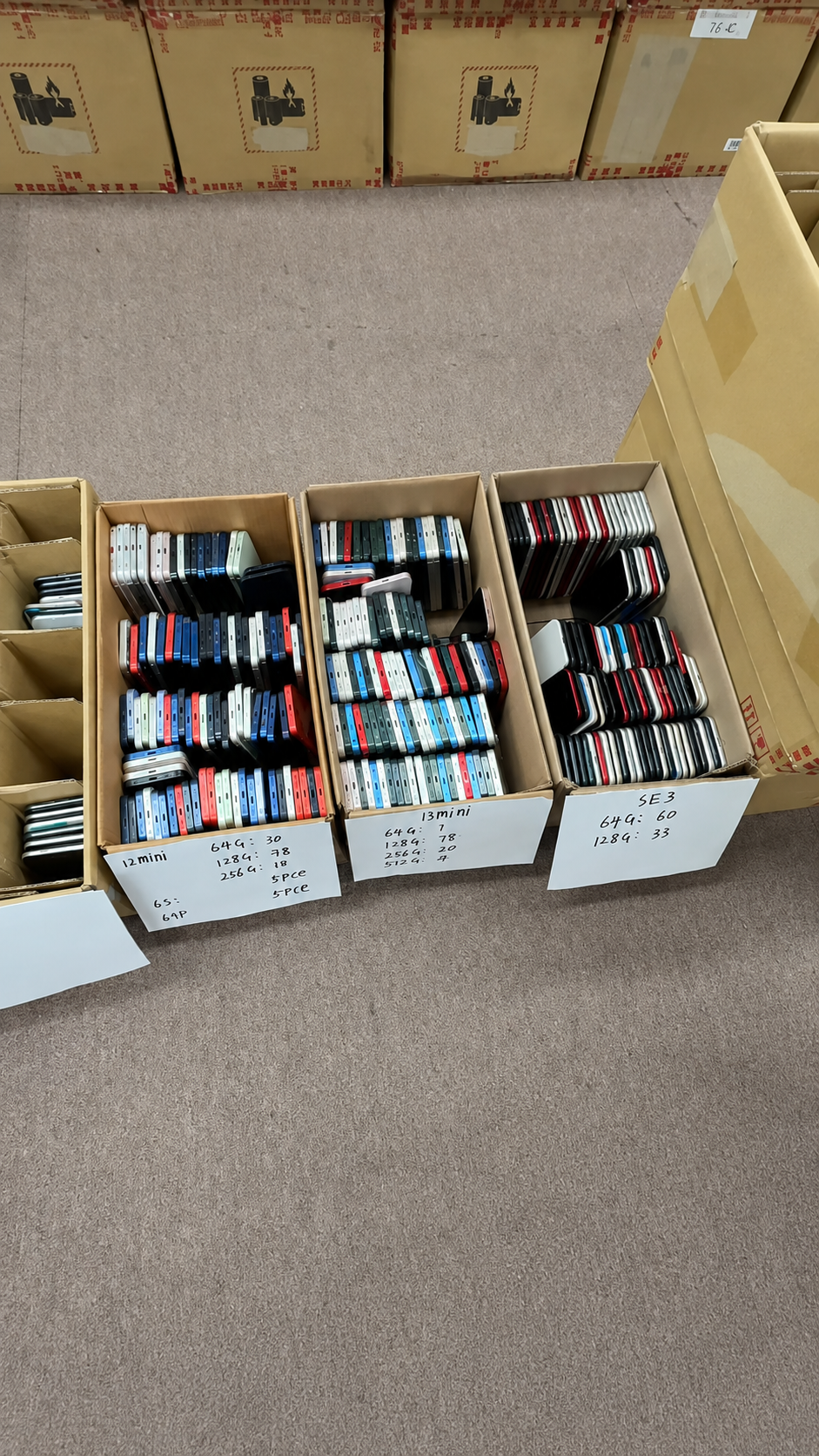
12. Final Buyer Checklist
Supplier verification
- Confirm legal company identity.
- Match address, invoice, and payment details.
- Request written lock-status definition.
- Review manifest and sample process.
- Agree return and dispute terms.
Device identity and lock verification
- Request a per-device manifest.
- Match IMEI or serial records.
- Verify carrier lock in Settings.
- Check Activation Lock readiness.
- Record every exception promptly.
Compatibility and quality verification
- Confirm model number and regional compatibility.
- Record SIM/eSIM configuration.
- Check bands and local requirements.
- Verify battery and functional tests.
- Review grade and parts information.
Commercial and acceptance verification
- Compare matching quotes and landed cost.
- Confirm quantity and delivery terms.
- Place a controlled sample order.
- Document incoming inspection evidence.
- Track supplier claim performance.