
Practical buyer guide
Grade B Usually Means Visible but Manageable Cosmetic Wear

Grade B usually signals evidence of ordinary prior use without severe cosmetic damage. The exact level of acceptable wear is set by the supplier, not by a universal grading authority.
Typical Grade B Cosmetic Expectations
| Area | Often acceptable | Usually not acceptable | Buyer check |
|---|---|---|---|
| Screen | Faint marks or light scratches | Cracks, deep gouges, display faults | View powered on and off |
| Frame edges | Light scuffs and small edge wear | Bends or sharp, severe dents | Inspect each rail and corner |
| Back glass | Light surface marks | Cracks or loose glass | Check under direct light |
| Camera lenses and surround | Minor surround wear | Cracked, hazy, or chipped lens | Test photos and video |
| Buttons | Light cosmetic rub marks | Loose or non-responsive controls | Test every button |
| Charging port area | Minor finish wear | Loose port or exposed damage | Test cable connection |
| Overall finish | Clearly used but presentable | Structural or undisclosed severe damage | Compare to written standard |
Common Marks Buyers May See
- Faint screen marks visible at an angle.
- Light scratches on the display, frame, or back panel.
- Minor scuffs around corners and frame edges.
- Small edge wear from normal case-free use.
- Light back-panel marks that do not affect integrity.
- Subtle discoloration or finish variation consistent with prior use.
What Should Not Be Hidden Inside Grade B
- Cracked display
- Deep screen gouges
- Bent housing
- Broken camera lens
- Loose charging port
- Swollen battery
- Significant liquid damage
- Undisclosed functional defect
Grade B Is Not a Universal Industry Standard

One supplier may call the same appearance Grade B, Good, or Very Good. The commercial label is useful only when its written scope, inspection method, and exceptions are clear.
Why Grade B Definitions Differ
- Sourcing channel and the condition of inbound devices.
- Target resale market and buyer expectations.
- Inspection method and lighting used during grading.
- Cosmetic tolerance for scratches, scuffs, and edge wear.
- Local market norms and returns policy.
- Warranty policy and how the seller separates functional testing.
How to Compare Grade B Across Suppliers
| Comparison point | Question for supplier | Evidence to request | Why it matters |
|---|---|---|---|
| Screen marks | What marks are allowed? | Real close-up photos | Sets presentation expectation |
| Frame wear | Are dings or paint loss allowed? | Grade guide and sample | Controls resale description |
| Back glass | Are any cracks accepted? | Written exclusion list | Protects structural condition |
| Battery policy | What threshold or range applies? | Test data and lot rule | Grade does not answer this |
| Repair history | What is disclosed? | Parts records where available | Supports accurate pricing |
| Warranty | What faults are covered? | Terms and claim process | Defines commercial risk |
| Return coverage | What is the acceptance window? | Written return policy | Controls exception handling |
Written Standards Protect Both Buyer and Seller
- They create consistent grading across receiving teams.
- They support accurate pricing for wear level and risk.
- They help reduce avoidable return rates.
- They make claims handling faster and more objective.
- They give resellers a reliable basis for customer-facing descriptions.
Grade A vs Grade B vs Grade C iPhones

Grades should help a buyer position stock, not replace inspection. A practical range usually separates cosmetic presentation while keeping functional and legal-status checks independent.
| Point | Grade A | Grade B | Grade C |
|---|---|---|---|
| Overall appearance | Very clean under stated rules | Clearly used, resale-acceptable | More obvious wear |
| Screen condition | Minimal visible marks | Light marks may be allowed | Heavier marks may be accepted if stated |
| Frame condition | Limited cosmetic wear | Minor scuffs or dings possible | Pronounced cosmetic wear possible |
| Back-glass condition | Clean presentation | Normal-use marks possible | Visible wear disclosed |
| Scratch visibility | Low | Moderate but manageable | More noticeable |
| Typical customer | Premium or image-sensitive | Value-focused mainstream | Budget or repair-aware |
| Resale positioning | Higher presentation tier | Honest value tier | Low-cost, clearly disclosed tier |
| Expected price position | Usually highest | Usually below Grade A | Usually lowest |
| Documentation requirement | High | High | High, with clearer exceptions |
Why Grade B Often Offers Strong Value
- Buyers can accept modest visual wear in exchange for a better model.
- It may allow more storage within the same budget.
- It can lower purchase cost without accepting hidden functional faults.
- It suits honest value positioning for mainstream resale.
When Grade A Is Worth the Premium
- Gift buyers who expect cleaner presentation.
- Premium retail stores with appearance-sensitive customers.
- Online channels that require near-pristine listing photos.
- Corporate or image-sensitive replacement programs.
When Grade C May Be Appropriate
- Low-budget consumer markets with clear condition disclosure.
- Repair channels that can evaluate cosmetic or component work.
- Backup-device programs where cosmetics are secondary.
- Lower-cost resale where the condition is accurately described.
Cosmetic Grade and Functional Condition Must Be Separate

A Grade B iPhone may look used and work perfectly. Conversely, a cleaner-looking phone can still have a hidden fault, which is why cosmetic grading and functional testing need separate records.
Functional Test Checklist
- Display brightness, pixels, and touch response
- Cameras, flash, video, and autofocus
- Face ID or Touch ID where applicable
- Speakers and microphones
- Buttons and vibration
- Charging port and cable charging
- Wireless charging where applicable
- Wi-Fi and Bluetooth
- Cellular connection
- GPS and sensors
- Battery charging behavior
Separate Cosmetic and Functional Records
| Test area | Cosmetic result | Functional result | Pass or fail rule | Evidence retained |
|---|---|---|---|---|
| Display | Light marks noted | Touch and pixels tested | Must meet stated functional test | Photo and test record |
| Camera | Surround wear noted | Focus and video tested | All required modes work | Sample images or log |
| Frame / buttons | Scuffs noted | Controls tested | Responsive without looseness | Inspection checklist |
| Battery | Not a cosmetic grade item | Charging behavior tested | Meets agreed policy | Battery record |
Why This Matters for Resale
- Accurate descriptions prevent condition misunderstandings.
- Clear records reduce buyer disputes and returns.
- Reliable testing improves retailer and end-buyer trust.
- Separated records make inventory control more precise.
Battery Health Is Not Part of the Grade B Label

Battery health needs its own disclosure and acceptance rule. Grade B does not independently promise a battery percentage, original battery, charging performance, or remaining service life.
What Battery Health Can Indicate
- Maximum Capacity is a reference point, not a full performance diagnosis.
- Performance behavior may reveal shutdowns, heat, or charging concerns.
- Charging performance should be checked with a compatible cable and power source.
- A single percentage does not replace an agreed test and disclosure process.
Common Battery Scenarios
| Scenario | Buyer impact | Required disclosure | Recommended action |
|---|---|---|---|
| Original battery above agreed threshold | Supports stated lot policy | Test date and reading | Keep in the documented range |
| Original battery below agreed threshold | May affect resale price | Exception clearly noted | Separate, reprice, or replace as agreed |
| Replaced battery | Part history may affect buyer preference | Replacement status and evidence | Disclose and test charging behavior |
| Battery condition not stated | Unknown commercial risk | Missing policy must be resolved | Pause until criteria are agreed |
Battery Requirements for Wholesale Lots
- Agreed threshold or range
- Test date and test method
- Mixed-lot tolerance
- Replacement-battery disclosure
- Sample testing process
- Handling of exceptions and claims
Parts, Repairs, and Grade B iPhones

Grade B appearance does not reveal whether a phone has been repaired or which replacement parts were used. Repair history should be reviewed and disclosed independently wherever evidence is available.
How to Review Parts and Service History
On supported iPhone models, Parts and Service History can be reviewed in Settings > General > About. Availability varies by device model and repair history, so its absence is not proof that no repair occurred.
| Status | What it can indicate | What not to assume | Recommended buyer response |
|---|---|---|---|
| Genuine Apple Part | A recognized part status | Full device history or warranty | Record and test the related function |
| Used Part | A previously used component may be present | That performance is guaranteed | Assess against policy and disclose |
| Unknown Part | Part recognition may be limited | The part is unsafe or failed | Inspect, test, and follow lot rules |
| Unverified Part | Information needs more review | A cosmetic grade resolves it | Request disclosure or isolate |
| No visible history | No listed record on that device | No repair ever occurred | Use physical and functional evidence |
Repair Disclosure Checklist
- Battery
- Display
- Cameras
- Rear glass
- Housing
- Charging connector
- Logic board work
Why Grade B Stock Needs Honest Disclosure
- It improves pricing accuracy for a wholesale lot.
- It helps buyers determine appropriate warranty coverage.
- It sets correct customer expectations.
- It supports legal and marketplace resale requirements.
Verify Identity, Activation, Carrier, and Management Status

Cosmetic condition never proves lawful resale readiness. Each device needs identifier controls and legitimate status checks before a buyer accepts it into stock.
IMEI and Serial Number Controls
- Match identifiers to the physical device.
- Confirm model, storage, color, and regional variant.
- Check for duplicate identifiers.
- Retain all receiving and inspection records.
Activation Lock and Apple Account Status
- A Grade B iPhone must be removed from the previous owner’s Apple Account and ready for normal setup.
- Activation Lock must never be bypassed, purchased around, or recommended as a workaround.
- Only the rightful owner can legitimately remove account credentials and associated device controls.
Carrier and Remote-Management Restrictions
| Restriction | Lawful verification | Legitimate resolution | Buyer action |
|---|---|---|---|
| Carrier lock | Review device and carrier status | Carrier-authorized unlock by eligible account holder | Buy only if destination fit is confirmed |
| Blacklist concern | Check permitted status records | Rightful owner or carrier resolution | Quarantine or reject unresolved devices |
| MDM / remote management | Confirm setup status and organization control | Organization removes management legitimately | Do not accept unresolved units |
| Finance restriction | Request lawful seller documentation | Original contractual party resolves it | Pause the transaction |
| Network compatibility | Confirm bands, SIM/eSIM, and region | Use an appropriate approved network | Match to destination market |
Warranty and Returns for Grade B iPhones

Warranty is a commercial commitment, not a cosmetic grade. Grade B buyers need to understand whether visible wear, battery condition, and functional exceptions are covered before stock ships.
| Coverage type | Typical coverage | Best suited to | Main limitation | Questions to ask |
|---|---|---|---|---|
| Manufacturer warranty | Only where still valid and transferable | Eligible devices | Often absent on used stock | Is coverage active and valid? |
| Refurbisher warranty | Defined repair or replacement terms | Refurbished resale programs | Scope varies | Which faults and parts are included? |
| Seller warranty | Supplier’s written coverage | Wholesale purchase orders | May include exclusions | How are claims submitted? |
| DOA-only coverage | Failure-on-arrival window | Low-risk bulk buying | Short acceptance period | What evidence and timing apply? |
| No warranty | No stated post-sale protection | Only risk-aware channels | Buyer carries more risk | What inspection rights exist? |
Before Buying Grade B Stock
- Warranty duration
- Return window
- Claim procedure
- Shipping responsibility
- Battery exclusions
- Liquid-damage exclusions
- Repair, replacement, credit, or refund terms
- Proof required for claims
Why a Lower Grade Needs Clearer Terms
- Visible wear should be understood before a unit is received.
- Battery policy must be separate from the Grade B label.
- Functional exceptions need a defined remedy.
- Clear terms support fair claims on a mixed wholesale lot.
How Wholesale Buyers Should Source Grade B iPhones
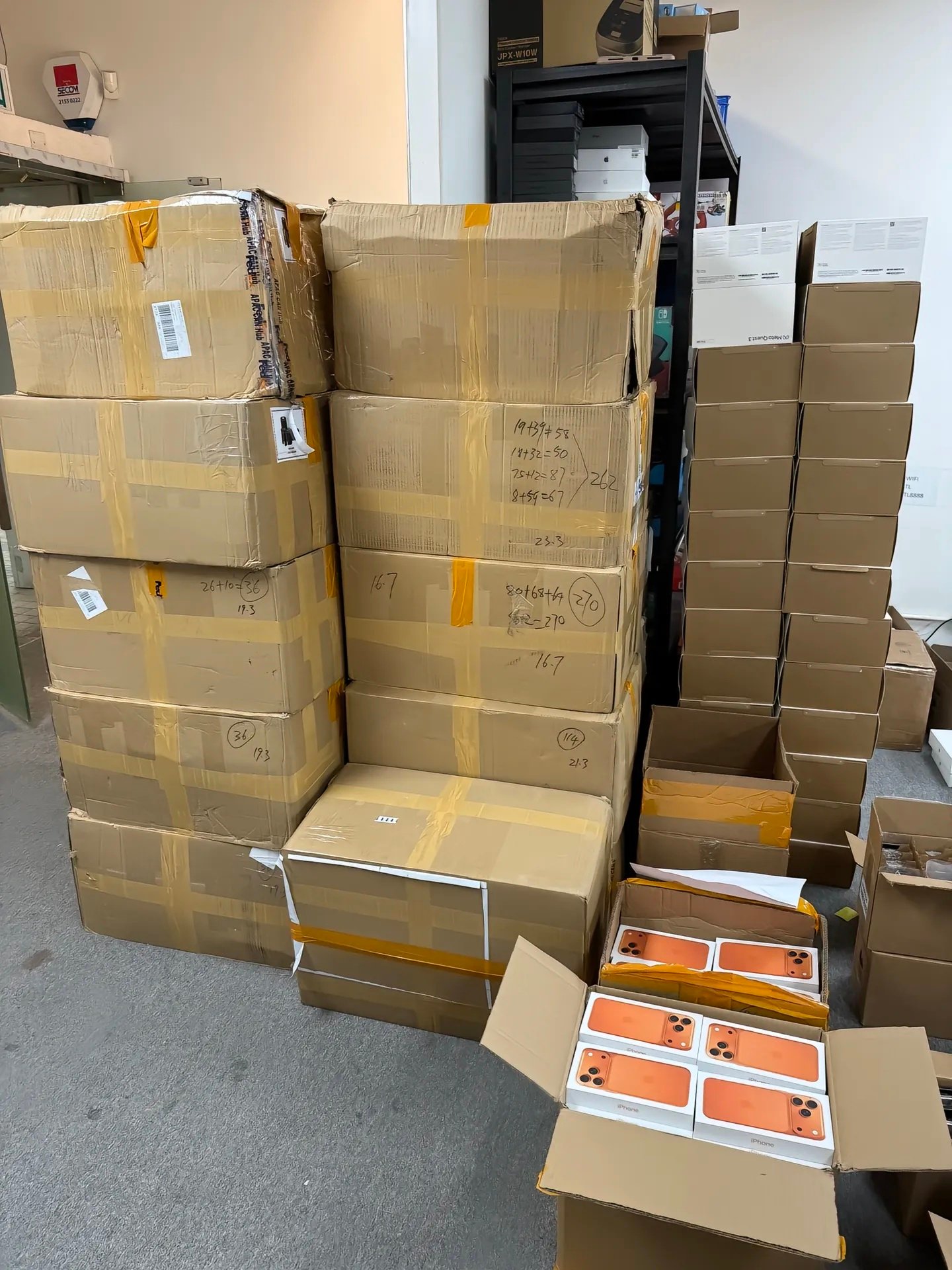
Wholesale Grade B sourcing should begin with a written standard and end with a documented acceptance process. A clear manifest helps buyers compare units, sample test correctly, and route exceptions fairly.
Required Lot Manifest Fields
| Field | Purpose |
|---|---|
| Model | Matches demand and resale plan |
| Storage | Confirms listing and pricing tier |
| Color | Supports retail merchandising |
| Grade | Links each unit to written cosmetic criteria |
| Battery-health range | Shows the agreed separate policy |
| Repair disclosure | Supports accurate resale description |
| Activation and carrier status | Confirms lawful usability requirements |
| IMEI or serial-number list | Provides traceability |
| Quantity | Controls receiving reconciliation |
| Warranty | Defines commercial coverage |
| Price | Connects condition to agreed value |
Sample-Based Acceptance Testing
- Review written Grade B definitions before shipment.
- Match physical devices to the manifest.
- Test a representative sample.
- Record cosmetic and functional discrepancies.
- Separate nonconforming units.
- Submit claims within agreed terms.
Best Sales Channels for Grade B Stock
- Budget retail: transparent value option with clearly stated wear.
- Online resale: use real photos and condition-specific descriptions.
- Export distribution: align grade definition with destination market expectations.
- Repair-market resale: provide honest parts and functional disclosure.
- Business replacement devices: prioritize tested functionality and documented status.
Red Flags in Grade B iPhone Listings

A low price is not a Grade B definition. When evidence is incomplete, pause rather than assuming that cosmetic grade covers every risk.
- No written Grade B definition
- No real device photos
- No battery policy
- No functional-test record
- No repair disclosure
- Missing IMEI or serial-number records
- Activation Lock or remote-management warning
- Photos inconsistent with the listed grade
- Unusually low price without documentation
- Vague warranty or return wording
Pause the Transaction When…
- The supplier cannot explain what Grade B allows and excludes.
- Identifiers, account status, or management status cannot be resolved lawfully.
- Battery, repair, or functional evidence is missing after a reasonable request.
- The acceptance and claims process is not documented.