Grading in practice
How iPhone Grading Works in Practice
1. Why iPhone Grading Matters

Used devices can vary widely even when model, storage, and color match. A repeatable grade creates a shared language for a supplier, receiving team, reseller, and customer.
- Supports transparent pricing.
- Matches stock with target customers.
- Makes bulk inventory easier to sort and list.
- Reduces cosmetic disputes.
- Supports accurate product descriptions.
- Guides quality control after receiving.
- Creates clearer acceptance standards in purchase orders.
2. Understand Why Grades Are Not Universal

Grade A from one supplier may look different from Grade A from another. Strict cosmetic inspection accepts fewer marks; flexible inspection may place similar devices in a higher grade. A supplier’s written grading guide is more important than the letter alone.
| Supplier Practice | Impact on Buyers |
|---|---|
| Strict cosmetic inspection | Fewer marks may be accepted in higher grades |
| Flexible cosmetic inspection | Similar devices may be placed in a higher grade |
| Cosmetic-only grading | Function and battery need separate agreement |
| Combined grading | Buyers must understand every included requirement |
| Mixed-grade lots | Need an agreed ratio and exception allowance |
- Ask for a written grading sheet.
- Request sample images for each grade.
- Confirm display, frame, back-glass, and camera scope.
- Ask whether function and battery are included.
- Place the definition in the purchase order.
3. Grade A and Like New iPhones

Grade A or Like New commonly describes very limited visible wear, but the exact threshold must be defined. It does not mean unused, nor does it remove the need for battery, repair, identity, and carrier checks.
| Inspection Area | Typical Grade A Expectation | Buyer Must Confirm |
|---|---|---|
| Display | Very light or no visible wear | No touch, brightness, or pixel issue |
| Frame | Minor marks only, if any | No bending or deep dents |
| Back glass | Clean appearance | No cracks or separation |
| Cameras | Clear lenses | Focus and functions work |
| Battery | Supplier-specific policy | Actual reading and messages |
| Device status | Separately verified | IMEI, Activation Lock, carrier status |
- Minimal visible marks under stated inspection conditions.
- Clean screen and lenses without cracks.
- Fully functional according to the agreed test list.
- No undisclosed account, carrier, or IMEI issue.
4. Grade B and Good Condition iPhones

Grade B or Good usually allows visible signs of normal use while requiring a device that remains suitable for resale. Define limits for scratches, dents, screen marks, and camera-lens condition instead of expecting every buyer to interpret “Good” the same way.
| Area | Typical Grade B Allowance | Not Automatically Included |
|---|---|---|
| Screen | Light visible scratches | Battery-health guarantee |
| Frame | Minor scuffs or small dings | Unlocked-status guarantee |
| Back glass | Signs of normal use | Repair-history guarantee |
| Cameras | Minor exterior wear | Focus or image-quality guarantee |
| Appearance | Clearly used but resale-acceptable | Functional-test scope |
- Request photos matching the agreed standard.
- State functional requirements separately.
- Disclose battery independently.
- Do not accept undisclosed major cracks.
5. Grade C and Fair Condition iPhones

Grade C often serves value-focused resale, repair, or markets where price matters more than appearance. More visible scratches, scuffs, or dents are common, so the intended customer segment should be chosen before buying.
| Grade C Use Case | Why It May Fit |
|---|---|
| Budget retail | Lower entry price for value-conscious customers |
| Export markets | May suit functional affordability |
| Repair businesses | Can be repaired or cosmetically improved |
| Parts sourcing | Some devices can provide useful components |
| Refurbishment operations | Creates opportunity for rework and regrading |
- Disclose cosmetic imperfections clearly.
- Define the policy for cracks and component defects.
- Document battery health and functional status.
- Price and route stock separately from premium inventory.
6. Grade D, As-Is, and Parts or Repair Devices
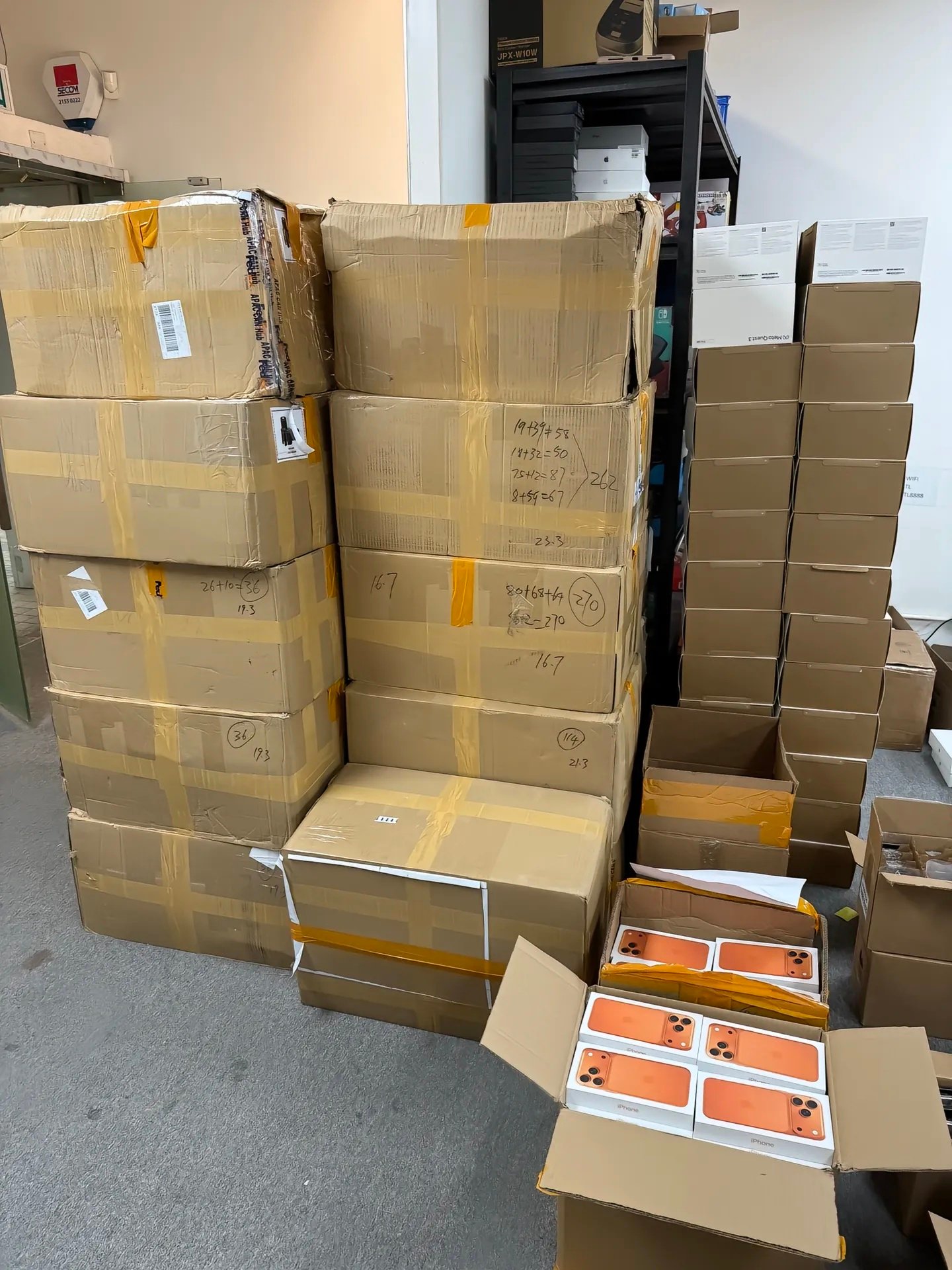
Grade D or as-is stock is not ready-to-sell Grade A, B, or C inventory. It may have major cosmetic or functional defects, be untested, or be intended for component recovery. Separate it physically and commercially from normal resale stock.
| Condition Type | Typical Situation | Suitable Buyer |
|---|---|---|
| Grade D | Major cosmetic or functional defects | Repair specialists |
| As-is | Condition may be untested or mixed | Experienced buyers with inspection capability |
| Parts or repair | Component recovery or restoration | Repair shops and refurbishers |
| Non-working | May not power on or has severe faults | Parts-recovery operations |
- Request fault categories and power-on information.
- Clarify screen, battery, camera, and logic-board issues.
- Plan safety screening, labor, parts, and recovery yield.
- Never market as direct-to-consumer-ready stock.
7. Separate Cosmetic Grade From Functional Testing

A device can look excellent but have hidden functional problems, or look worn but function normally. Grade tells the buyer how the device appears; a functional test tells the buyer what passed at inspection.
- Display brightness, touch response, and pixels.
- Front and rear cameras, focus, flash, and video.
- Face ID or Touch ID where applicable.
- Speakers, microphones, buttons, and vibration.
- Charging port and stable charging.
- Wi-Fi, Bluetooth, mobile network, and GPS as needed.
- Battery heat behavior and software stability.
- Physical signs of liquid damage or swelling.
| Scenario | Cosmetic Grade | Functional Result | Correct Action |
|---|---|---|---|
| Clean phone, failed camera | High cosmetic grade | Functional exception | Repair or claim route |
| Worn phone, passes tests | Lower cosmetic grade | Functional pass | Sell with clear disclosure |
| Good appearance, weak battery | Cosmetic pass | Battery exception | Price or route separately |
| Cracked housing, working phone | Cosmetic exception | Functional pass | Repair, value resale, or parts route |
8. Check Battery Health Separately

Cosmetic grade does not indicate capacity or charging condition. Record Battery Health separately and agree an accepted threshold or disclosed range for wholesale orders.
- Open Settings, Battery, then Battery Health & Charging.
- Record Maximum Capacity where available.
- Review Peak Performance Capability or service messages.
- Test charging behavior.
- Inspect for swelling, heat, or repeated shutdowns.
- Review Parts and Service History where available.
- Keep battery exceptions separate from cosmetic-grade exceptions.
9. Review Parts and Service History

Parts and Service History can add transparency on supported models, but should be considered with full functional testing. It can show certain recorded battery, display, camera, and other repair information.
- Open Settings.
- Tap General.
- Tap About.
- Look for Parts and Service History where available.
- Review listed information.
- Record relevant results for disclosure.
| Status | General Meaning | Buyer Response |
|---|---|---|
| Genuine | A genuine Apple part and process may be recorded | Keep record for transparent resale |
| Used | Part may have been installed in another iPhone | Assess under stock policy |
| Unknown | Part may be unverified, incomplete, non-genuine, or not working | Inspect and treat as an exception if needed |
| No history shown | Feature may not be available | Use other inspection evidence |
10. Check IMEI, Activation Lock, and Carrier Status

A grade letter does not prove a device is ready for lawful resale. Verify identity, ownership, carrier status, and regional compatibility independently for every intended destination.
- Record IMEI and match it to invoice or manifest.
- Confirm the listed IMEI count matches quantity.
- Use lawful market-appropriate reported-status checks.
- Confirm no “iPhone Locked to Owner” during setup.
- Check Carrier Lock in Settings, General, About.
- “No SIM restrictions” indicates an unlocked iPhone.
- Confirm regional model, physical SIM, eSIM, and local carrier compatibility.
- Document and quarantine exceptions.
11. Create a Consistent Grading Process

Repeatable grading protects suppliers and buyers. Use the same inspection conditions and record each result so the grade can be traced to a unit, image set, and functional test record.
| Step | Action | Record |
|---|---|---|
| 1 | Clean and prepare device | Intake reference |
| 2 | Confirm model, storage, color, IMEI | Identity record |
| 3 | Inspect display, frame, back, cameras, ports | Cosmetic notes and photos |
| 4 | Run functional tests | Pass/fail result |
| 5 | Review battery and parts history | Battery and repair notes |
| 6 | Check lock and carrier status | Ownership/network record |
| 7 | Assign cosmetic grade | Final decision |
| 8 | Route approved or exception units | Inventory destination |
12. Put Grading Standards Into the Purchase Order

A written purchase order should define grade, allowable variation, inspection process, and claims procedure before payment. HQB buyers should also independently confirm destination-country rules, import obligations, local network support, and physical SIM/eSIM requirements.
- Exact models, storage, colors, quantities, and prices.
- Grade definitions with cosmetic criteria and agreed grade mix.
- Functional-testing standard.
- Battery-health policy and Parts History disclosure.
- IMEI manifest, Activation Lock, and carrier-status requirements.
- Packaging and shipment requirements.
- Inspection window, defect allowance, and exception process.
- Replacement, credit, return, or refund procedure.