

Overview
Profit Starts with a Complete Device Record
One device record should follow each used iPhone from purchase through resale. The record prevents missed costs and supports clearer pricing decisions. It connects the exact hardware, verification outcome, repairs, sales channel, and retained revenue instead of relying on a generic model average.
Update the record at receiving, after testing, after any repair, and after final sale or other disposition. The aim is practical control: a buyer should be able to explain which facts supported a purchase and why the expected result changed.
Record Before You Price
- Exact model and storage capacity
- IMEI or serial number verification status
- Carrier, activation, and management-lock status
- Cosmetic grade and battery-health reading where available
- Functional test results, repair and parts history
- Accessories, packaging, purchase source, and acquisition cost
- Expected sales channel, actual selling price, and post-sale costs
| Data Point | Profit Impact |
|---|---|
| Model and storage | Define the correct comparison set and buyer demand. |
| Condition and testing | Identify rework, disclosure, and claim exposure. |
| Status verification | Determines whether normal resale is appropriate. |
| Cost record | Supports Fully Loaded Cost per unit. |
| Channel and sale record | Shows Net Sales Revenue actually retained. |
Profit calculation
Define Revenue Before Calculating Profit

Listed price is a position, not proof of retained revenue. Customer sale price is what a buyer agreed to pay. Net Sales Revenue is the amount remaining after relevant discounts, refunds, payment deductions, shipping treatment, or channel costs under the buyer’s own method. Gross Profit compares retained revenue with direct Fully Loaded Cost. Operating Profit and Net Profit may include wider expenses and require a consistent internal treatment.
Use the same definitions across a lot. A team that uses an advertised retail price in one record and retained revenue in another cannot judge which device or channel performed better.
| Term | Meaning | Include in Calculation? |
|---|---|---|
| Listed Price | Public or proposed amount | No, unless achieved and retained. |
| Customer Sale Price | Amount accepted by customer | Yes, as a starting point. |
| Discounts and Refunds | Amounts reducing retained revenue | Yes. |
| Net Sales Revenue | Revenue retained under the selected method | Yes. |
| Direct Device Costs | Costs tied to sale readiness | Yes. |
| Operating Expenses | Wider business expenses | For Operating Profit. |
| Gross Profit | Revenue after direct cost | Yes. |
| Operating Profit | Gross result after applicable operations | For wider analysis. |
| Net Profit | Result after broader treatment | Use with qualified advice. |
Do not calculate profit from an advertised retail price that has not been achieved or retained.
Calculate Fully Loaded Cost

Fully Loaded Cost includes more than the supplier quote. It covers the work and risk required to turn a received unit into a sellable unit for the intended channel. Record costs according to your business method; accounting classification can vary by jurisdiction, entity structure, and adviser guidance.
Do not import another company’s assumptions. A buyer with a different repair route, shipping arrangement, returns exposure, or channel may have a different cost profile for the same model.
| Cost Category | Typical Examples | Check Before Buying |
|---|---|---|
| Acquisition Cost | Verified supplier quotation | What record supports it? |
| Receiving and Inspection | Intake, identity, and condition check | Is time or service recorded? |
| Functional Testing | Camera, screen, charging, biometrics | Is a unit-level result available? |
| Data Erasure and Processing | Approved handling workflow | Is the process required? |
| Repairs and Rework | Labor, diagnostics, corrective work | What units need it? |
| Replacement Parts | Parts used for approved rework | Is disclosure needed? |
| Cosmetic Preparation | Cleaning and presentation work | Does grade support it? |
| Packaging and Accessories | Channel-specific materials | Are they included? |
| Inbound Freight and Insurance | Transport-related inputs | Which lot receives allocation? |
| Duties, Taxes, or Import Charges | Applicable market charges | Confirm qualified treatment. |
| Payment or Channel Fees | Sales route deductions | What is retained? |
| Returns and Claims Reserve | Internal planning allowance | Is it documented? |
| Inventory Carrying Cost | Holding and capital exposure | How long might stock hold? |
| Disposal or Parts Recovery Cost | Alternate disposition handling | What cannot enter resale? |
Formula: Fully Loaded Cost = Acquisition Cost + Processing Cost + Repair Cost + Logistics Cost + Sales-Channel Cost + Risk Reserve + Applicable Allocated Costs.
Use Sellable Units Instead of Purchased Units

A lot may contain devices that need rework, cannot be sold through the intended channel, are returned, or must be separated for parts recovery. Profit should be calculated against Verified Sellable Units, not simply the number of devices received. Otherwise the direct cost on resale-ready units may be understated.
- Receive the lot.
- Verify identity and status.
- Test functions.
- Grade condition.
- Separate sellable, rework, return, quarantine, and parts-recovery units.
- Allocate costs across Verified Sellable Units.
- Review the profit estimate again before pricing.
Formula: Cost per Sellable Unit = Total Allocated Lot Cost ÷ Verified Sellable Units.
| Device Outcome | Treatment | Profit Impact |
|---|---|---|
| Ready for Resale | Enter approved channel | Supports sellable-unit calculation. |
| Requires Rework | Estimate and record corrective cost | Changes Fully Loaded Cost. |
| Return to Supplier | Use documented process | Do not treat as normal sale. |
| Parts Recovery | Separate disposition record | Do not use normal resale revenue. |
| Quarantine for Verification | Hold until status is resolved | Exclude from normal resale. |
| Unsellable Unit | Use compliant disposition path | Review recovery and allocated cost. |
Calculate the Break-Even Selling Price
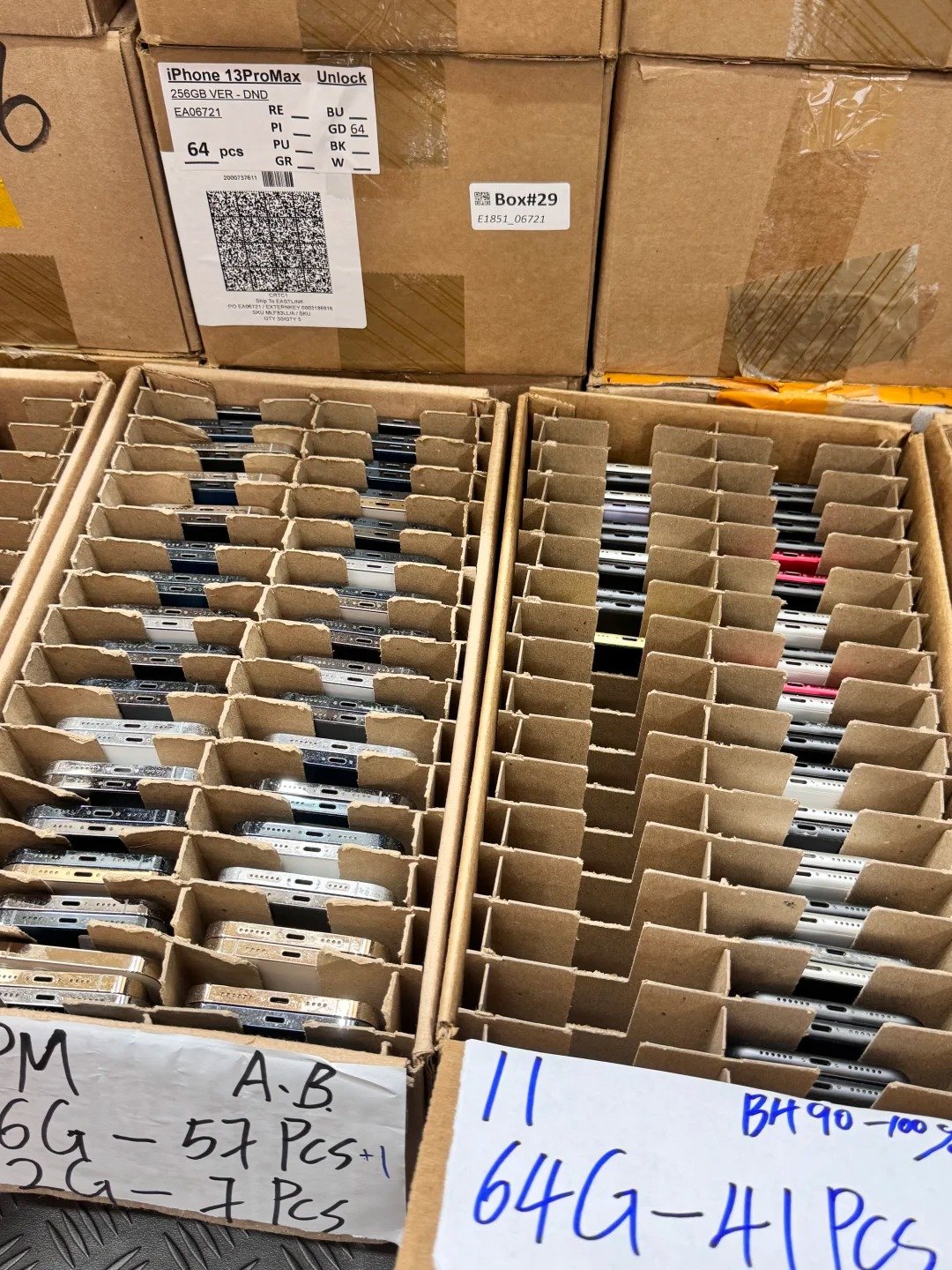
The break-even price is the minimum retained revenue needed to cover the Fully Loaded Cost of a sellable device. It is not automatically the desired selling price or a guaranteed market price. It is a control point: if current evidence cannot support it, the buyer should reconsider the purchase, repair scope, channel, or disposition.
Break-even review should use the same condition and status record used for the market comparison. A clean-looking unit with incomplete testing can produce a misleading result if its repair exposure remains outside the calculation.
| Input | Calculation Role | Buyer Question |
|---|---|---|
| Fully Loaded Cost per Sellable Unit | Core cost reference | Is every direct cost included? |
| Expected Channel Fee | Reduces retained revenue | Which deduction applies? |
| Expected Shipping or Fulfilment Cost | Channel-specific cost | Who bears it? |
| Return or Claim Reserve | Planning allowance | Is the record-based reserve current? |
| Break-Even Price | Cost-covering reference | Can retained revenue exceed it? |
| Current Market Evidence | Tests realistic resale range | Does it match the device? |
| Planned Selling Price | Internal proposed position | Is it supported by both? |
- Is the expected retained revenue above break-even?
- Is the sales comparison based on exact model, storage, condition, and status?
- Are repairs already included?
- Is the resale channel realistic for this device?
- Does the calculation still work if sale takes longer than expected?
Check Market Evidence Before You Buy

Buyers should compare current completed transactions or verified channel evidence instead of relying only on active listings or outdated price assumptions. A comparable must resemble the device being reviewed. Condition, storage, battery state, repair history, network status, and included accessories can change buyer confidence and retained revenue.
Market evidence is not a promise. It is a dated record that helps test whether a planned selling range is credible. Keep the source date, market, channel, and matching criteria with the device record so that another reviewer can understand the decision.
| Comparison Factor | Why It Changes Resale Value | What to Match |
|---|---|---|
| iPhone Model | Different buyer segments | Exact generation and variant |
| Storage Capacity | Changes utility and demand | Exact capacity |
| Cosmetic Grade | Sets appearance expectation | Written grade criteria |
| Battery Condition | Influences confidence | Available reading or disclosure |
| Functional Status | Changes sale readiness | Test outcome |
| Lock and Management Status | Can limit normal resale | Verified status |
| Repair History | Changes disclosure and risk | Available records |
| Included Accessories | Can alter channel presentation | Actual included items |
| Sales Channel | Changes fees and expectations | Intended route |
| Market Location | Changes demand and requirements | Destination evidence |
If the verified market ceiling is below the calculated break-even point, reassess the acquisition price, repair plan, channel, or device disposition.
Price Condition Separately

Two units of the same model can have different resale value and cost exposure. Do not use a single price for every unit in a model group. Cosmetic grade, functionality, battery information, parts history, and status should be recorded separately because each factor can change the required disclosure, rework decision, and sales-channel fit.
| Condition Factor | Effect on Buyer Confidence | Effect on Cost or Price Review |
|---|---|---|
| Screen Condition | Visible-use expectation | Grade or rework review. |
| Housing Condition | Presentation confidence | Condition range review. |
| Camera Function | Core usability | Test or repair requirement. |
| Face ID or Touch ID Function | Feature confidence | Channel and disclosure review. |
| Battery Health | Usage confidence | Accurate record and comparison. |
| Charging Function | Basic resale readiness | Test and rework cost. |
| Water-Damage Indicators | Risk perception | Hold or disposition review. |
| Original or Replacement Parts | Disclosure expectation | Record parts information. |
| Activation Lock Status | Lawful usability | Do not place in normal resale unresolved. |
| MDM Status | Management risk | Verify before channel placement. |
Do Not Assume
- Do not assume a clean exterior means a fully functional device.
- Do not assume identical model names mean identical resale value.
- Do not assume a repaired device has the same cost profile as an untouched unit.
- Do not offer unresolved lock-status devices through a normal resale channel.
Add Channel Costs to the Calculation

Direct retail, online sales, wholesale resale, export distribution, and project supply can have different cost structures. The revenue retained after channel-specific costs is more useful than the headline selling price. Choose the sales channel first, then include its realistic costs and buyer expectations in the record.
| Sales Channel | Common Cost Considerations | Review Question |
|---|---|---|
| Local Retail | Presentation, local support, store handling | What service expectation applies? |
| Online Direct Sale | Payment, shipping, return handling | What revenue is retained? |
| Marketplace or Platform Sale | Channel fees, disputes, fulfilment | Which deductions apply? |
| Wholesale Resale | Lot consistency and documentation | Does grade match the quote? |
| Export Distribution | Logistics and destination requirements | What is the landed cost method? |
| Corporate or Project Supply | Status evidence and specification fit | What condition record is required? |
Build a Return and Rework Reserve
A reserve is an internal planning allowance for foreseeable post-purchase costs. It should be based on documented historical results, not arbitrary optimism. A reserve helps compare potential lots using a consistent method, particularly when similar devices have shown repeat repair, grading, delivery, or claim exposure.
The reserve is not a prediction that a return, repair, or claim will happen. It is a transparent way to avoid treating all received units as cost-free after the supplier invoice. Review the internal basis when testing results, market conditions, or channel rules change.
| Risk Area | Example Trigger | Internal Planning Response |
|---|---|---|
| Functional Failure | Test issue after receiving | Record rework or alternate disposition. |
| Cosmetic Regrading | Actual appearance differs from record | Update grade and channel range. |
| Battery Complaint | Battery disclosure concern | Review record and reserve basis. |
| Shipping Damage | Transit exception | Record packaging and logistics exposure. |
| Return Request | Customer return route | Track retained revenue impact. |
| Buyer Claim | Condition or function mismatch | Check original inspection record. |
| Price Decline During Holding Period | Current evidence moves lower | Refresh revenue estimate. |
| Unresolved Device Status | Lock or management uncertainty | Quarantine and verify lawfully. |
A reserve supports better internal forecasting. It does not guarantee that a future return, repair, or claim will occur.
Separate Gross Margin from Net Profit
Gross Profit measures revenue retained after direct device costs. Gross Margin expresses that amount as a share of Net Sales Revenue. Operating Profit considers applicable wider expenses, while Net Profit may include further accounting, financing, tax, and other treatment. A device can show a positive Gross Profit while the wider operation remains unprofitable after overhead.
Use each metric for its intended purpose. Gross Margin can help compare device-level decisions across lots, but it should never be presented as a guaranteed business result or as a substitute for a full financial review.
| Metric | Formula | Best Use |
|---|---|---|
| Gross Profit | Net Sales Revenue − Direct Fully Loaded Cost | Direct device result. |
| Gross Margin | Gross Profit ÷ Net Sales Revenue × 100 | Compare retained revenue and direct cost. |
| Operating Profit | Gross Profit − applicable operating expenses | Assess wider operations. |
| Net Profit | Result after broader applicable treatment | Use with qualified advisers. |
| Profit per Sellable Unit | Lot result ÷ Verified Sellable Units | Compare actual sale-ready units. |
Plain language: Gross Margin % shows how much of retained sales revenue remains after direct costs. It should not be presented as a guaranteed business result.
Use a Profit Per Sellable Unit Dashboard

A repeatable internal dashboard turns a lot into reviewable decisions. It helps a team see whether a profit forecast was based on actual Verified Sellable Units, current condition records, and the correct sales channel. Do not fill the dashboard with assumed prices; update it from the same evidence used to approve the transaction.
| Model | Storage | Grade | Units Received | Verified Sellable Units | Total Allocated Cost | Fully Loaded Cost per Sellable Unit | Expected Net Sales Revenue | Gross Profit per Sellable Unit | Channel | Review Status |
|---|---|---|---|---|---|---|---|---|---|---|
| Recorded device model | Verified capacity | Written condition | Receiving count | Post-test count | Documented internal total | Calculated internal figure | Current evidence-based estimate | Calculated example result | Planned route | Open, reviewed, or closed |
- Update the record after each repair.
- Update the record after each completed sale.
- Record returns separately.
- Compare forecast profit with actual retained revenue.
- Use results to improve future acquisition decisions.
Review Inventory and Cash Flow

Profit on paper is different from cash recovered. Slow-moving inventory can add storage, financing, risk, and price-decline exposure. Review aging inventory using the current device record and current market evidence, not the original purchase assumption alone.
| Review Signal | What It May Indicate | Action to Consider |
|---|---|---|
| Rising Inventory Age | Holding exposure increases | Recheck channel and revenue estimate. |
| Repeated Repricing | Initial evidence may be stale | Refresh comparable records. |
| Higher Than Expected Rework | Cost assumption is incomplete | Update Fully Loaded Cost. |
| More Returns | Disclosure or channel mismatch | Review test and listing record. |
| Lower Sell-Through | Demand or price issue | Reassess channel fit. |
| Delayed Buyer Payment | Cash recovery differs from plan | Review internal cash-flow control. |
| Declining Comparable Sales | Market range may have moved | Update expected Net Sales Revenue. |
Review aging inventory regularly and update expected Net Sales Revenue using current, verified market evidence.
Use a Pricing Approval Checklist
Pricing approval should be based on evidence, not instinct. A short final review can show whether the team is comparing the exact device record with a realistic revenue estimate and a complete cost allocation.
- Exact device identity verified
- Model and storage confirmed
- Condition grade documented
- Functional test completed
- Lock and management status checked
- Repair estimate included where needed
- Fully Loaded Cost calculated
- Sellable-unit count confirmed
- Current market evidence reviewed
- Channel fees included
- Return and rework exposure considered
- Break-even price reviewed
- Final price approved internally
Keep the Estimate Reviewable
A reviewable calculation is more useful than a complicated one. Link the pricing approval to the current condition record, cost categories, sellable-unit count, comparable evidence, and channel assumptions. When a manager changes one assumption, the record should show why it changed and which later decision may need to be reviewed.
Use the same routine after purchase as before it. Receiving may reveal storage, condition, battery, repair, or status details that were unavailable during sourcing. Those new facts are not minor exceptions; they can alter Fully Loaded Cost, the Verified Sellable Unit count, the correct sales channel, and the expected Net Sales Revenue.
After a completed sale, compare the forecast with the actual retained result. Record the reason for meaningful differences such as an added repair, a revised grade, a channel fee, a return, an extended holding period, or a change in market evidence. This feedback makes a future used phone wholesale decision more disciplined without promising any fixed margin or resale outcome.
FAQ
Frequently Asked Questions
What is the basic formula for used iPhone profit?
Gross Profit = Net Sales Revenue − Direct Fully Loaded Cost. Use verified retained revenue and direct costs for that sellable device.
What is the difference between gross profit and gross margin?
| Gross Profit | Amount remaining after direct Fully Loaded Cost. |
|---|---|
| Gross Margin | Gross Profit ÷ Net Sales Revenue × 100. |
Why is purchase price alone not enough?
- Receiving, inspection, and testing
- Processing, repair, parts, and cosmetic work
- Packaging, freight, fees, returns, and holding exposure
How should I handle devices that are not sellable?
Use a controlled workflow: return where appropriate, record rework, quarantine unresolved status, or use a compliant parts-recovery path. Do not count them as normal resale-ready units.
Should shipping and payment fees be included?
Include relevant costs when estimating retained revenue and Fully Loaded Cost.
How do I calculate cost per sellable unit for a lot?
Cost per Sellable Unit = Total Allocated Lot Cost ÷ Verified Sellable Units.
Can I sell an iPhone with unresolved MDM or lock status normally?
No. Keep the unit in verification or another compliant disposition path until status is resolved.
Can HQB guarantee resale profit?
No. HQB can support sourcing discussions and device-information review, but resale results depend on condition, verification, costs, demand, channel, and buyer operations.
Summary
Calculate Before You Commit
Profitable used-iPhone resale depends on disciplined records, verified condition, complete cost allocation, current market evidence, and a realistic sales channel. The useful question is not whether the supplier price looks low in isolation. It is whether the exact device can be made sellable and sold with retained revenue that supports the complete record.
- Verify the device.
- Record every cost.
- Calculate per sellable unit.
- Separate gross margin from net profit.
- Compare against current market evidence.
- Review actual results after sale.
This article is for general operational education. Financial, accounting, tax, customs, and legal treatment varies by business and location. Use verified internal records and consult qualified advisers for decisions affecting your business.
Contact HQB
Request a Used iPhone Cost Review
Share your sourcing or resale requirements with HQB. Our team can discuss available device information, condition requirements, and your project needs. Final quotations and device verification remain subject to review.
 HQBsales@usedphonehqb.com+8617374267737H1091, Manha Commercial Plaza, No. 2022 Huaqiang North Road, Futian District, Shenzhen.
Article record
Article Date
Published: September 16, 2026
Last reviewed: September 16, 2026
Author: HQB Editorial Team
Category: Used iPhone Wholesale Guide
| Update check | Buyer action |
|---|---|
| Market, cost, or status change | Recheck current market evidence, fully loaded cost, and the verified device record before future pricing decisions. |
Continue reading
Related Used iPhone Guides
 Pricing guide
How to Price Used iPhones for Resale
Build a practical resale price from condition, complete cost, channel fees, and current market evidence.
 Inventory guide
Which Used iPhone Sells the Fastest?
Learn which device attributes can affect demand, inventory turnover, and channel selection for used iPhones.
 Condition guide
Excellent vs Good Condition Refurbished iPhone
Compare condition grades, buyer expectations, and verification points that influence resale decisions.