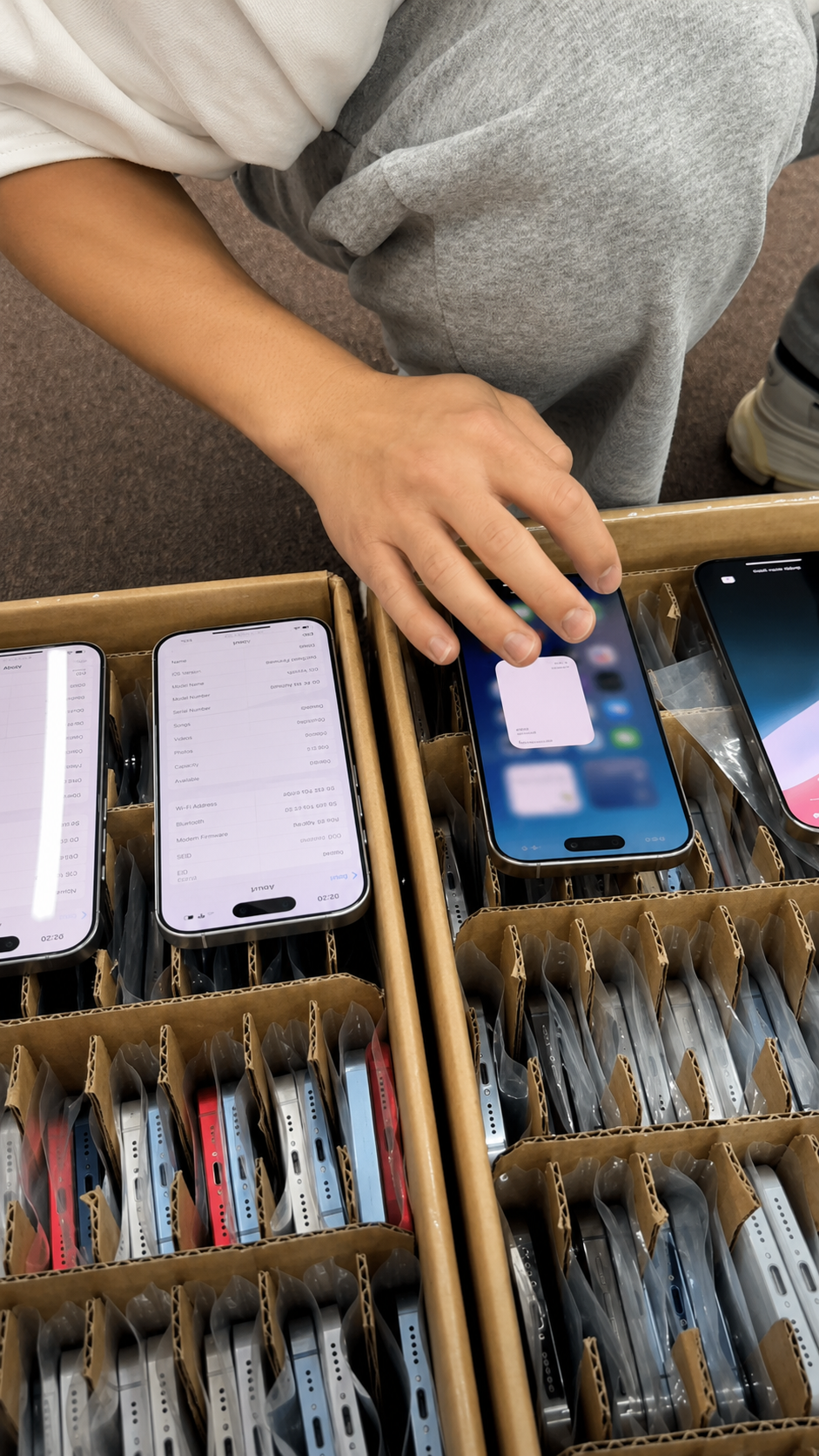
BUYER CONTEXT
An iPhone 13 Pro vs Pro Max for resale decision starts with the customer profile, not a generic model hierarchy. Buyers should define whether their catalog needs a compact premium option, a larger-screen option, or both. Then they should match that position with the exact storage, grade, battery evidence, and condition documentation requested.
The shared A15, ProMotion, triple-camera system, LiDAR Scanner, 5G capability, and storage tiers mean that a comparison should focus on the true differences. Display size, weight, and official video-playback reference are useful positioning inputs. They do not replace checks of the actual unit or establish a commercial outcome in every market.
Product teams can keep the comparison concise by using shared features once and model-specific differences where they matter. A Pro listing can state the 6.1-inch display and 204 g reference. A Pro Max listing can state the 6.7-inch display, 240 g reference, and higher official video-playback figure without implying superior core performance.
For a refurbished iPhone 13 Pro wholesale request, the purchase brief should distinguish requirements from preferences. A required storage tier, a defined cosmetic grade, battery-information evidence, and destination-market checks may be mandatory. Color preference or packaging presentation may be negotiable. Clear categories reduce substitutions and make quotation review more reliable.
Used iPhone grading is strongest when all teams use the same definition. Sourcing teams need a quoted grade; receiving teams need a practical inspection method; sales teams need customer-facing wording that does not exceed the verified evidence. This shared record avoids turning a visual grade into an unsupported claim about battery condition or repair history.
Battery data needs the same discipline. The official playback figures describe new-device reference testing, while a used-device result depends on the specific unit. Buyers can ask for battery information where available, charging test evidence, or replacement disclosure where applicable. The exact evidence should be agreed before a lot is selected.
Regional and carrier requirements also need unit or lot verification. A model being 5G capable does not prove compatibility with every carrier, physical SIM configuration, eSIM arrangement, activation condition, or destination-market rule. A buyer should document the relevant requirement instead of treating the model number as a complete compatibility answer.
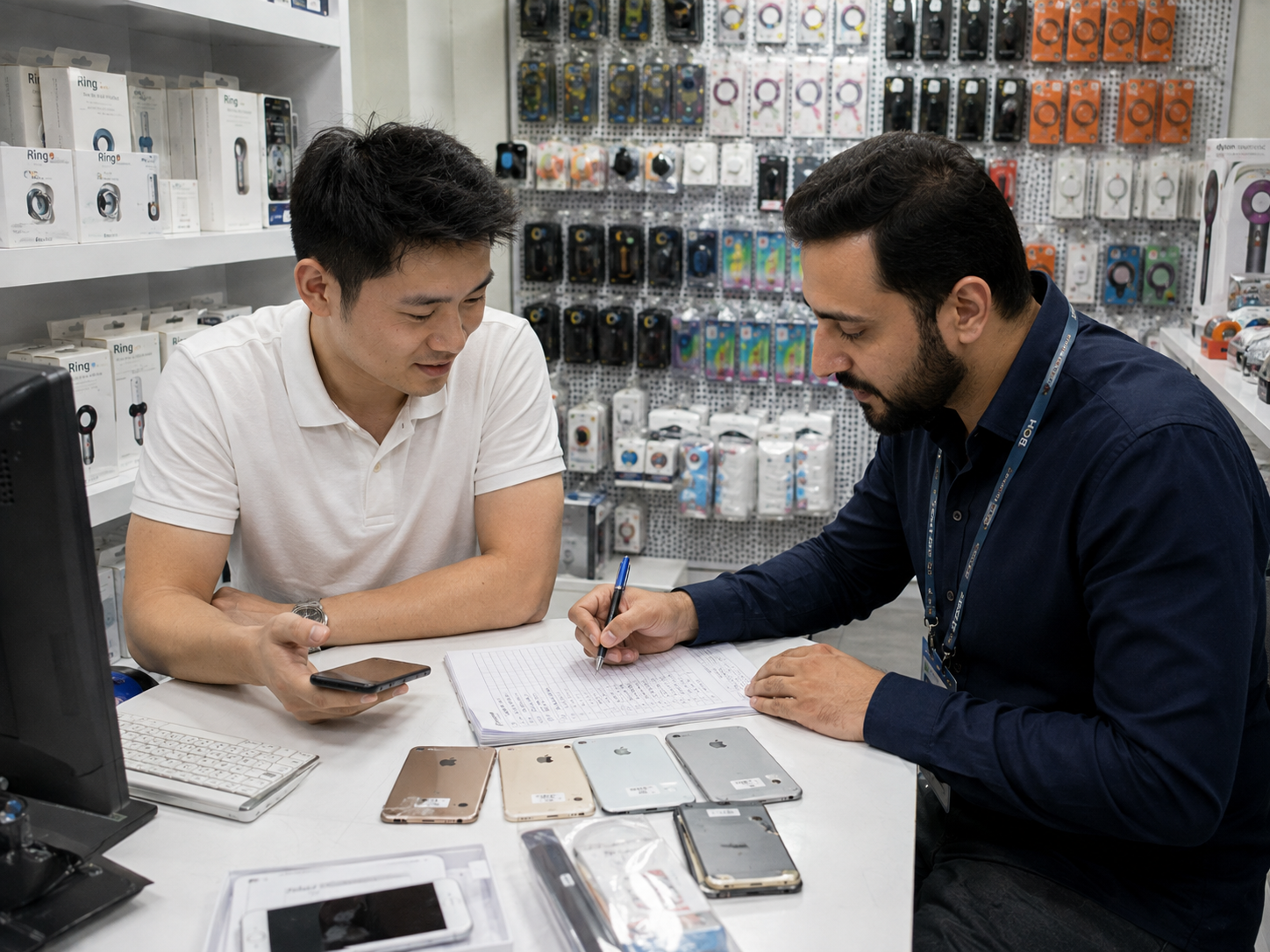
Receiving procedures complete the sourcing process. Delivered Pro and Pro Max units should be checked against the agreed model split, storage mix, grade distribution, functional scope, and documentation. Differences should be recorded before the devices are moved into retail stock, export preparation, or another resale channel.
HQB can support the quotation and sourcing discussion once the purchase brief is complete. It cannot guarantee sales performance, which remains dependent on the customer base, channel strategy, price positioning, condition consistency, and local demand. The goal of this guide is a transparent, comparable, and verifiable B2B iPhone sourcing decision.
SHARED PLATFORM
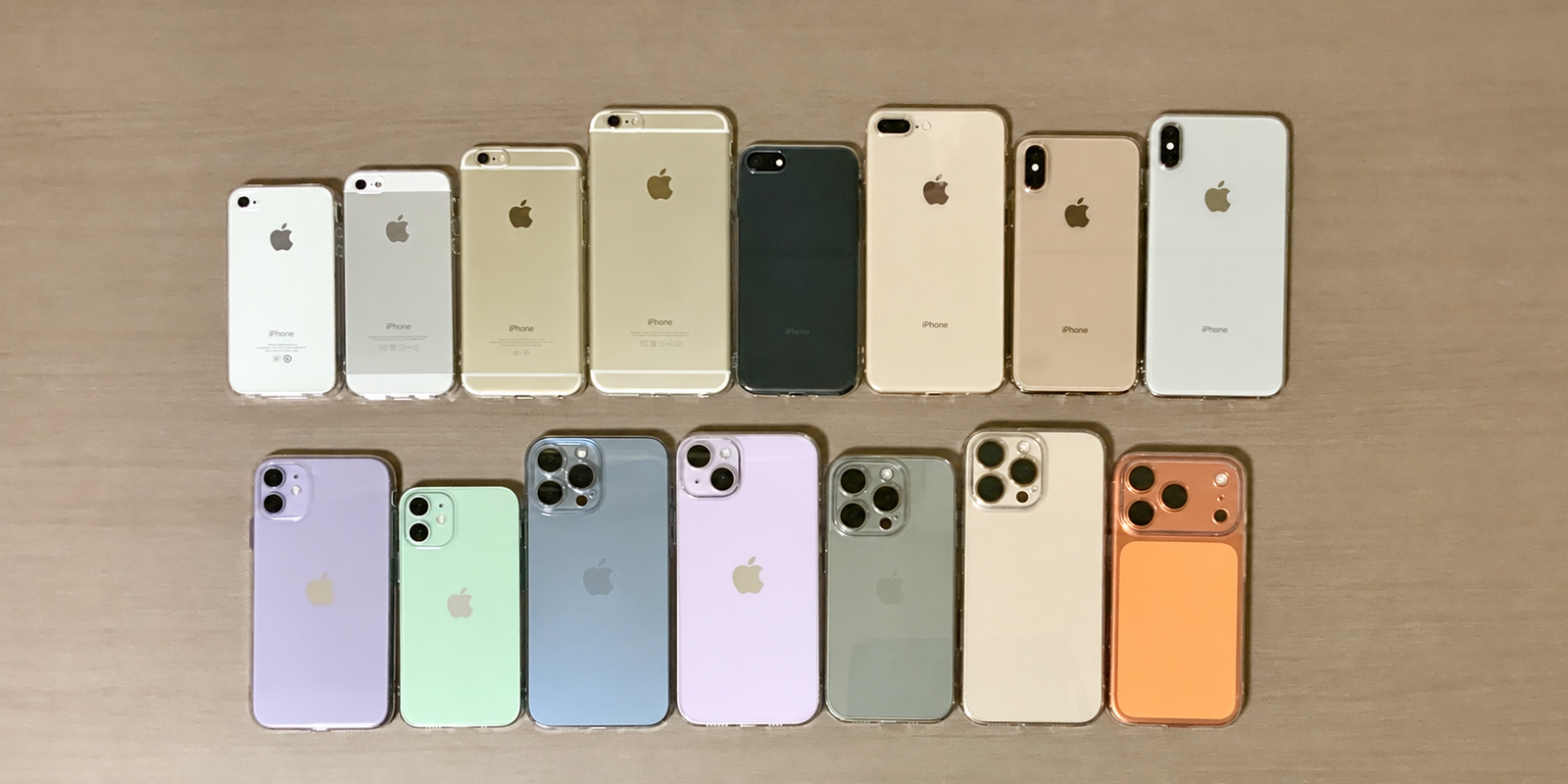
Shared Pro Features
The two models provide a similar premium feature baseline. Both use the A15 Bionic chip, Super Retina XDR OLED with ProMotion up to 120Hz, triple 12MP rear cameras, LiDAR Scanner, 5G capability, Lightning, and the same storage range. A supplier should not present core performance or camera capability as a Pro Max-only advantage in this generation.
Shared specifications make a matched catalog easier to build. They do not remove the need to verify individual devices. A buyer still needs exact storage, display condition, camera operation, battery information, carrier suitability, account status, and repair disclosures for the quoted unit or lot.
| Shared feature | Buyer-facing meaning | Verification point |
|---|---|---|
| A15 Bionic | Same core chip generation | Functional performance test |
| ProMotion display | Adaptive refresh rate up to 120Hz | Display responsiveness |
| Triple 12MP cameras | Wide, Ultra Wide, and Telephoto coverage | Camera and focus test |
| LiDAR Scanner | Supports selected depth and AR functions | Functional verification where applicable |
| 5G capability | Modern cellular category | Carrier and regional compatibility |
| Lightning connector | Existing accessory ecosystem | Port and charging test |
| Storage options | 128GB, 256GB, 512GB, 1TB | Confirm exact capacity |
| iOS 26 compatibility | Current software relevance | No future-support promise |
Size and Handling
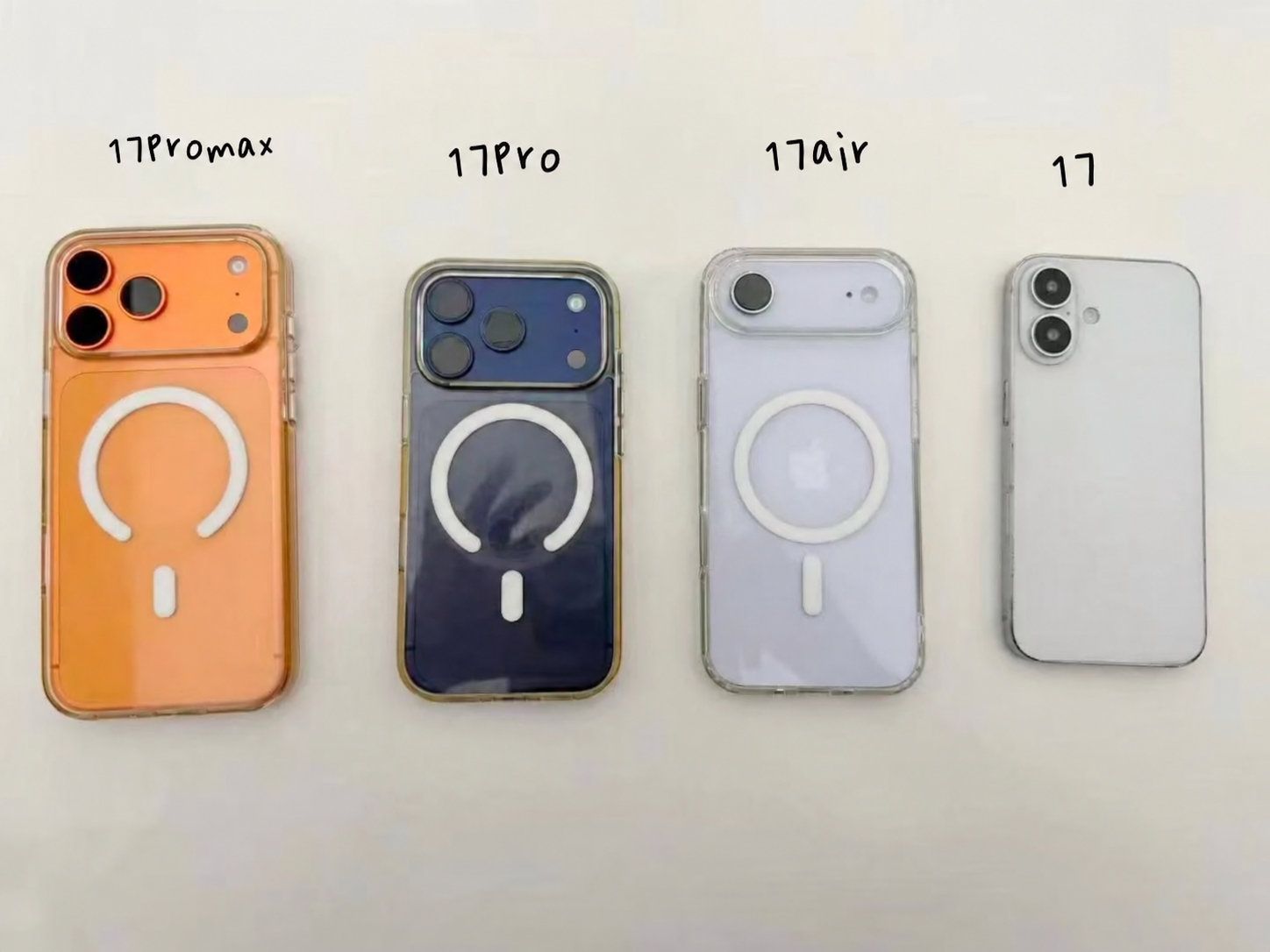
Screen size and weight are the clearest physical distinction. A precise listing should use the correct model name and not treat the two formats as interchangeable. Form factor affects how customers perceive a premium device even where chip, cameras, storage, and display technology are shared.
iPhone 13 Pro Size
- 6.1-inch display.
- 146.7 mm height.
- 71.5 mm width.
- 7.65 mm depth.
- 204 g weight.
iPhone 13 Pro Max Size
- 6.7-inch display.
- 160.8 mm height.
- 78.1 mm width.
- 7.65 mm depth.
- 240 g weight.
| Consideration | iPhone 13 Pro | iPhone 13 Pro Max |
|---|---|---|
| Screen size | 6.1 inches | 6.7 inches |
| Weight | 204 g | 240 g |
| One-hand positioning | More compact option | Larger form factor |
| Media viewing | Standard Pro display area | More display area |
| Catalog role | Compact premium option | Large-screen premium option |
Buyer checklist
- Identify whether the local market favors compact or large-screen devices.
- Match product descriptions to the exact model.
- Use model-specific photos where possible.
- Do not substitute Pro Max for Pro without approval.

Display Comparison
Both models use Super Retina XDR OLED with ProMotion up to 120Hz. The display technology is shared; panel size and resolution differ. Pro is a compact premium-viewing option, while Pro Max provides a larger canvas for buyers who value more screen area for media, text, and on-device work.
For used or refurbished inventory, display condition matters more than a simple specification line. Buyers should define how screen scratches, brightness variation, touch performance, True Tone status, panel replacement notifications, and visible panel mismatch are checked and described.
| Display item | iPhone 13 Pro | iPhone 13 Pro Max |
|---|---|---|
| Screen size | 6.1 inches | 6.7 inches |
| Resolution | 2532 by 1170 pixels | 2778 by 1284 pixels |
| Display type | Super Retina XDR OLED | Super Retina XDR OLED |
| Refresh technology | ProMotion up to 120Hz | ProMotion up to 120Hz |
| Resale message | Compact premium viewing | Larger premium viewing |
Display inspection checklist
- Check for dead pixels.
- Check brightness consistency.
- Test touch response.
- Confirm True Tone status where applicable.
- Inspect for display replacement notifications or visible panel mismatch where applicable.
- Document screen scratches separately from frame condition.
Battery Positioning
Apple rates iPhone 13 Pro for up to 22 hours of video playback and iPhone 13 Pro Max for up to 28 hours. These are official reference figures, not a promise of real-world performance for used or refurbished devices. Actual performance depends on the exact unit, battery condition, software state, usage, and other factors.
Pro Max therefore has a clearer official playback-positioning difference, but an individual Pro unit with stronger verified battery condition can still be a more suitable sourcing choice than an undocumented Pro Max. Cosmetic grade and battery evidence must remain separate in buyer-facing language.
| Battery reference | iPhone 13 Pro | iPhone 13 Pro Max |
|---|---|---|
| Official video playback rating | Up to 22 hours | Up to 28 hours |
| Commercial interpretation | Compact Pro option | Longer-rated playback option |
| Critical used-device variable | Battery condition | Battery condition |
| Required disclosure | Battery information where available | Battery information where available |
Battery verification checklist
- Confirm battery-health information where available.
- Disclose any battery replacement where applicable.
- Test charging behavior and Lightning port function.
- Check for unexpected shutdowns during testing.
- Align reported battery information with the quoted lot.

Camera and Content Features
Both phones share the same Pro camera positioning. Each has 12MP Wide, Ultra Wide, and Telephoto cameras, a LiDAR Scanner, ProRAW and ProRes support, plus a 12MP TrueDepth front camera. Pro Max should not be described as having a superior camera system within the iPhone 13 Pro generation.
What matters commercially is a documented test of the actual unit. Rear lenses, focus transitions, flash, portrait functions, video, front camera, and Face ID should be checked. Lenses should be inspected for cracks, haze, or damage before a unit is grouped into a grade-based resale lot.
| Camera feature | iPhone 13 Pro | iPhone 13 Pro Max | B2B content guidance |
|---|---|---|---|
| Wide camera | 12MP | 12MP | Describe consistently |
| Ultra Wide camera | 12MP | 12MP | Verify focus and lens condition |
| Telephoto camera | 12MP | 12MP | Test zoom performance |
| LiDAR Scanner | Included | Included | Check relevant functionality |
| ProRAW and ProRes | Supported | Supported | Confirm storage requirements where relevant |
| Front camera | 12MP TrueDepth | 12MP TrueDepth | Test Face ID and front camera |
Camera test checklist
- Test each rear lens.
- Test autofocus and focus transitions.
- Test flash, portrait, and video functions.
- Inspect camera lenses for cracks or haze.
- Test front camera and Face ID.

Storage Mix for Resale
Both models were offered in 128GB, 256GB, 512GB, and 1TB capacities. Storage should be verified per unit and never assumed from external appearance. A valid Pro-versus-Pro-Max comparison is clearer when the same storage tier and a comparable condition standard are matched.
Storage mix is a catalog decision, not a promise that one capacity fits every channel. A reseller may use 128GB as an entry Pro configuration, 256GB as a balanced option, and higher capacities for customers with specific storage needs. The purchase brief should name each requested tier clearly.
| Storage tier | Typical catalog role | Buyer confirmation needed |
|---|---|---|
| 128GB | Entry Pro configuration | Confirm actual capacity |
| 256GB | Balanced premium configuration | Confirm customer demand |
| 512GB | Higher-storage option | Confirm commercial suitability |
| 1TB | Specialist high-capacity option | Confirm local buyer need |
Do not replace a requested storage tier with another tier unless the buyer approves the substitution in writing.

Software and Feature Limits
Both models are currently compatible with iOS 26. Current compatibility must not be represented as guaranteed future software support. Software version, service availability, language, regional rules, and feature access can vary and should be checked where they are material to the customer’s purchase decision.
Neither iPhone 13 Pro nor iPhone 13 Pro Max supports Apple Intelligence. This boundary should be stated plainly in a modern resale catalog. A device can be currently compatible with iOS 26 without supporting hardware-dependent features available only on newer models.
| Topic | Accurate statement | Avoid saying |
|---|---|---|
| iOS 26 | Both models are currently compatible | Guaranteed future updates |
| Apple Intelligence | Neither model supports it | AI-ready or Apple Intelligence capable |
| 5G | Both are 5G capable | Compatible with every carrier worldwide |
| Water resistance | Original specifications may state IP68 | A used device remains water resistant after wear or repair |
| Refurbishment | Condition must be disclosed | Every refurbished unit is identical |
Condition and Grade Consistency
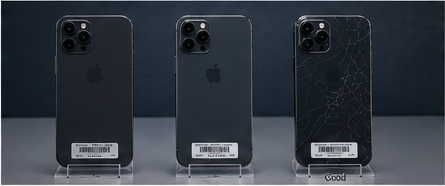
Cosmetic grade, functional status, and battery condition are separate variables. A clean-looking device may still require independent battery and repair disclosures. Likewise, a device with visible wear can meet a clear functional standard when that wear is accurately documented.
Used iPhone grading becomes useful only when buyer and supplier share a written definition. Grade labels should explain permitted cosmetic variation. Representative images, test records where applicable, and a receiving procedure help keep the same grade from being interpreted differently by sourcing, operations, and sales teams.
| Grade | Cosmetic description | Functional expectation | Required disclosure |
|---|---|---|---|
| Like New | Minimal visible wear | Listed functions tested | Battery and repair details separately |
| Excellent | Light signs of use | Listed functions tested | Representative condition notes |
| Good | Noticeable cosmetic wear | Listed functions tested | Clear description of visible wear |
Receiving checklist
- Confirm grade definitions before purchase.
- Request representative device images where available.
- Check frame, back glass, display, and camera lenses.
- Separate cosmetic notes from functional test results.
- Record discrepancy procedures before shipment.
Resale Catalog Strategy
Build separate product records for Pro and Pro Max. Exact model naming, display size, storage tier, grade, battery information, and status disclosures make a catalog easier to understand. A shared Pro feature set can be explained once, while the size and official battery-reference difference remains visible in each model’s description.
A buyer can carry both models when its market supports compact and large-screen premium choices. It can also specialize in one format if the customer profile is narrow. Either approach should follow verified condition and local market fit, not a general assumption that the larger model is always the better commercial choice.
| Catalog objective | iPhone 13 Pro role | iPhone 13 Pro Max role |
|---|---|---|
| Compact premium selection | Primary option | Secondary option |
| Large-screen premium selection | Secondary option | Primary option |
| Shared camera-led positioning | Suitable | Suitable |
| Battery-focused customer segment | Suitable after verification | Stronger official playback reference |
| Storage-tiered offer | Suitable | Suitable |
| Grade-based refurbished offer | Suitable with documentation | Suitable with documentation |
Catalog controls
- Use the exact display size and storage tier in titles.
- Keep grade, battery, and status disclosures model-specific.
- Use model-specific photos where possible.
- Base sourcing decisions on verified condition and local market fit.

SOURCING CONTROLS
Sourcing Risk Checks
Device-Level Verification
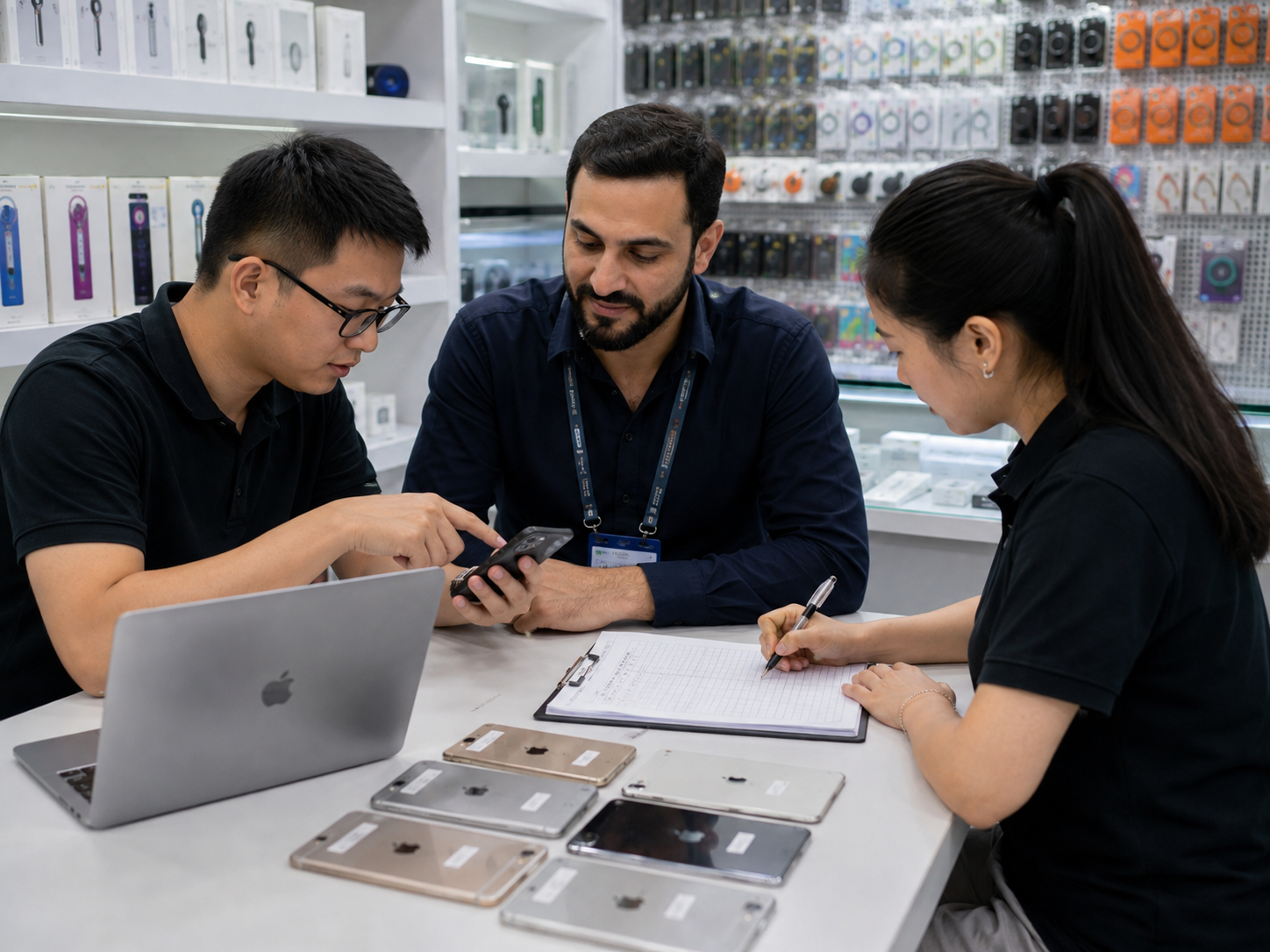
Functional and status checks make a model comparison actionable. The required evidence should be agreed in the purchase brief and may vary by destination market and commercial process. A supplier statement should not be treated as proof without the level of verification required by the buyer’s receiving procedure.
- Confirm exact model identity and storage capacity.
- Record IMEI or serial data according to applicable compliance procedures.
- Confirm account removal and activation status.
- Check management restrictions where lawful and applicable.
- Confirm carrier-lock status for the destination market.
- Test display, Face ID, cameras, buttons, speakers, microphones, Wi-Fi, Bluetooth, and cellular functions.
- Test wired charging and wireless charging where applicable.
- Inspect frame, back glass, display, camera lenses, and water-damage indicators.
- Disclose relevant battery, repair, and cosmetic information.
Lot-Level Verification
- Confirm Pro versus Pro Max quantity split.
- Confirm storage mix and grade distribution.
- Confirm battery-information requirements.
- Confirm destination-market and packaging requirements.
- Confirm documentation and shipment requirements.
- Request quotation only after the purchase brief is complete.
Buyer Selection Guide
Choose the format that matches the buyer profile and the verified lot, not the format that carries the larger headline specification. Both models can be credible used iPhone Pro sourcing options when the description, condition record, battery evidence, and target-market requirement are aligned.
Choose iPhone 13 Pro When
- The target buyer prefers a compact premium iPhone.
- A 6.1-inch Pro display matches the catalog.
- Lower device weight matters.
- The buyer values shared Pro camera and performance features without requiring the largest display.
- Verified battery condition and grade meet the purchase brief.
Choose iPhone 13 Pro Max When
- The target buyer prioritizes a 6.7-inch display.
- The larger format suits the intended customer segment.
- The higher official video-playback rating supports the product position.
- The buyer accepts the heavier device.
- Verified battery condition and grade meet the purchase brief.
Reconsider Both Models When
- USB-C is a mandatory requirement.
- Apple Intelligence support is required.
- The supplier cannot provide clear condition records.
- Carrier, activation, or management status cannot be verified.
- The requested storage or grade mix is unavailable.