
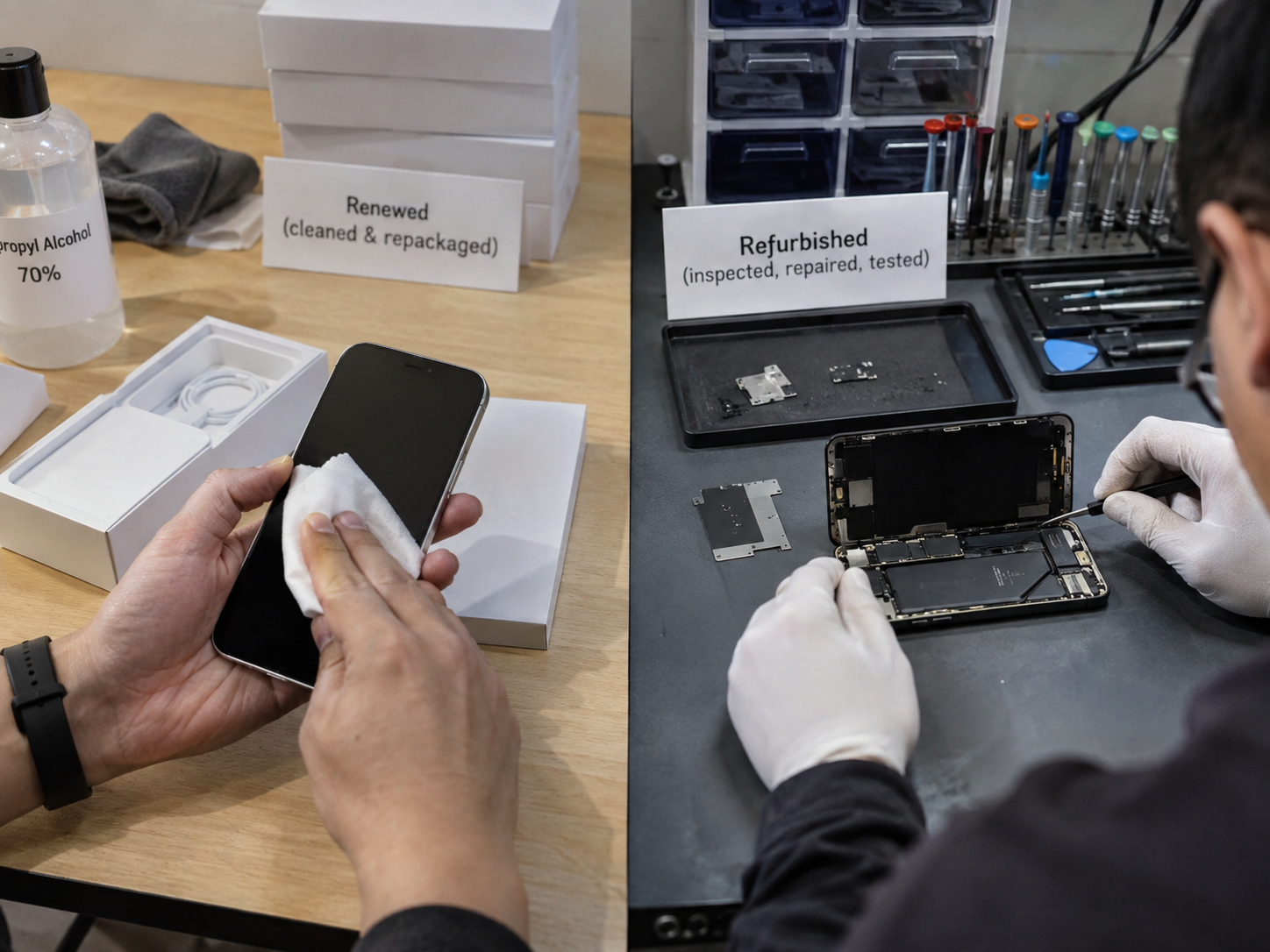
What Is the Difference Between Renewed and Refurbished iPhones?

Renewed is frequently a marketplace or retailer program label for inspected pre-owned products. Refurbished usually means a device has undergone some level of inspection, cleaning, testing, repair, and/or component replacement. Used can be as-is or professionally resold. Open-box normally means handled or returned stock. Apple Certified Refurbished follows Apple’s own stated terms.
| Label | What it may indicate | What it does not guarantee | Evidence to request |
|---|---|---|---|
| Renewed | Prepared for resale under a program | New battery, parts, or a universal grade | Listing conditions and guarantee |
| Refurbished | Processing after prior ownership/return | Identical repair scope across sellers | Testing, repair, and parts records |
| Used/open-box | Prior handling | Condition or setup readiness | Photos, tests, and identifiers |
- Identify the seller or program.
- Request written testing and condition standards.
- Confirm battery and parts policy.
- Verify warranty and returns.
- Check model, storage, compatibility, and locks.
- Compare total value against alternatives.
“Renewed” Is Often a Program Label, Not a Universal Device Standard

A renewed label may indicate a marketplace, retailer, or participating seller program prepared a pre-owned phone for resale. Actual condition still depends on listing terms, seller, grade, and applicable program requirements.
Questions to Ask About a Renewed iPhone
- Who inspected it, which diagnostics were completed, and which cosmetic standard applies?
- What battery condition is promised, were parts replaced, and what types of parts may be used?
- What warranty, guarantee, and return procedure applies?
Why Marketplace Details Matter
| Listing element | Why it matters |
|---|---|
| Seller, tier, fulfilment, and grade | Shows who is responsible and what condition is claimed. |
| Program, warranty, and return provider | Defines practical post-sale protection. |
| Return window | Sets inspection timing and claim route. |
Do Not Treat “Renewed” as “Like New” Automatically
- Verify the exact listing; a marketing label does not replace device-level evidence.
“Refurbished” Usually Describes a Process, but the Process Varies

Refurbishment can include inspection, cleaning, data removal, diagnostics, repair, replacement, retesting, grading, and repackaging. Independent refurbishers may perform different levels of work.
A Strong Refurbishment Process
- Device intake and identity record.
- Cosmetic inspection and functional diagnostics.
- Repair or component replacement where needed.
- Cleaning, secure data removal, and retesting.
- Battery/grade evaluation, packaging, documentation, and warranty allocation.
Refurbishment Details Buyers Should Request
- Testing coverage, battery standard, repair disclosure, parts source, cosmetic grade, accessories, warranty, and return terms.
A Refurbished Label Does Not Guarantee
| Assumption | Why it varies | What to confirm |
|---|---|---|
| New battery or genuine parts | Policy and repair scope differ | Battery result and part disclosure |
| New shell or water resistance | Cosmetic/reseal work varies | Written condition and repair terms |
| Accessories or one-year warranty | Package and coverage differ | Included items and guarantee |
Apple Certified Refurbished vs Marketplace Renewed and Independent Refurbished

Apple states its Certified Refurbished products complete a rigorous process with functional testing, cleaning and inspection, genuine Apple replacement parts when needed, a new battery and outer shell for refurbished iOS devices, and a standard one-year limited warranty. These are Apple-specific policies and must not be assumed for marketplace renewed or independent refurbished stock.
| Area | Apple Certified Refurbished | Marketplace Renewed | Independent Refurbished |
|---|---|---|---|
| Standard | Apple-defined | Program/listing-defined | Seller-defined |
| Battery, parts, grade | Apple-stated policy | Verify listing | Verify seller policy |
| Warranty/returns | Apple stated terms | Program terms | Seller terms |
| Buyer verification | Product listing | Seller and program detail | Test, manifest, and written terms |
What to Ask a Third-Party Seller
- Request testing, battery, part, grade, repair, warranty, return, and IMEI/serial documentation.
Battery Health, Parts, and Cosmetic Grade

Why Battery Health Matters
- Maximum Capacity is a reported capacity signal; Peak Performance Capability is another status indicator. Neither replaces charging, heat, and functional testing.
Battery Policies Can Differ
| Condition | Buyer impact | What to request |
|---|---|---|
| Original battery above stated threshold | Defined range | Threshold and test date |
| Lower disclosed capacity | Value-tier or service exposure | Price and exception policy |
| Replaced battery | Parts policy matters | Origin, test, and warranty |
| Not stated | No usable standard | Pause until documented |
Parts, History, and Grade
Supported models may show Parts and Service History in Settings > General > About. Genuine Apple Part, Used Part, Unknown Part, Unverified Part, or no visible history should be reviewed alongside function tests and seller disclosure. Grade A, Grade B, Excellent, Good, and Like New are cosmetic labels defined by sellers unless a written guide is supplied.
- Request photo examples, accepted screen and housing marks, camera-area standards, battery range, repair disclosure, and lot-level consistency limits.
Warranty, Identity, and Receiving Controls

| Protection | Questions to ask | Main limitation |
|---|---|---|
| Marketplace/seller warranty | Duration, claim procedure, remedy, freight, exclusions | Program-specific terms |
| DOA-only/no warranty | Definition, evidence, and acceptance window | Limited post-acceptance protection |
IMEI and Lock Checks
- Match identifiers to device and manifest; confirm model, storage, color, and region/network variant; check duplicates; retain receiving evidence.
- Require normal setup with the prior owner’s Apple Account removed. Activation Lock must never be bypassed.
- Use only lawful verification for carrier locks, blacklist concerns, MDM/remote management, and organisation restrictions.
Receiving Inspection Process
- Review pre-shipment records.
- Match devices to the manifest.
- Test a representative sample.
- Record and isolate discrepancies.
- Submit claims within agreed terms.
- Update resale descriptions to match verified stock.
Red Flags When Buying Renewed or Refurbished iPhones

- No clear label definition, functional-test description, battery policy, or parts disclosure.
- Missing IMEI/serial list, unresolved lock screen, inconsistent photos/grades, or unusually low price without records.
- Vague warranty/returns or refusal to share inspection evidence.
Pause the Purchase When…
- identity, ownership, condition, or claim terms cannot be documented.
Frequently Asked Questions About Renewed and Refurbished iPhones

Is renewed the same as refurbished?
No. Both labels vary by seller and program; verify the written standard.
Is Apple Certified Refurbished the same as marketplace renewed?
No. Apple’s stated program policies are separate from marketplace terms.
Does renewed mean a new battery or genuine Apple parts?
No. Confirm the actual battery and parts policy.
Can a renewed phone have a replaced screen?
Yes; request disclosure and test the screen fully.
What battery health should I request?
A stated range, test timing, and exception policy that match your sales channel.
Can I buy a device with Activation Lock?
No. It must be removed by the rightful owner or organisation.
Are renewed and refurbished devices suitable for resale?
Yes, when condition, legal status, documents, and after-sales terms fit the channel.
| Question area | Most important verification | Evidence to request |
|---|---|---|
| Condition | Grade plus function | Guide, photos, test record |
| Battery/parts | Policy and disclosure | Test result and history where available |
| Legal status | Normal setup | Manifest and lawful checks |
| Support | Claim remedy | Written warranty and returns |

Final Takeaway: Verify the Standard Behind the Label
- Identify the seller or program.
- Request written testing, grading, battery, and parts standards.
- Verify function, repair history, and legal device status.
- Compare warranty and return protection.
- Document condition requirements for every wholesale lot.
- Do not choose based on renewed or refurbished alone.
- Prefer documented, testable specifications.
- Treat battery and repair disclosures as purchase-critical.
- Match grade and warranty to the resale promise.
Qualified B2B buyers can ask HQB for current iPhone inventory, grading standards, battery requirements, testing details, and wholesale terms.
Request Renewed and Refurbished iPhone Wholesale Details
Contact sales@usedphonehqb.com with model, quantity, grade, battery, and destination requirements.


Published: August 28, 2026 • Last updated: August 28, 2026
Author: HQB Editorial Team • Category: Refurbished iPhone Buying Guide • Reading time: 12–14 minutes
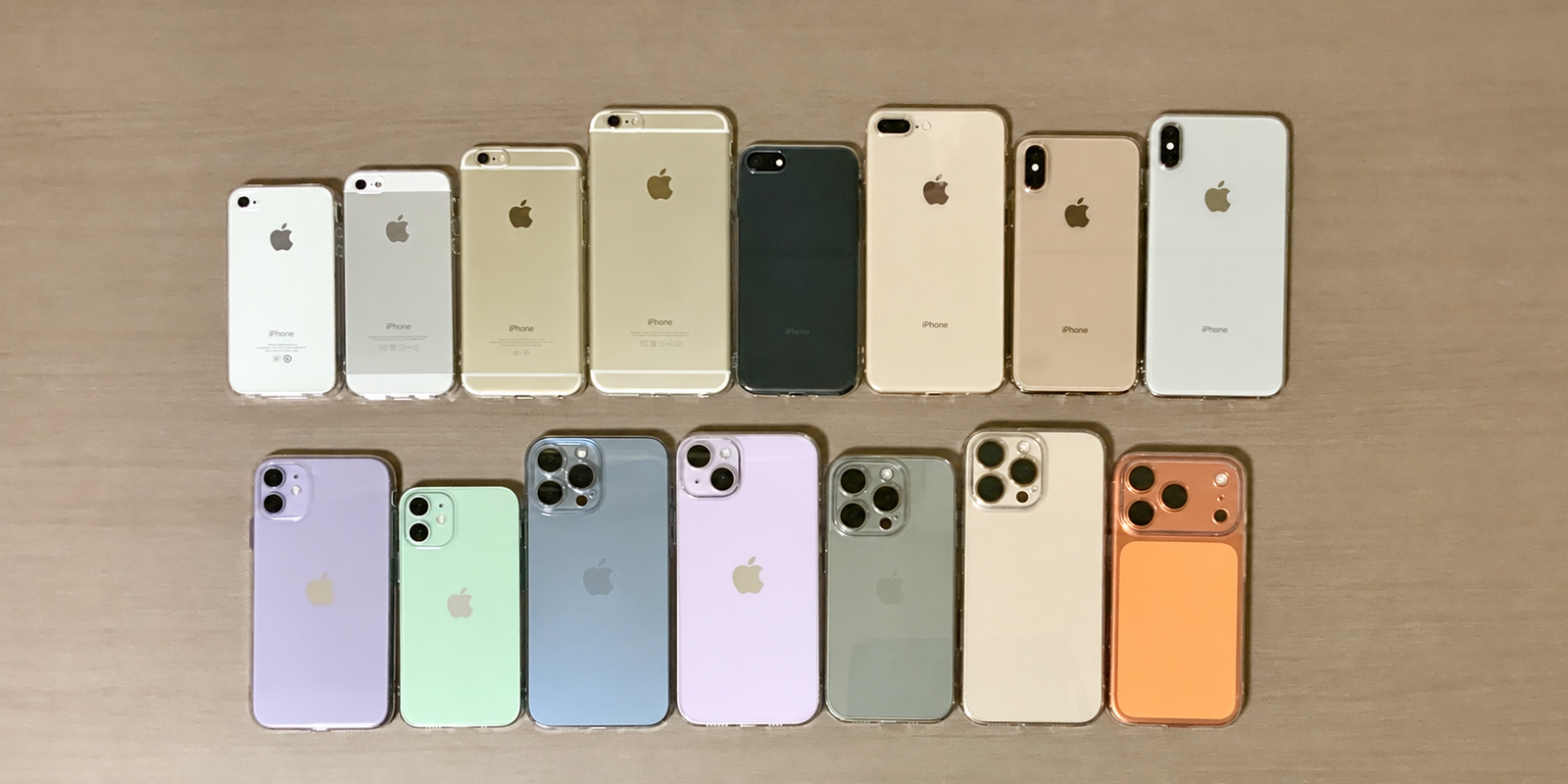
Related Articles
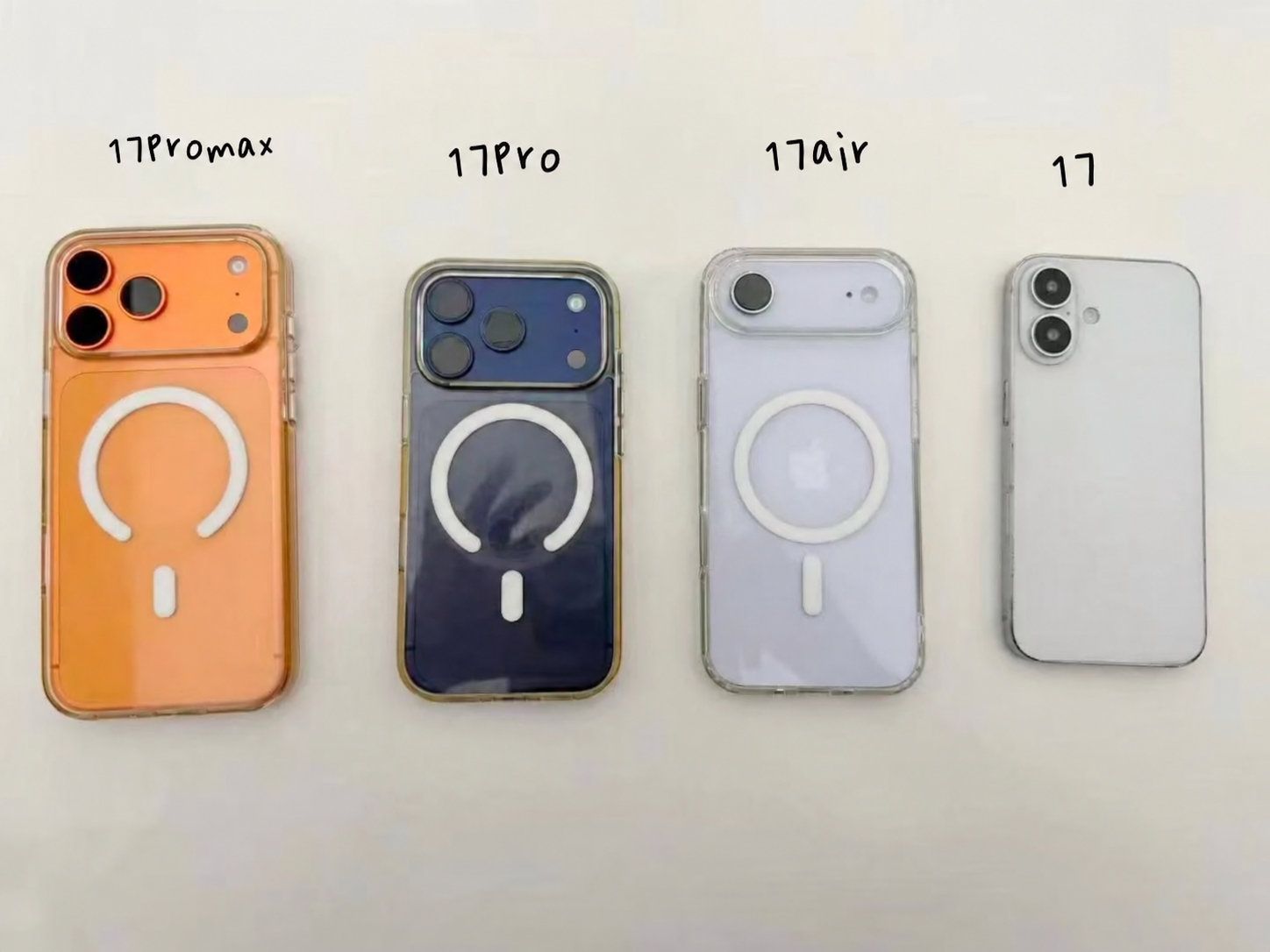
Refurbished iPhone: What Does It Mean?
Learn why refurbished is a process rather than a universal grade, and which battery, parts, test, warranty, identity, and return details buyers should verify.
Read the guide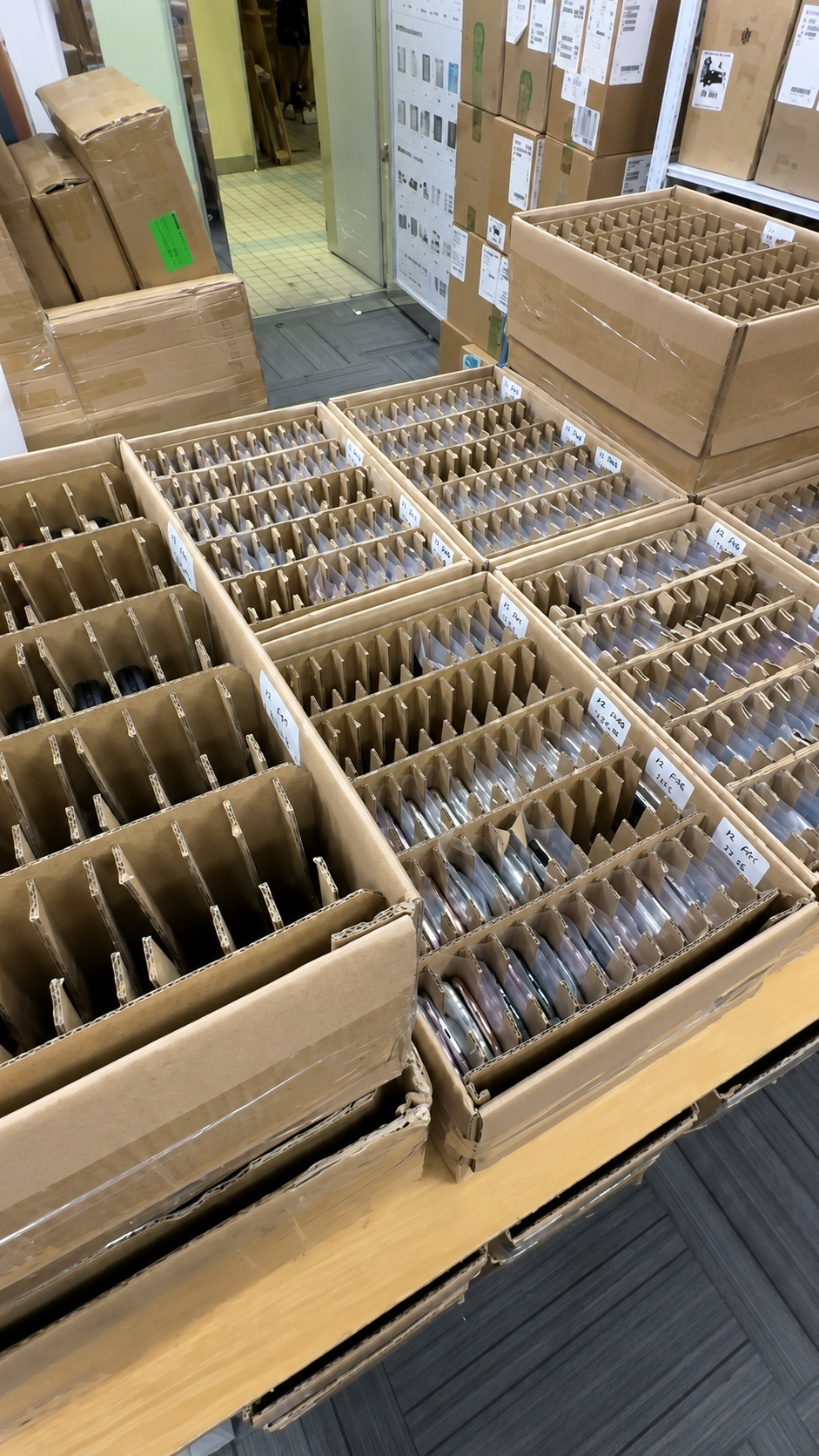
Used vs Refurbished iPhone: What’s the Difference?
Compare condition processes, battery expectations, parts disclosure, functional testing, cosmetic grades, ownership checks, and commercial terms before choosing used or refurbished resale inventory.
Read the guide
iPhone Grading System Explained
Understand seller-defined cosmetic grades, request clear photo examples and defect limits, and keep grade separate from battery, function, repair disclosure, warranty, and legal-status checks.
Read the guide