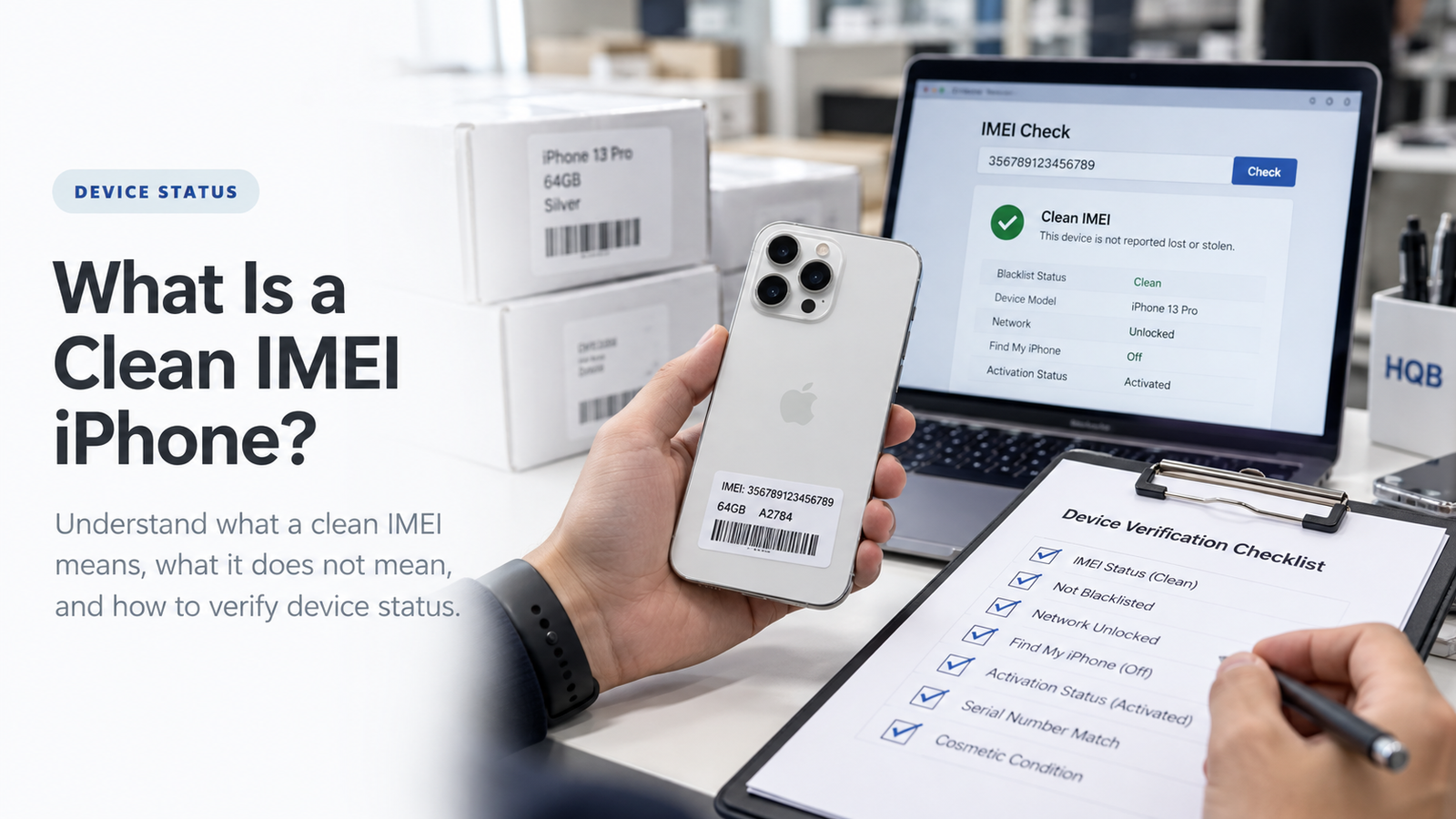
A clean IMEI is a useful point-in-time status check. It can help a buyer ask better questions, but it is never a replacement for lawful proof of ownership, device inspection, or secure transaction controls.
Verification is strongest when identifiers, device state, documents, and commercial controls agree.
QUICK REFERENCE
Clean IMEI: a narrow status, not a broad guarantee
Use the check to guide a responsible review. Keep the result in context and record when, where, and against which identifier it was obtained.
Check
Status indicates
Does not prove
Next responsible check
IMEI shown by device
The hardware reports an identifier
That the device is lawfully owned
Match it with Settings, packaging, and paperwork
Clean IMEI result
No adverse record was returned by that source at that time
Future status, title, or payment history
Record the source, region, timestamp, and scope
Blacklist result
Whether a participating database reports an adverse status
Worldwide or permanent coverage
Confirm market relevance and refresh before release
Carrier Lock field
Current carrier restriction state on a supported iPhone
IMEI blacklist status
Read “No SIM restrictions” separately from IMEI checks
Activation Lock state
Whether setup is blocked by a prior Apple Account
Lawful ownership or network eligibility
Complete a lawful setup check with the owner present
MDM or management state
Whether organization management may affect use
Consumer resale suitability
Confirm legitimate release and documented authority
Parts and Service History
Reported repair or component information on supported devices
Identity, title, or original condition
Inspect disclosures, functionality, and serial consistency
Seller documentation
The commercial trail supplied by the seller
Database status by itself
Validate invoice, entity, and return commitments
Physical inspection
Visible condition and identifier consistency
Future network treatment
Combine it with secure payment and acceptance checks
Key takeaways
IMEI: an equipment identifier, not a certificate of ownership.
Clean: a database response with a time, market, and source behind it.
Blacklisted: a reported adverse status whose coverage can be limited or change.
Carrier Lock: a separate device setting; “No SIM restrictions” means unlocked on supported iPhones.
Activation Lock: a setup and account-protection issue, not an IMEI result.
MDM: an organization-management concern requiring lawful release.
Parts and Service History: useful repair context, not an identity guarantee.
OVERVIEW
What buyers usually mean by “clean IMEI”
In used-phone sourcing, people often use “clean IMEI” to mean that an identifier did not return a known adverse listing in a particular lookup at a particular moment. It is a status observation—not a promise that the phone is owned free and clear, will work on every carrier, or will remain unchanged.
A disciplined buyer treats that observation as one line in a wider identity-and-acceptance process. The device, seller, transaction, local rules, and intended resale market all matter.
Check the phone and its commercial record together; neither tells the full story alone.
IMEI
A mobile-equipment identifier reported by the handset. Dual-SIM models may have more than one relevant identifier.
Clean
A point-in-time response that no adverse result appeared in the database or service checked.
Blacklisted
An adverse status reported through a database or participating network process. Scope varies by source and market.
Carrier Lock
A separate restriction concerning SIM use. It does not answer whether an IMEI is clean.
Activation Lock
Apple Account protection that can prevent a new owner from setting up the device without proper release.
MDM
Mobile-device management that may subject a device to an organization’s enrollment or policy controls.
Clean IMEI does not equal
Why the distinction matters
Proof of lawful ownership
Databases do not replace an invoice, seller identity, or legitimate chain of title.
Carrier compatibility
Band support, account rules, lock state, and local network policy are separate questions.
Activation Lock release
Setup may still be blocked until the prior owner removes the device properly.
A permanent future status
Reports can be delayed, corrected, region-specific, or updated after the check.
Payment or condition protection
Commercial remedies and functional inspection need their own controls.
An 8-point buyer framework
Identify the exact model, storage, and regional variant.
Read the IMEI only from authorized, lawful sources.
Match it against the device, documentation, and purchase record.
Check the relevant market’s status source and note the timestamp.
Verify setup, Activation Lock, and Carrier Lock separately.
Review management and repair disclosures where supported.
Test functions before acceptance.
Use contractual, payment, and return controls to manage remaining risk.
Identifier review begins with a device that the buyer can inspect and reconcile to records.
Understanding IMEI in a used-iPhone transaction
An IMEI helps networks and systems distinguish one mobile device from another. It is valuable for inventory reconciliation, status research, service records, and shipment acceptance. It is not designed to establish the civil or commercial right to sell an item.
For that reason, responsible buyers do not treat a screenshot from an IMEI checker as a green light by itself. They combine the result with device identity, seller due diligence, functional testing, and a clear remedy if the delivered unit differs from the agreed manifest.
What an IMEI check can help verify
The handset reports an identifier that can be documented.
A lookup source returned a stated result at a stated time.
The source may identify an adverse report within its stated coverage.
Inventory teams can compare a device against a purchase manifest.
Service teams can avoid mixing similarly configured units.
Buyers can identify discrepancies before a shipment is released.
What an IMEI check cannot tell you by itself
Question
Why IMEI alone is insufficient
Who legally owns the phone?
Ownership depends on lawful records and the applicable transaction, not an equipment lookup.
Will it work on my carrier?
Compatibility, account policy, bands, and lock state must be reviewed separately.
Is Activation Lock removed?
That must be lawfully verified during setup with the proper account release.
Will status stay unchanged?
Records can be updated or interpreted differently across markets.
Is the phone free of financing obligations?
Only appropriate commercial documentation and lawful seller assurances address that risk.
Is the condition acceptable?
Functional tests, cosmetic grading, battery health, and parts disclosures are separate.
Is it safe for resale everywhere?
Local law, import requirements, carrier policies, and consumer rules vary.
Protect identifier information during checks
Do not publicly post full IMEIs in listings, chat threads, screenshots, or marketing material.
Limit access to staff and vetted counterparties who need it for a lawful transaction.
Use secure channels and store exports according to your data-retention policy.
Share only the minimum necessary identifier information with an authorized service provider.
Different markets can use different reporting systems, so scope matters as much as the headline result.
Clean and blacklisted status: how to read the result
“Clean” is best understood as a negative finding from a named source: it did not return an adverse record for the supplied IMEI at the time of the query. The check may be useful, but its meaning depends on the source’s participating data, the country or carrier scope, and the freshness of the record.
Clean versus blacklisted: a practical comparison
Result
Practical meaning
Buyer response
Clean / no adverse result
No matching adverse record was returned within the stated scope.
Continue the separate identity, lock, condition, and document checks.
Blacklisted / adverse result
The source reports an adverse status that may affect use or resale.
Pause the transaction and investigate only through lawful, authorized channels.
Unknown / unsupported
The source cannot provide a useful answer for the identifier or region.
Do not infer a clean result; seek a legitimate alternative source or decline.
Conflicting results
Sources or regions may differ in timing, scope, or data participation.
Document the conflict, refresh near acceptance, and use a conservative decision.
Why a status can change
Reporting may reach different systems at different times.
A carrier or registry may correct a prior entry.
Data coverage can differ between countries or participating networks.
A source may update its methodology or available records.
A result can be associated with an incorrect identifier and later resolved lawfully.
A clean check is not a lifetime guarantee
Keep an invoice and the verified identity of the seller.
Document the exact identifier, source, check date, and market relevance.
Agree in writing on status warranties, exclusions, and a remedy period.
Refresh checks close to shipment, receipt, and downstream allocation when appropriate.
Hold payment or acceptance milestones until the agreed review is complete.
Network eligibility, account protection, and management status are distinct layers of the buyer review.
Clean IMEI, Activation Lock, Carrier Lock, and MDM are different checks
Topic
What it addresses
What it does not replace
Clean IMEI
Reported adverse status within a source’s scope
Ownership, future status, lock state, or condition
Activation Lock
Whether Apple Account protection blocks lawful setup
Carrier compatibility or IMEI status
Carrier Lock
Whether a supported iPhone shows a carrier restriction
Blacklist or ownership checks
MDM / remote management
Organization enrollment or policy controls
Lawful title or consumer suitability
Parts and Service History
Reported repair/component context where available
Authentication, identity, or transaction protection
Activation Lock
It is designed to protect a prior owner’s Apple Account and device data.
A buyer should complete setup only with proper authority and a legitimate release.
An IMEI can appear clean while Activation Lock still prevents normal use.
If a seller cannot lawfully release the device, pause rather than seek a workaround.
Carrier Lock
On supported iPhones, review Settings > General > About > Carrier Lock.
“No SIM restrictions” means the iPhone reports itself as unlocked.
This field is separate from an IMEI blacklist result.
Compatibility still depends on carrier, region, account, eSIM, bands, and policy.
MDM and organization management
Managed devices can receive enrollment prompts, restrictions, or remote policy controls.
Enterprise-origin units require a documented, legitimate release path.
A normal IMEI status does not establish that an organization has released the device.
Buyers should obtain seller representations appropriate to the transaction and market.
A repeatable acceptance sequence reduces reliance on a single status check.
How to verify a used iPhone before buying
Confirm the intended sales market and the exact model requirement.
Identify the seller entity and obtain a clear quotation or invoice.
Read the IMEI from the device under legitimate access, not from a public listing alone.
Match the reported identifier with Settings, packaging, and the seller’s manifest.
Run a status check through an appropriate, authorized source and record its scope and time.
Review Activation Lock and Carrier Lock independently during a lawful setup check.
Check for management enrollment and Parts and Service History where supported.
Perform functional, cosmetic, battery, camera, and connectivity testing.
Accept, pay, or allocate only under the agreed documentation and remedy terms.
Match identifiers before you rely on a result
Location
What to compare
Caution
Settings
Model name, capacity, serial, and IMEI reported by the phone
Use lawful access and record only what your process requires.
Packaging / label
Identifier and model information against the device
Packaging can be mismatched; it is supporting evidence, not proof alone.
Seller manifest
Line item, identifier, grade, and configuration
Require corrections before acceptance when a field conflicts.
Invoice
Seller identity, quantity, commercial terms, and traceability
Keep records according to legal and contractual requirements.
Functional checks that belong beside IMEI review
Boot and basic setup behavior.
Display, touch, buttons, cameras, speakers, microphones, and charging.
Wi-Fi, Bluetooth, cellular/eSIM behavior where lawful and applicable.
Battery health and charging consistency.
Face ID or Touch ID, with proper reset and privacy handling.
Cosmetic condition against the stated grade.
Documentation controls
Keep a dated check record with source and intended market.
Use a purchase order and invoice that identify the seller clearly.
Define status, grade, mismatch, and return remedies before paying.
Preserve a signed acceptance record for bulk deliveries.
Condition and repair context can affect value, but they are separate from IMEI status.
Parts, repairs, and identity consistency
On supported devices, review Settings > General > About > Parts and Service History as one source of repair context. The information can help a buyer understand disclosed replacements, but it does not settle ownership, blacklist status, or the quality of a repair on its own.
How to interpret reported parts history
Reported status
Responsible reading
Genuine Apple Part
Reported component context; still inspect function and match the unit to records.
Used Part
A previously used component may be reported on supported devices; assess disclosure and function.
Unknown Part
Investigate the disclosure and condition; do not assume cause or quality from the label alone.
Finish Repair
Repair configuration may need proper completion by an authorized, lawful process.
No history shown
Not a universal guarantee of original parts; availability varies by model and repair context.
Model-match checks
Match model number, storage capacity, color, and regional variant to the listing.
Confirm the device’s physical features match the claimed model family.
Reconcile any serial and IMEI fields across the device and manifest.
Compare observed condition to the grade and repair disclosures.
Keep photos and acceptance notes for the specific unit or pallet.
When identifiers or disclosures do not match
Stop allocation of the affected unit or batch.
Ask the seller for a documented correction through the agreed channel.
Separate the unit from accepted stock until the discrepancy is resolved.
Use contractual return or remediation provisions when the discrepancy remains.
Good sourcing replaces assumptions with separate, documented checks.
Common misunderstandings about clean IMEI iPhones
Myth
Fact
“Clean” means the seller owns it.
It means only that one source returned no adverse record at that time; ownership needs lawful documentation.
A clean result guarantees every carrier will accept it.
Network eligibility depends on compatibility, lock state, policy, and market conditions.
A clean IMEI removes Activation Lock.
Activation Lock is a separate Apple Account protection state.
A clean result can never change.
Database results can vary by scope, timing, updates, and reporting processes.
An IMEI checker replaces inspection.
Physical condition, functionality, parts history, and identity reconciliation still matter.
The real benefit of a clean-status check
It gives procurement teams an additional, documented data point.
It can surface discrepancies early enough to pause a risky acceptance.
It supports inventory traceability when paired with a manifest.
It helps teams ask targeted questions about source, market, and timing.
It does not remove the need for legal, commercial, and technical controls.
Wholesale controls should make each unit traceable from manifest to acceptance decision.
Wholesale sourcing: make the manifest do the work
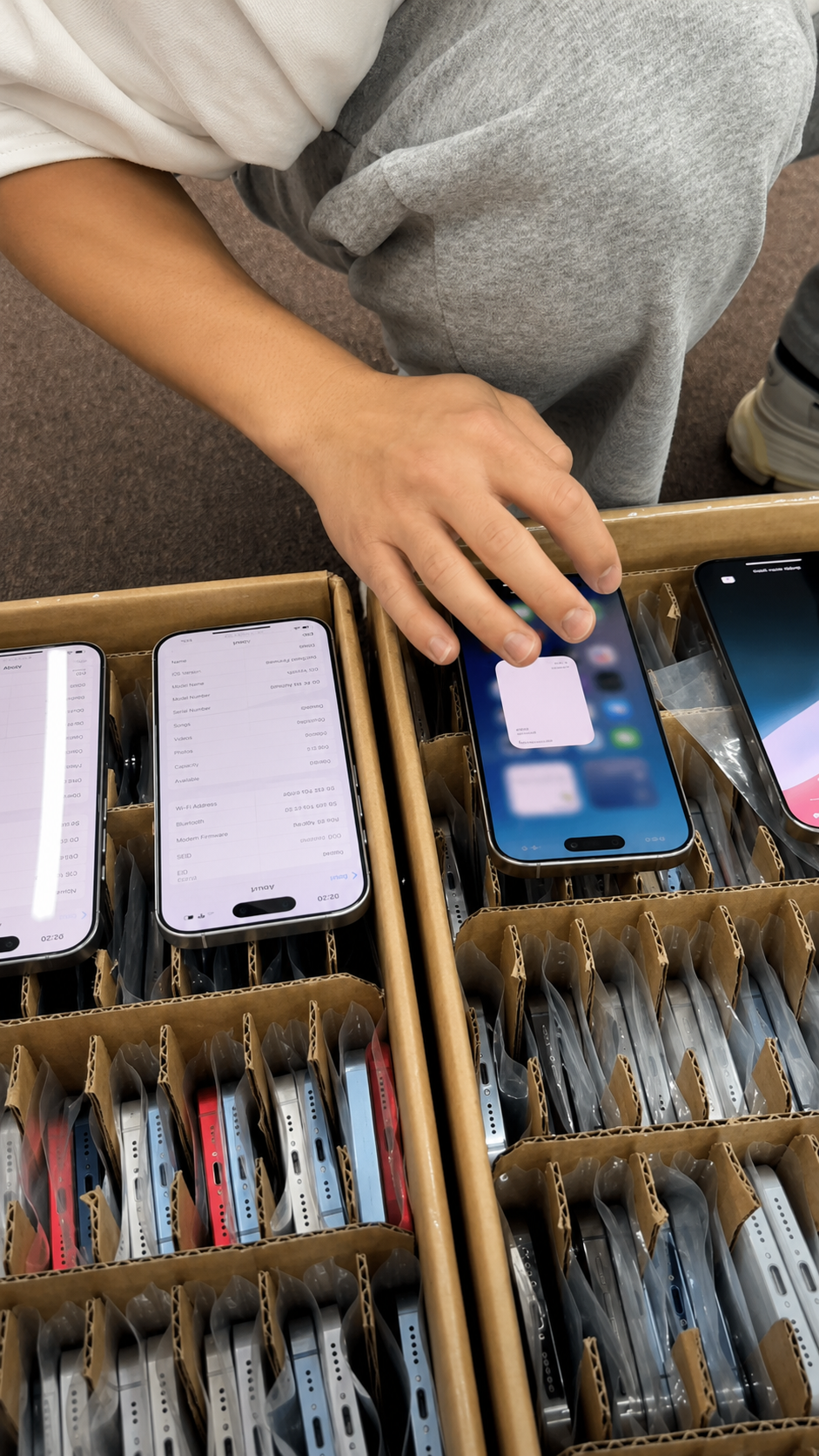
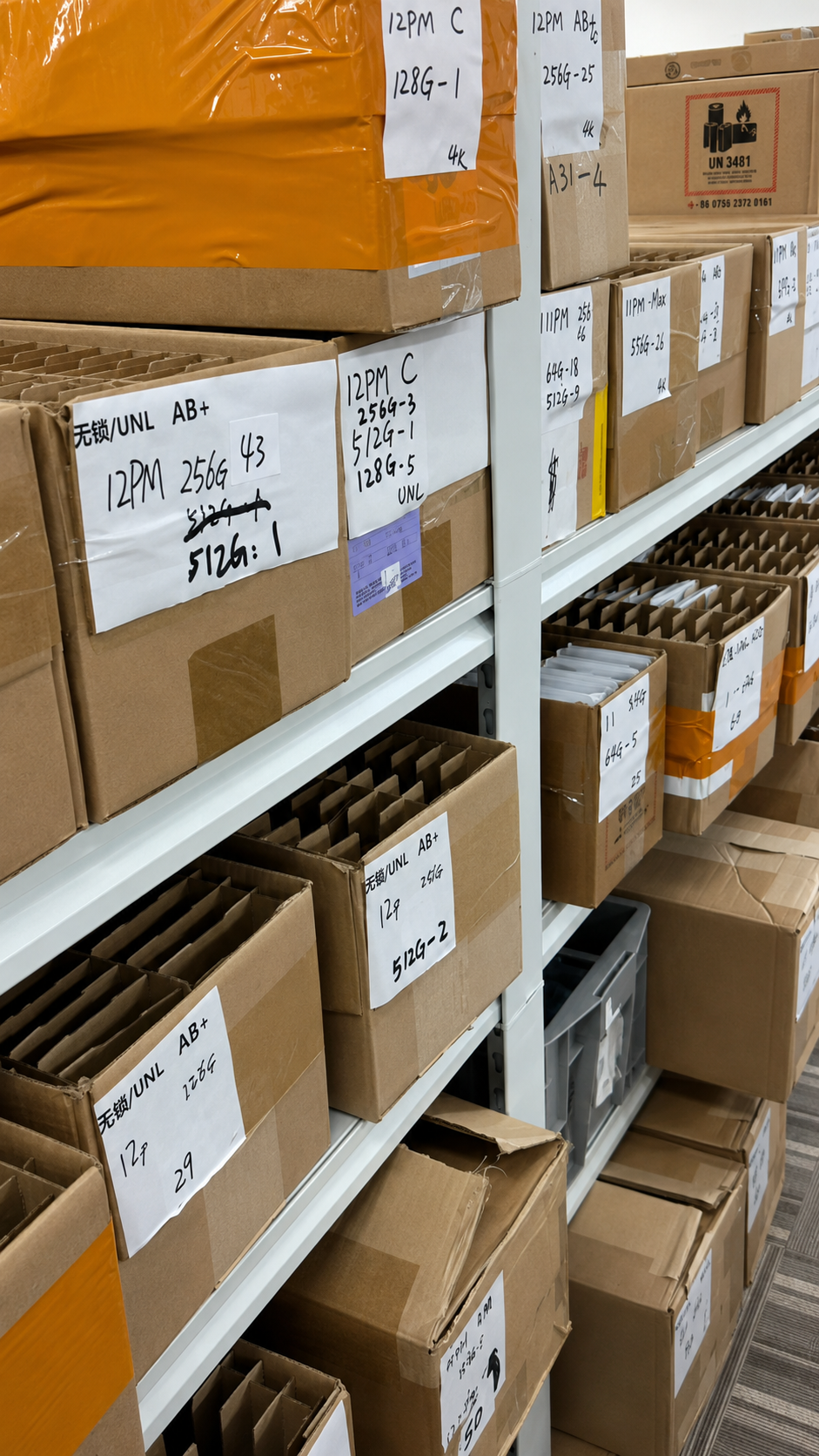
For a bulk purchase, the strongest control is rarely a single lookup. It is a consistent manifest, inspection sample or unit-level process, condition standard, documented chain of supply, and a clear agreement on what happens when a device does not match the stated facts.
Useful fields for a bulk manifest
Field
Why it is useful
Purchase order number
Links the batch to commercial terms.
Seller legal entity
Supports counterparty due diligence and invoice matching.
SKU / model
Confirms requested hardware family.
Storage / color / variant
Controls configuration accuracy.
IMEI or approved identifier field
Supports lawful unit reconciliation.
Serial number where needed
Provides a second identity reference.
Condition grade
Sets cosmetic and functional expectations.
Battery-health rule
Defines an acceptance threshold where applicable.
Carrier-lock disclosure
Separates network status from IMEI status.
Activation / management disclosure
Flags lawful setup or enterprise-release review.
Parts-history disclosure
Sets repair-context expectations.
Status-check timestamp and source
Records what was checked, when, and for which scope.
A 7-step bulk acceptance flow
Agree model mix, market, quality standard, and lawful source requirements.
Receive a pre-shipment manifest with the fields needed for verification.
Perform agreed pre-shipment review without exposing identifiers publicly.
Seal, label, and photograph pallets or cartons for traceability.
Reconcile quantity and selected or unit-level identifiers on receipt.
Run functional and condition checks according to the agreed sampling plan.
Document exceptions and apply the contracted hold, return, or credit process.
Acceptance checklist
Quantity and model mix match the purchase order.
Identifier fields reconcile to the manifest.
Condition grade and battery policy meet the agreed standard.
Status checks are current enough for the transaction and relevant market.
Lock, activation, management, and parts disclosures have been reviewed separately.
Exceptions are quarantined and documented before settlement.
A tidy shipment is not a substitute for a traceable and authorized transaction.
Red flags that should make a buyer pause
The seller will not provide a verifiable identity, invoice, or source documentation.
IMEI, serial, model, packaging, or manifest fields conflict.
A status source is unsupported, vague, outdated, or inconsistent with the intended market.
The seller asks you to ignore Activation Lock, management prompts, or carrier restrictions.
Pricing is unusually low without a credible commercial explanation.
The seller discourages inspection, secure payment, or written remedies.
Devices appear to have altered labels, unexplained configuration changes, or missing disclosures.
What to do next
Pause the affected unit, batch, or transaction.
Preserve the records and communicate through the documented commercial channel.
Seek clarification from the authorized seller or appropriate lawful authority.
Decline the transaction if concerns cannot be resolved with credible documentation.
Never attempt to change, rewrite, clone, bypass, or “clean” an identifier, blacklist record, Activation Lock, carrier restriction, or MDM state. Any follow-up must stay within legal authority and the applicable policies of the relevant owner, carrier, organization, or service provider.
FAQ
Clean IMEI iPhone questions buyers ask most often
These answers keep the terms distinct so that sourcing teams do not rely on one check for a decision it cannot support.
Use a structured question list before committing to a used-device order.
What does a clean IMEI iPhone mean?
It means a particular lookup returned no adverse result for that identifier within its stated data scope at that time. It is not proof of ownership, future status, or overall device quality.
Does clean IMEI mean the iPhone is not stolen?
No. A clean result is not a lawful title check. Buyers still need credible seller documentation, a traceable transaction, and appropriate due diligence.
Can a clean IMEI later become blacklisted?
Yes. Reporting, updates, corrections, and market-specific processes can change or clarify a result. Treat the check as time-stamped information, not a lifetime guarantee.
Does clean IMEI mean the phone is unlocked?
No. Carrier lock is separate. On supported iPhones, “No SIM restrictions” in Carrier Lock means unlocked, but it says nothing about blacklist status.
Does clean IMEI mean Activation Lock is removed?
No. Activation Lock is separate Apple Account protection. Verify lawful setup and release independently with proper authority.
Can an IMEI check prove ownership?
No. Equipment identifiers do not replace invoices, seller identity, purchase records, or lawful chain-of-title documentation.
Should I post an IMEI online to ask for help?
No. Do not publicly post full IMEIs. Limit identifier sharing to secure, authorized transaction and verification channels.
What if two IMEI checks disagree?
Pause and compare the scope, region, source, and timestamp. Do not choose the more convenient result; document the discrepancy and use a conservative decision.
Is a blacklist global?
Not necessarily. Coverage can differ by country, carrier participation, and lookup provider. Confirm relevance to the intended market.
What is the difference between IMEI and serial number?
Both can support identification, but they serve different systems and uses. Match the fields the device reports with the seller’s records rather than treating either as proof alone.
Can Parts and Service History confirm a phone is genuine?
No. It provides repair context on supported devices. Use it with physical inspection, model matching, lawful documentation, and functional testing.
What should a wholesale manifest include?
Include model, configuration, authorized identifier fields, grade, battery rule, relevant status timestamps, lock/management disclosures, and seller-linked commercial references.
What if a seller says they can “clean” an IMEI?
Do not proceed. Changing or bypassing device identifiers or status controls is outside a legitimate sourcing process; use lawful, authorized channels only.
When should I run a status check?
Use a documented check close enough to the relevant acceptance or release milestone, then retain the source, time, scope, and result with the transaction record.
FAQ reference
Best next step
Clean result but incomplete paperwork
Request lawful documentation or pause.
Unlocked result but adverse IMEI status
Treat the adverse status separately and investigate through authorized channels.
No adverse result but Activation Lock appears
Require legitimate account release; do not seek a workaround.
Bulk units with mismatched data
Quarantine exceptions and reconcile against the manifest before acceptance.
SUMMARY
A clean IMEI is one useful signal in a larger control system
Read “clean” as a time-stamped database response, not a broad warranty.
Verify lawful seller identity, documentation, and device-to-manifest consistency.
Check Activation Lock, Carrier Lock, MDM, parts history, and condition separately.
Protect IMEIs and use only secure, authorized verification workflows.
Use written remedies and acceptance controls for the risks a status check cannot solve.
Best practices
Use market-relevant sources and record their scope.
Refresh meaningful checks near payment or acceptance milestones.
Keep public listings free of full identifiers.
Pause whenever facts conflict or lawful documentation is missing.
Good procurement combines status information with evidence, inspection, and accountable commercial terms.
CONTACT FORM
Need a used-iPhone sourcing conversation?
Tell HQB the models, target market, and the verification information you need. Our team can discuss available stock and a documented sourcing workflow.
Send only the commercial details needed to start a secure conversation.
CONTINUE READING
Related articles for safer used-iPhone buying
Build a complete review process before you buy, receive, or resell devices.